



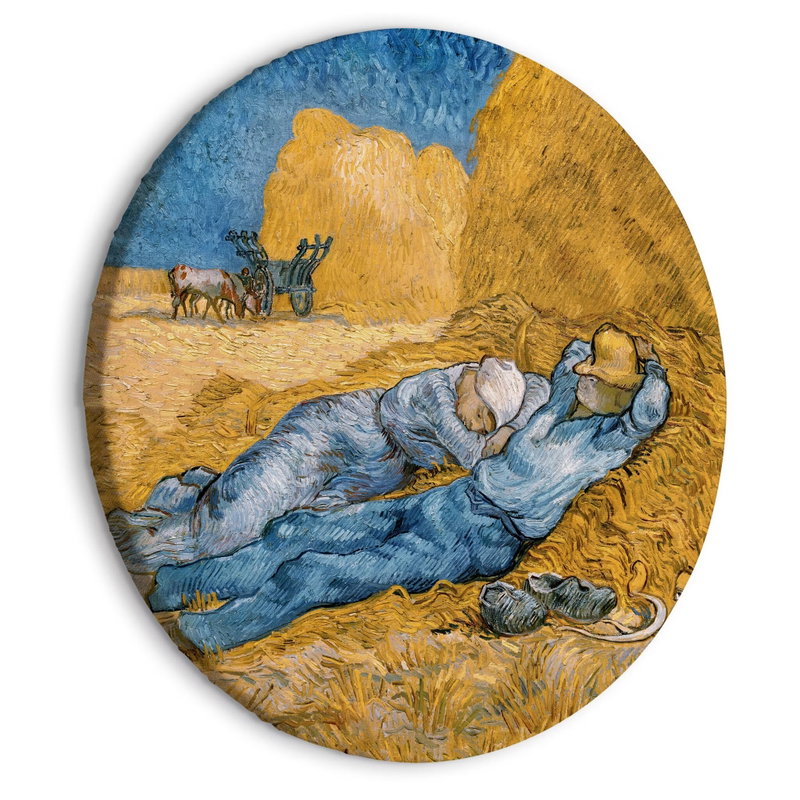

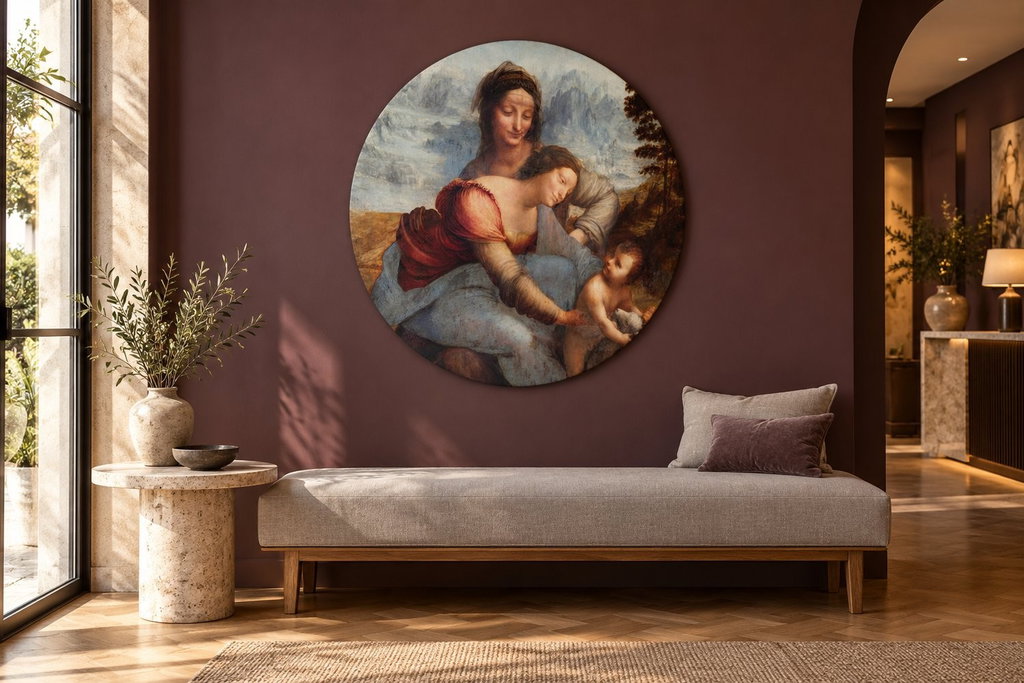
One person or several figures within the circle
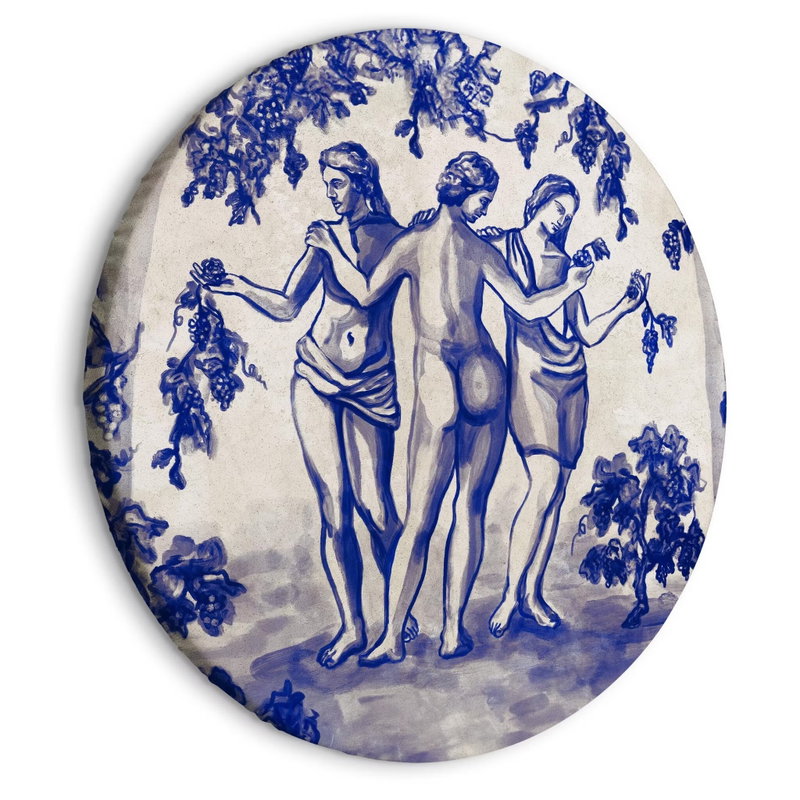
People subjects can rely on the presence of a face or the relationship between several figures. The checked round range includes three classically inspired figures on blue. The group’s shapes matter as much as individual details.
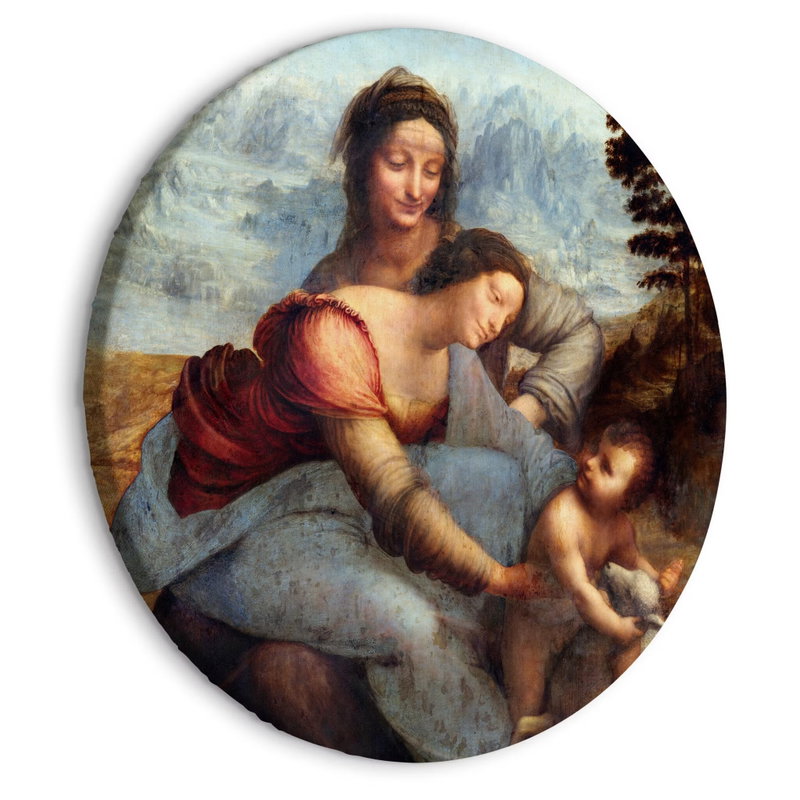
Consider what the image should convey. A close portrait creates a different connection from a group carried by posture and movement. Choose by the main image’s actual content and the depiction within that round format.
Gaze, posture and the circle’s balance
A gaze or leaning figure can give direction despite the even circular shape. In a group, spaces between people may matter as much as their outlines. Assess the whole composition before choosing by a small detail.
Compare the background with the wall and nearby textiles. Strong blue can become an accent or connect other blue elements. Also check how light and dark parts are distributed to achieve the visual weight you want.
Choose size around the figures’ level of detail
Small faces and hands need a different viewing distance from large colour fields or defined silhouettes. Consider the main image with the actual diameter. Decide what should be visible from the sofa, desk or usual viewing position.
The checked round models offer 40, 60 and 80 centimetres; check choices for the actual product. Try a paper template and leave space beside shelves and other pictures. A shared background tone can connect several circles without every one depicting the same kind of figure.
A personal image choice with absorbing construction
The construction behind the print can help shorten reverberation. The figures’ expression and round format give visual qualities, while the acoustic contribution depends on area, placement and other room materials.
Follow hanging and care guidance and choose wall-appropriate fixings. Position the image for its setting and let documented use guide handling. The figure image can then become a personal part of both wall art and absorbing furnishings.
See the gaps as part of the group subject
When several figures share an image, shapes also appear between them. A light opening between two bodies may hold the composition together, while a denser group creates a different rhythm. Look at both the figures’ outlines and the background visible around them.
This can help you choose how detailed the picture should feel in the room. At a distance, the group may read as larger shapes, while faces and hands are discovered close up. Refer to the actual reproduction and decide which level matters most in the intended position.
Choose the group’s expression for a shared setting
In a room used by several people, a figure image can be a distinct feature without depicting anyone the visitors know. Colour distribution, gestures or relationships between figures may make the composition interesting. Compare these visible qualities instead of assuming a particular story from the product name.
Consider whether the image should invite closer viewing or mainly serve as a point of colour and shape in the whole. This is a visual choice, not a promise about people’s reactions. Assess its acoustic contribution separately through construction and use in the room.
Plan the image’s orientation before hanging
Despite its round outline, an image of people usually has a clear top and bottom. Follow the main image and product guidance when planning its position. Do not assume the circle can be freely rotated to move the figures without changing the image’s expression.
If you want a group of pictures to feel more connected, try adjusting gaps and height on the wall instead. A shared line through the circles’ centres is one option, but different heights can also be assessed. Test with paper templates before choosing the final arrangement.