




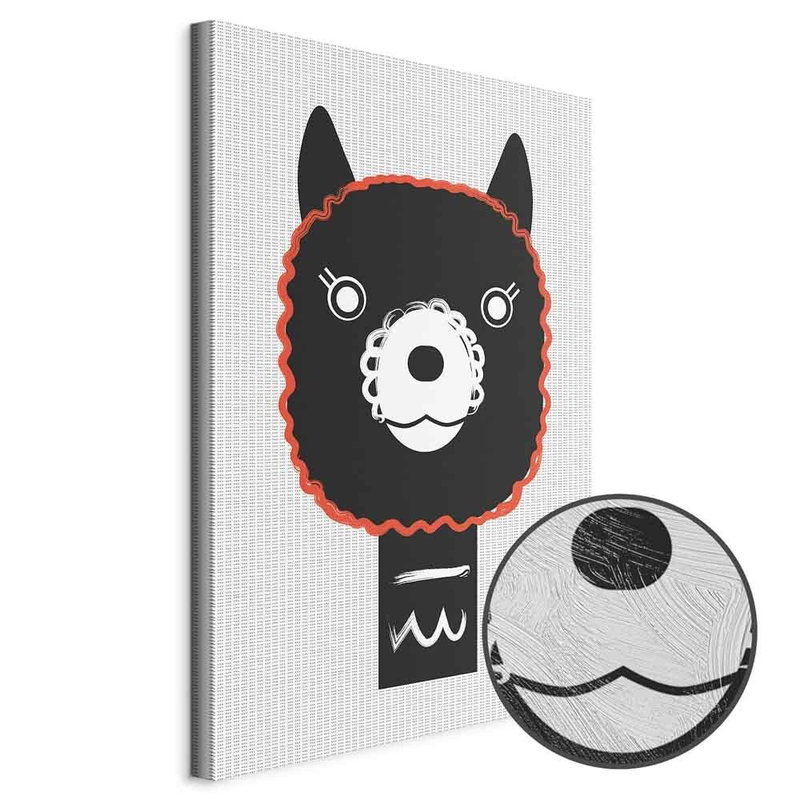
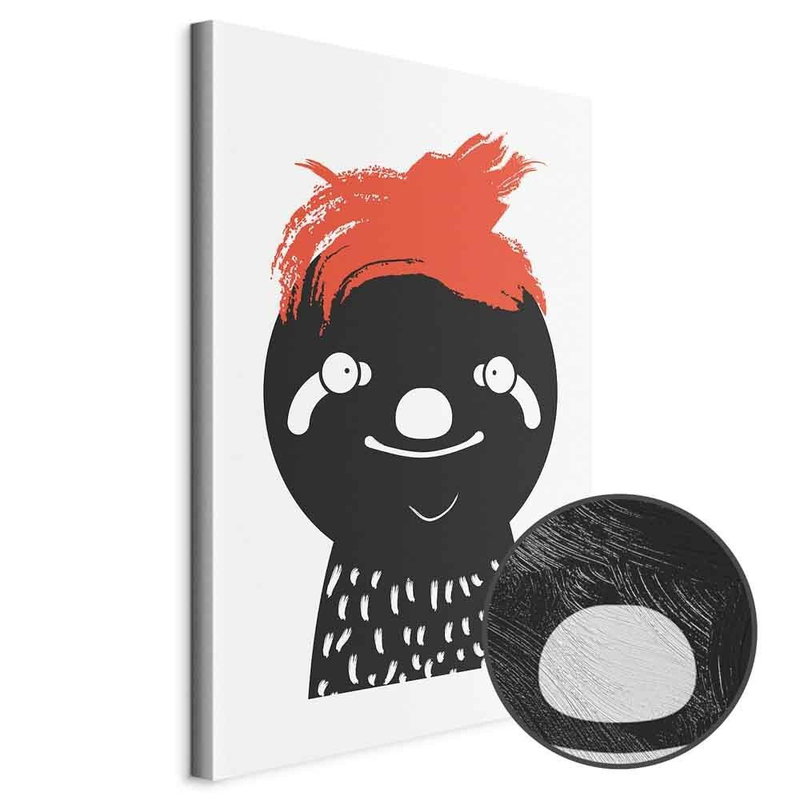
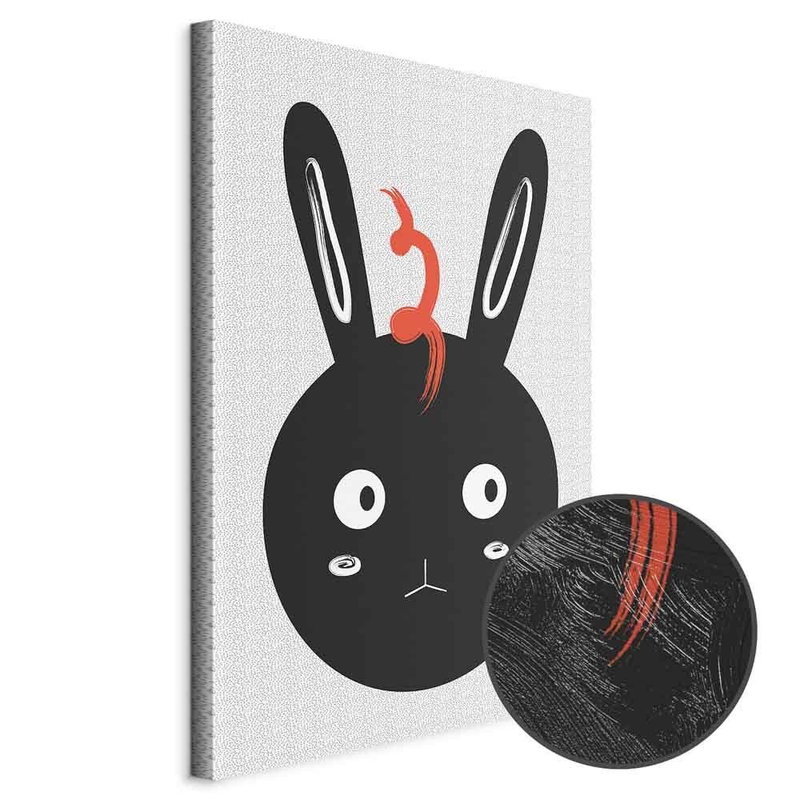
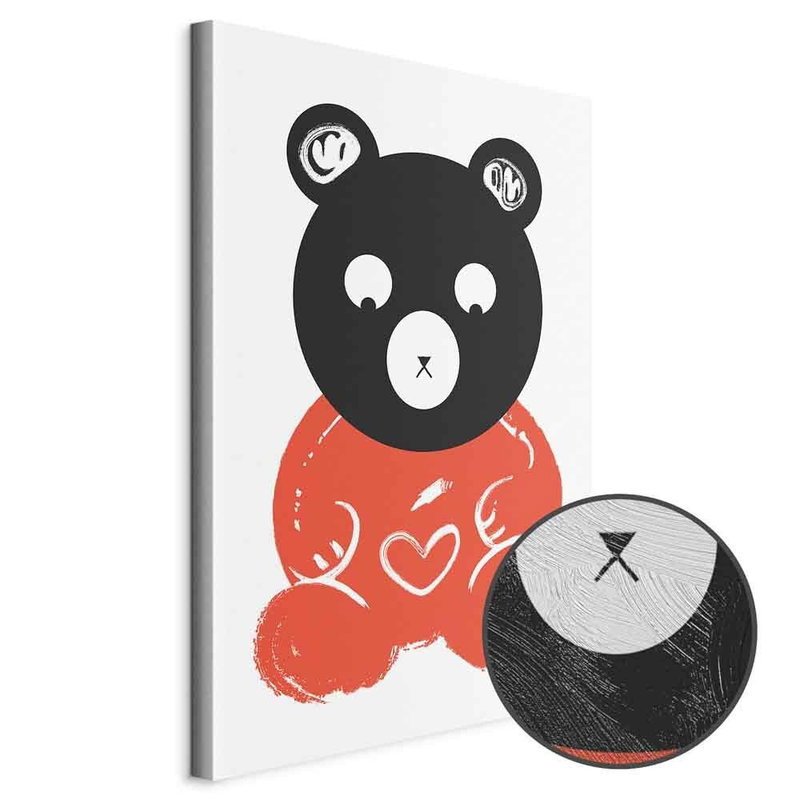
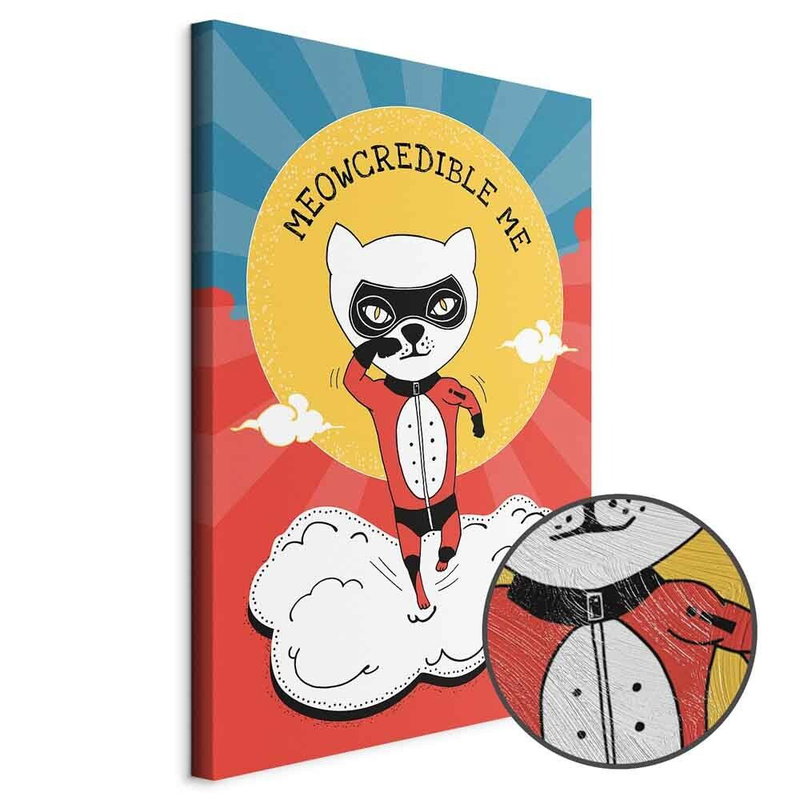
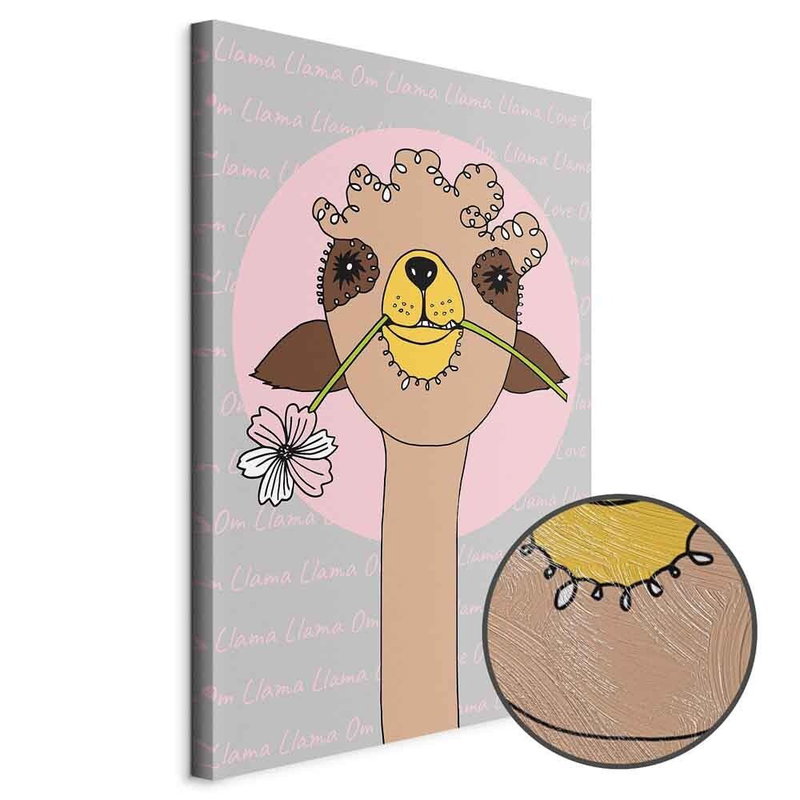
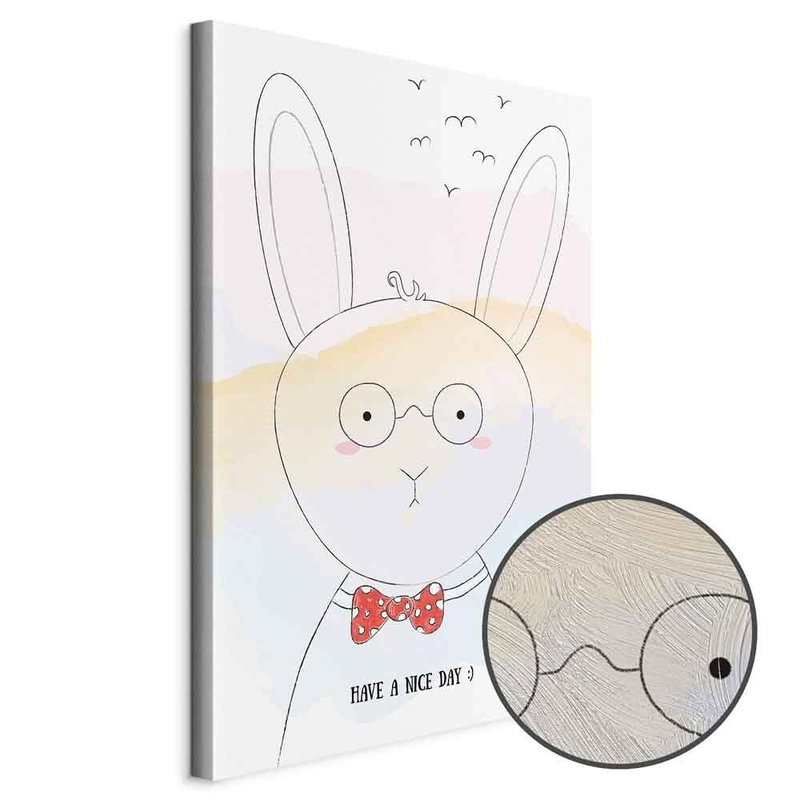
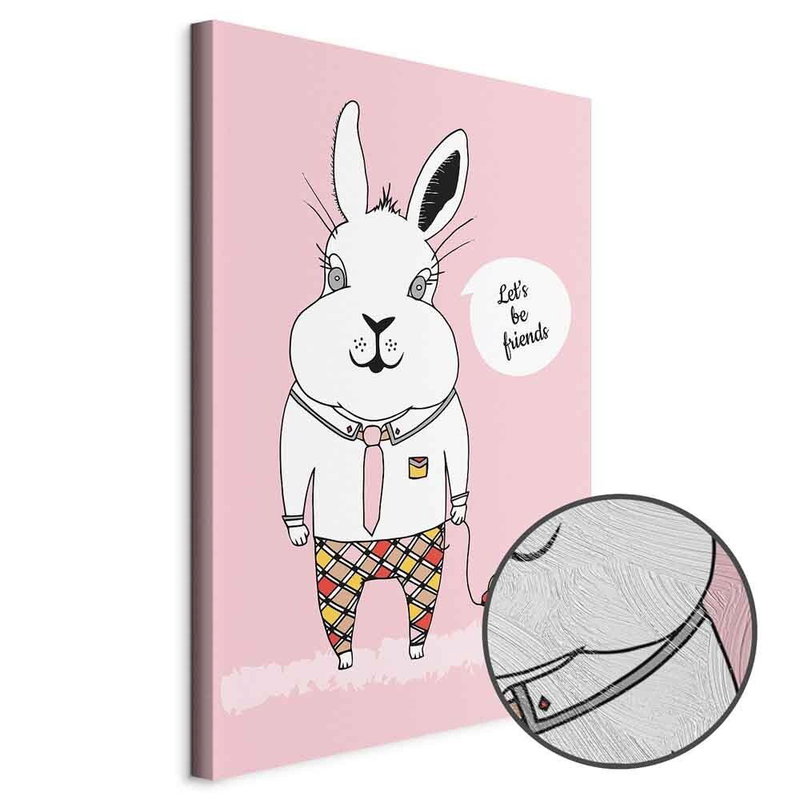

Animal characters with a story to tell
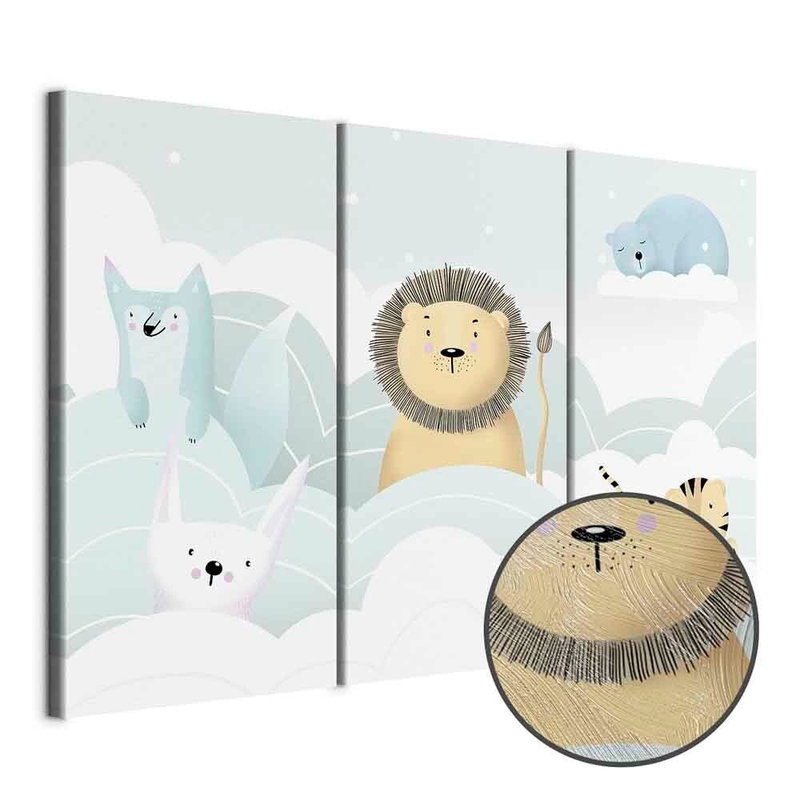
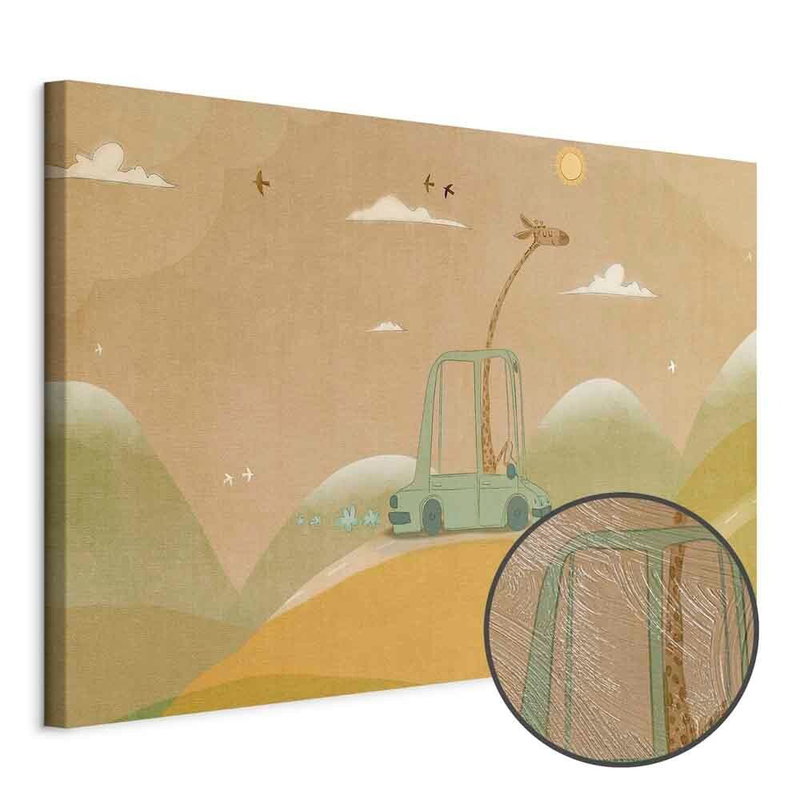
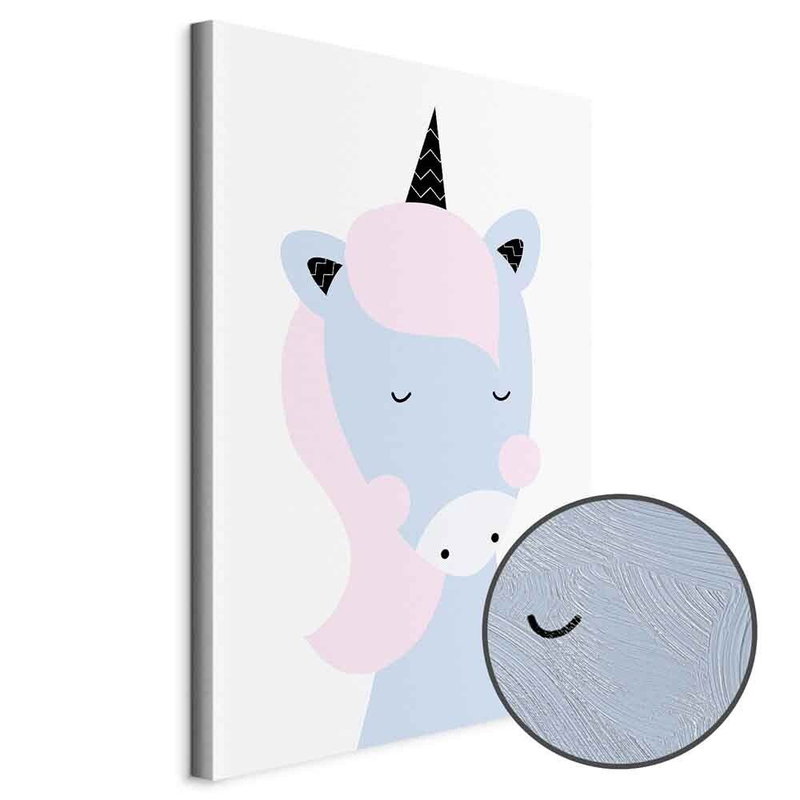
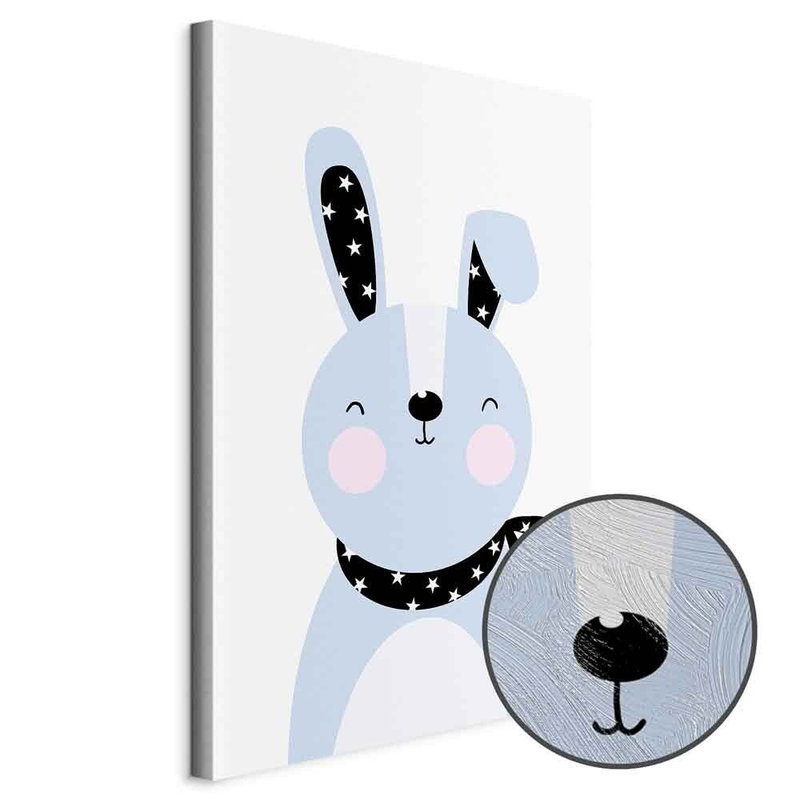
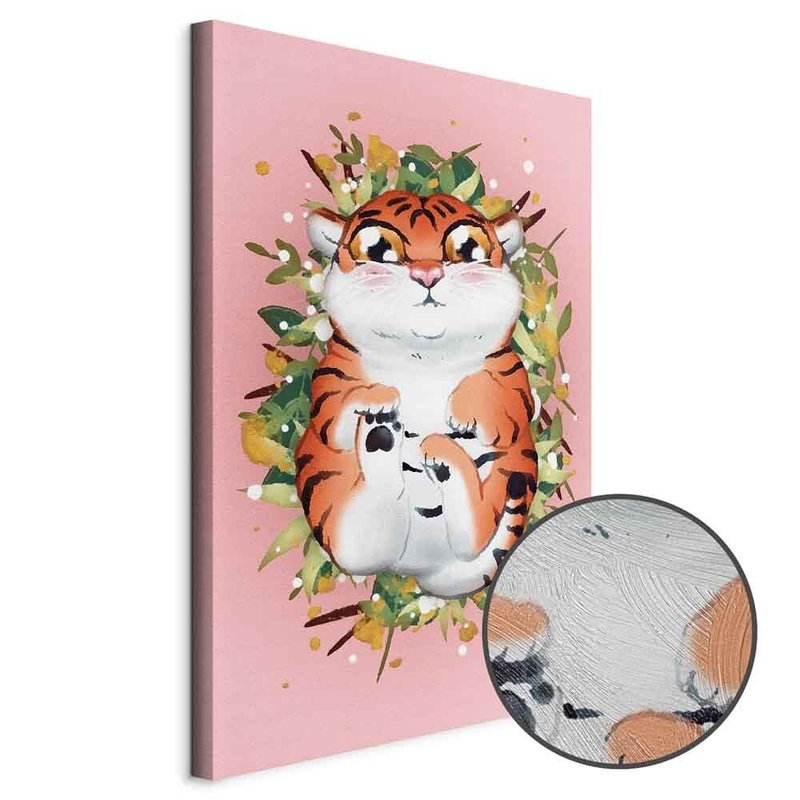
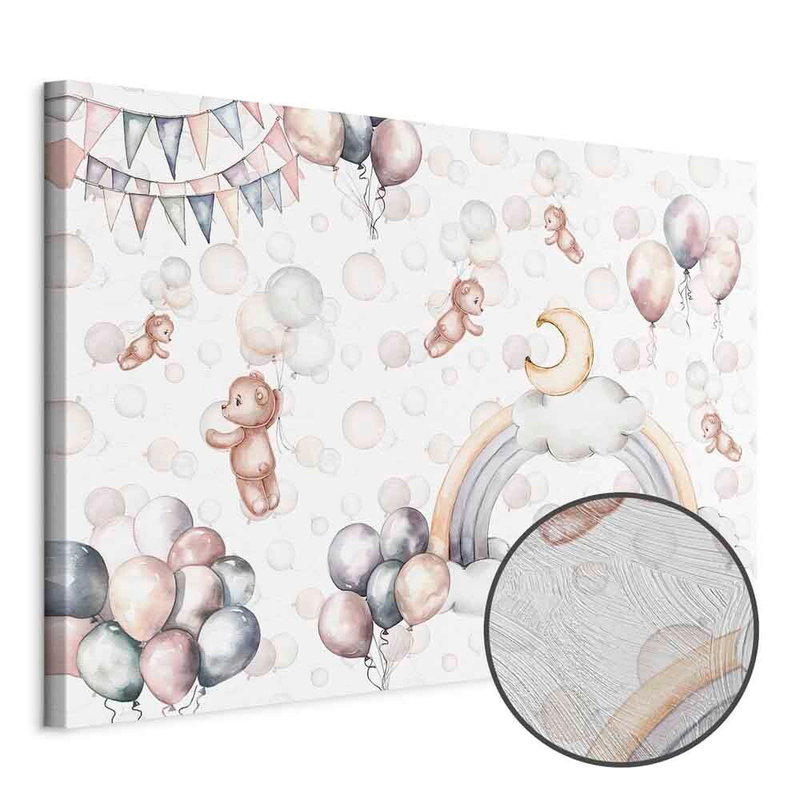
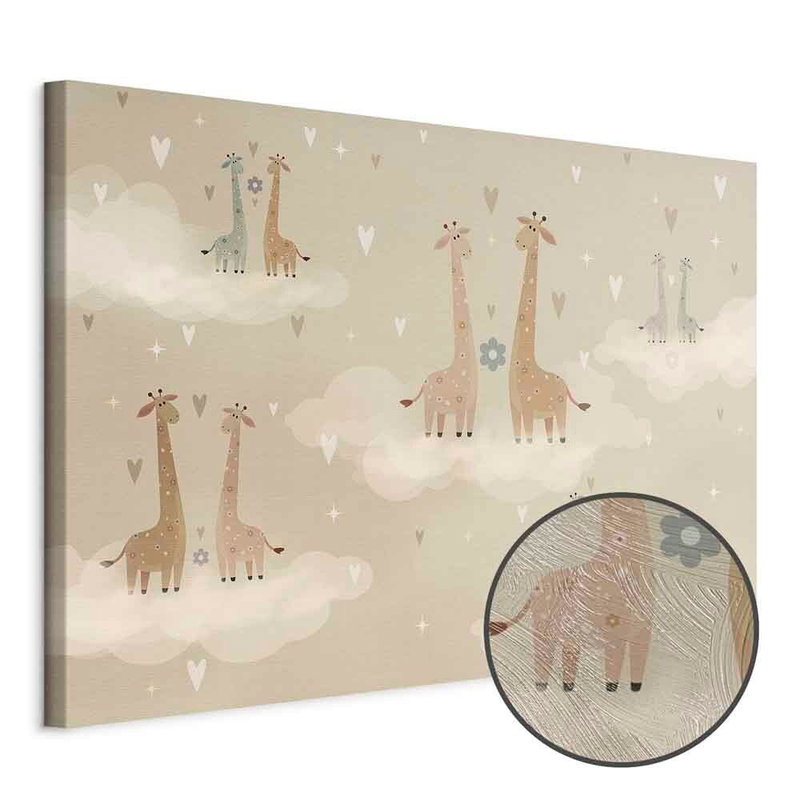
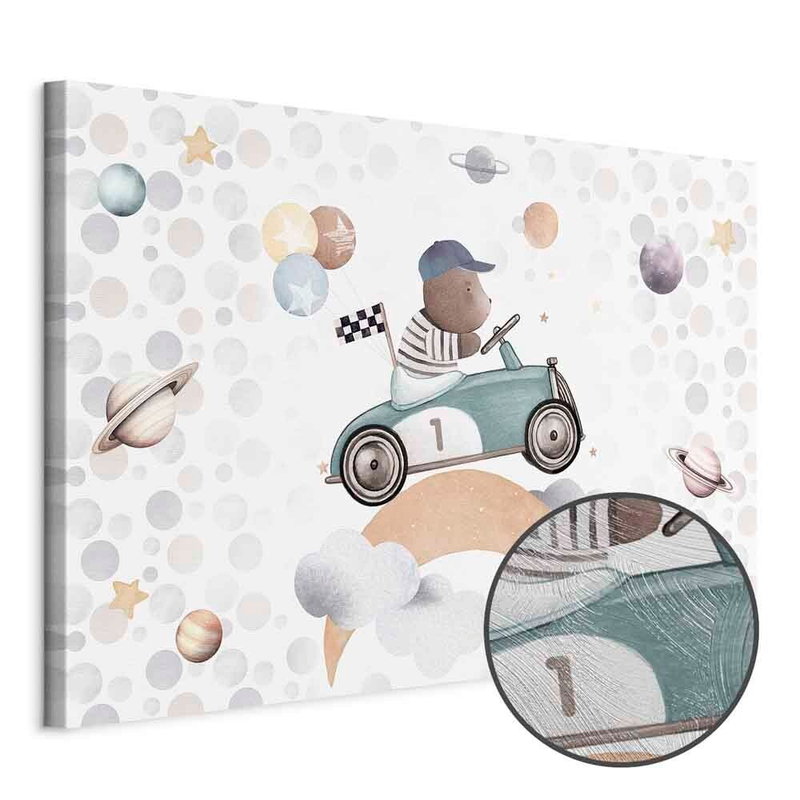
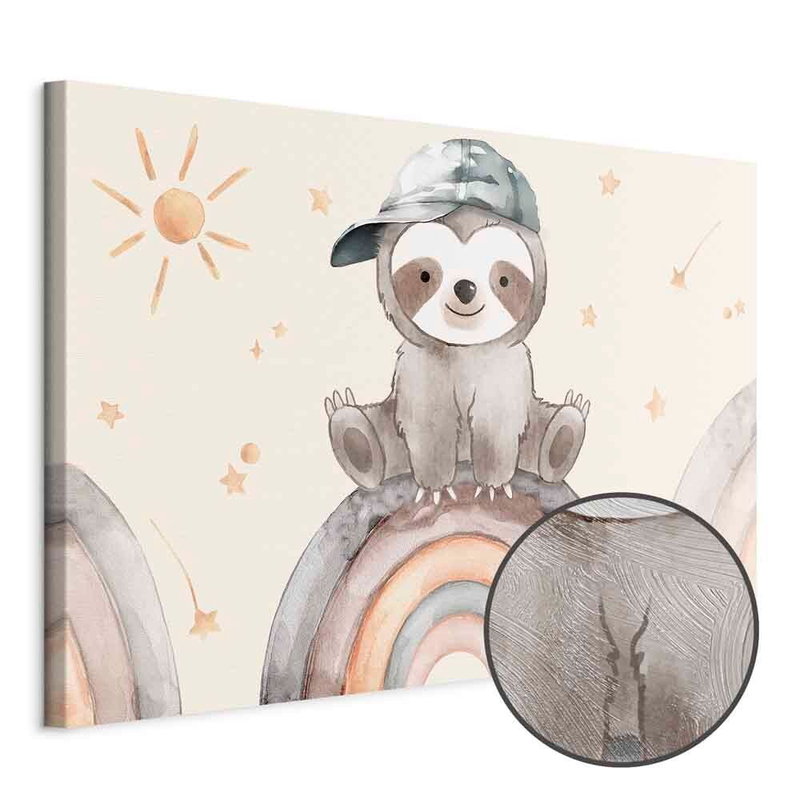
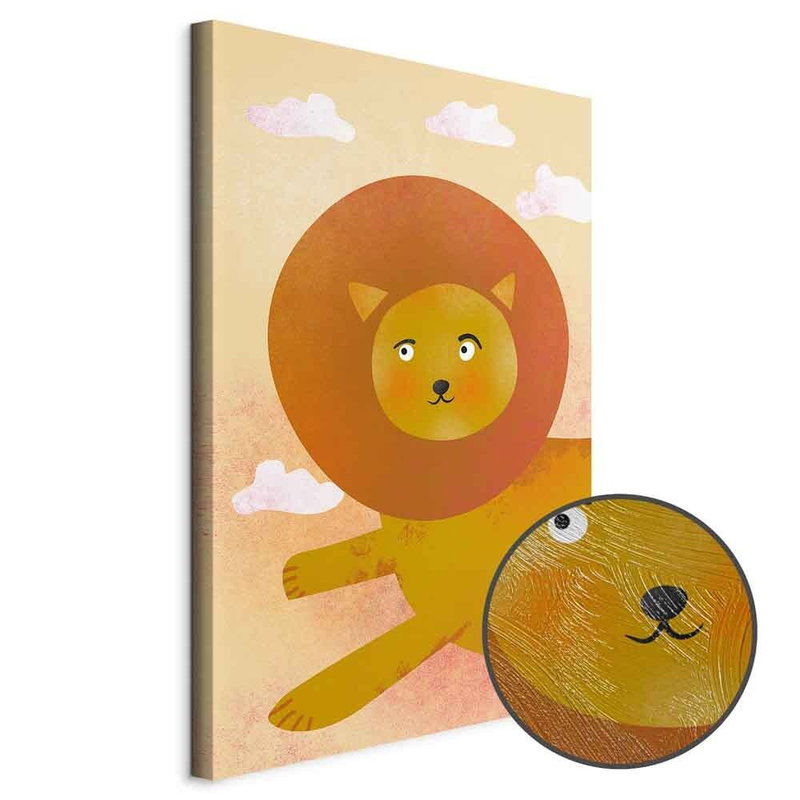
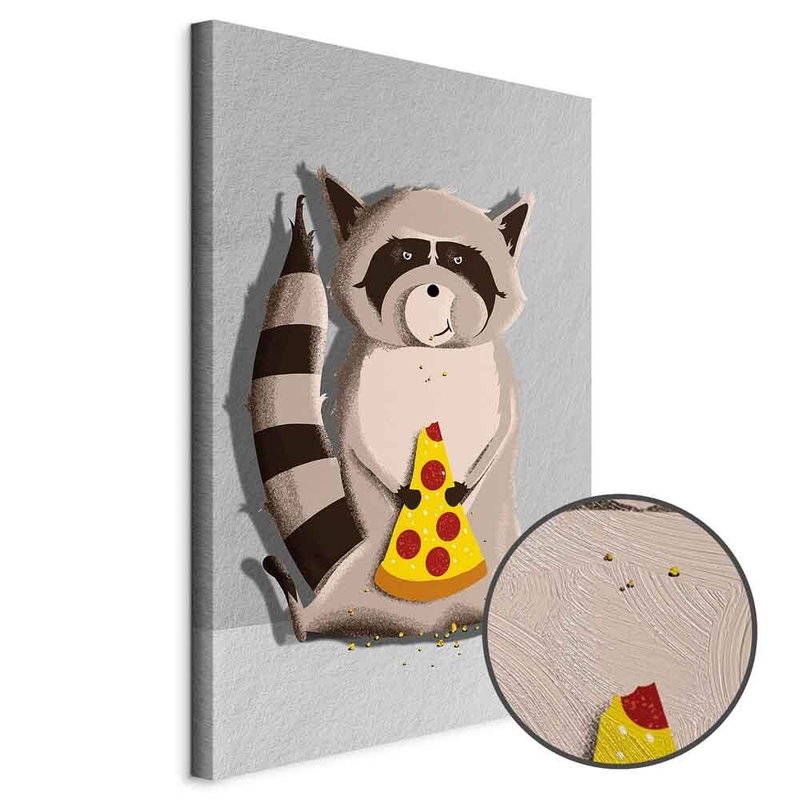
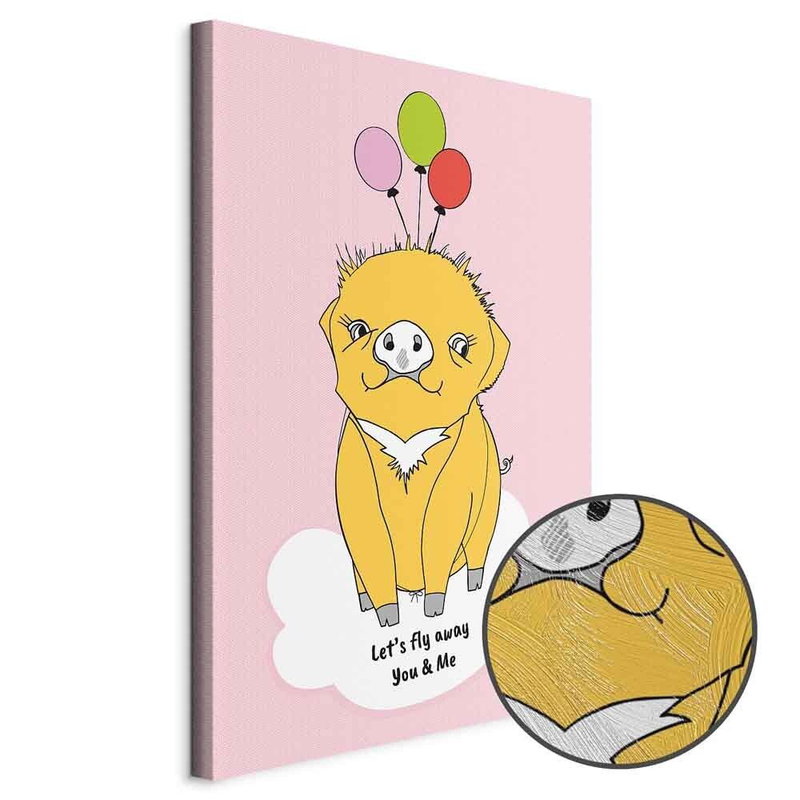
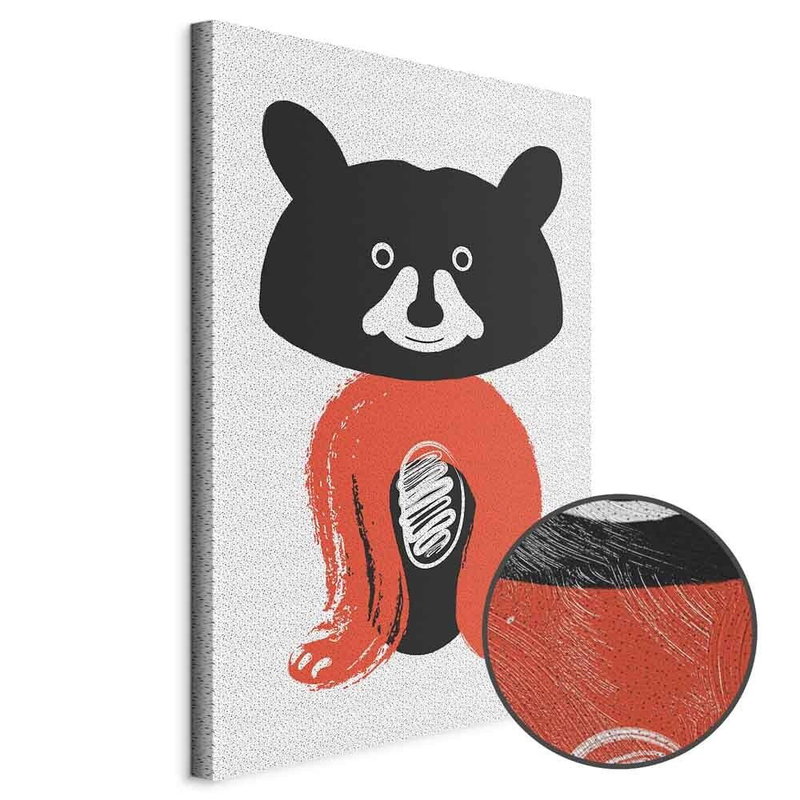
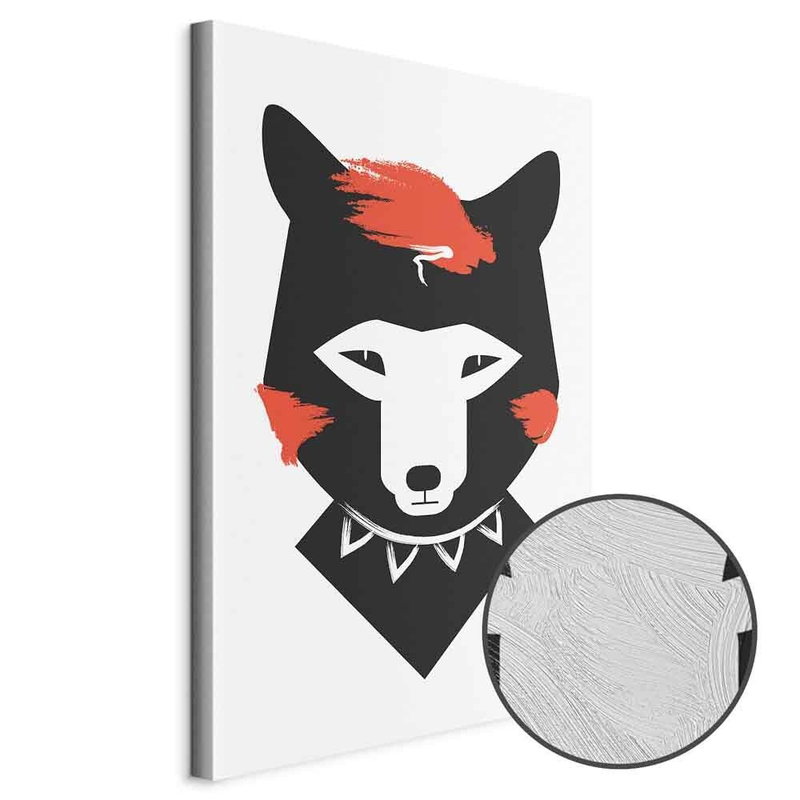
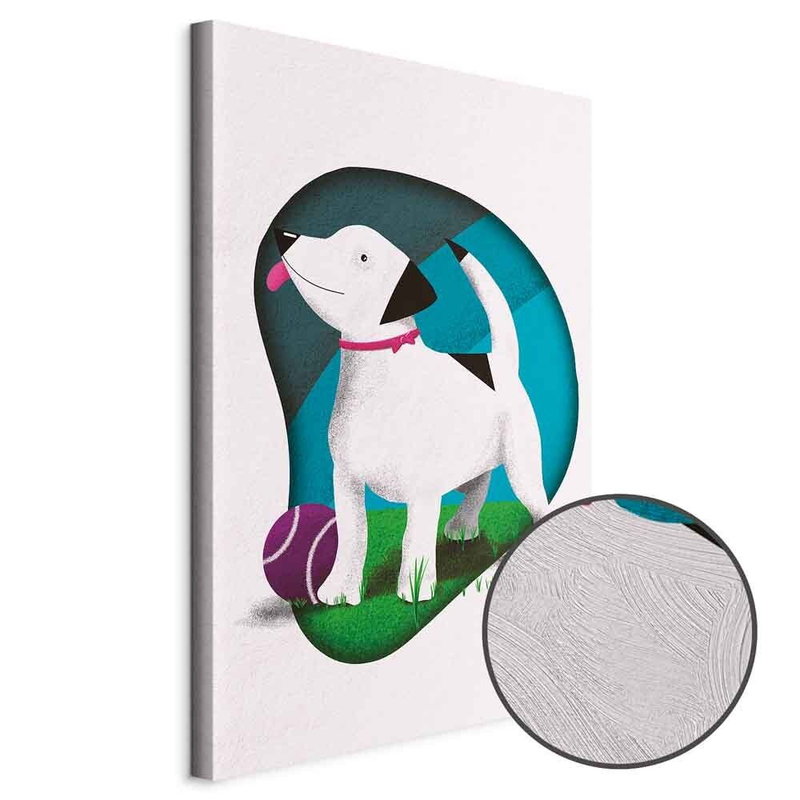
The selection includes illustrated rabbits, bears, foxes and giraffes. Some stand alone against a light background; others drive a car, hold balloons or appear in a larger imaginary landscape. This changes how much happens in the picture and where the eye is drawn first.
A simple animal portrait can suit a room where other elements already contain strong colours. A more narrative composition can become the wall’s focal point. Where possible, compare expressions, colours and details with the child; children’s designs do not have to mean the same visual style for everyone.
Rainbows, space journeys and graphic symbols
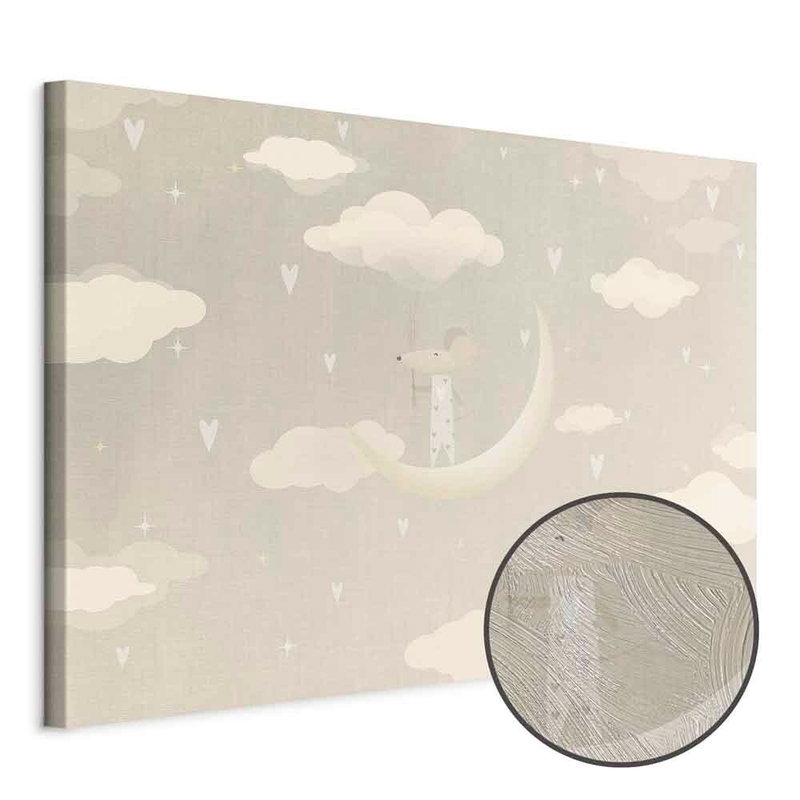
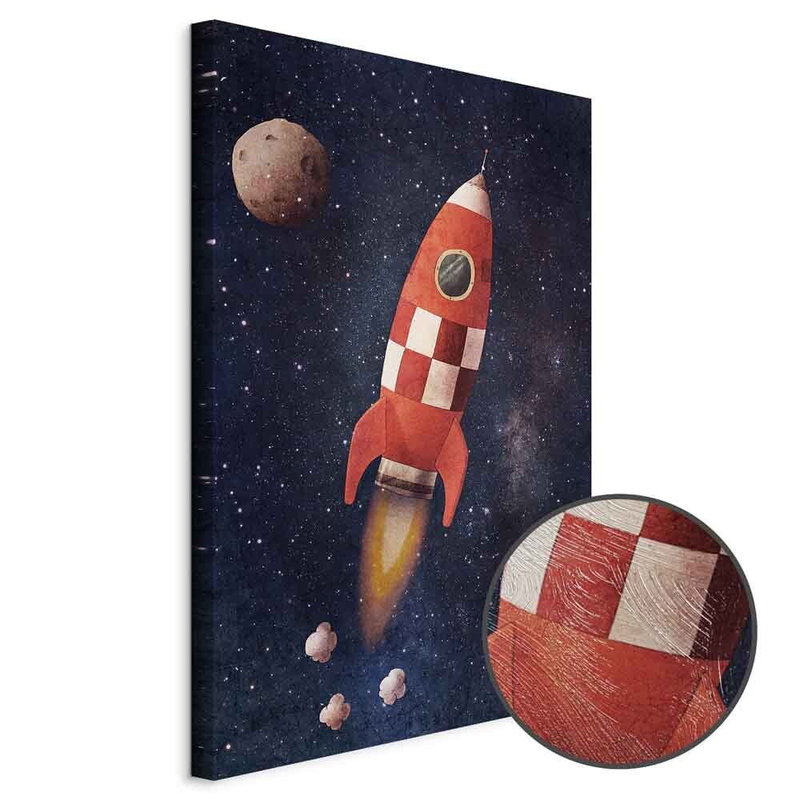
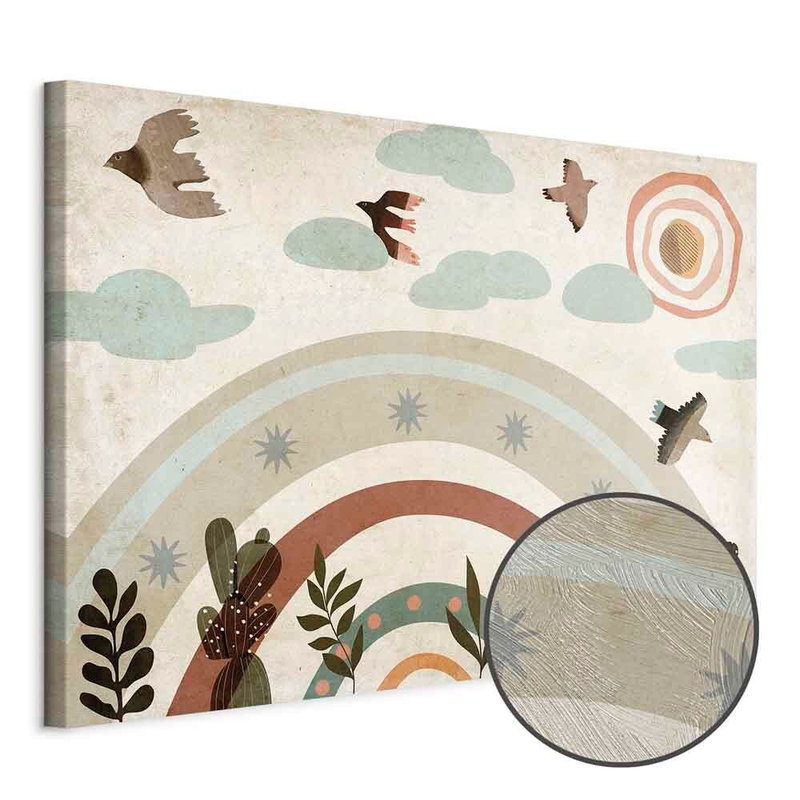
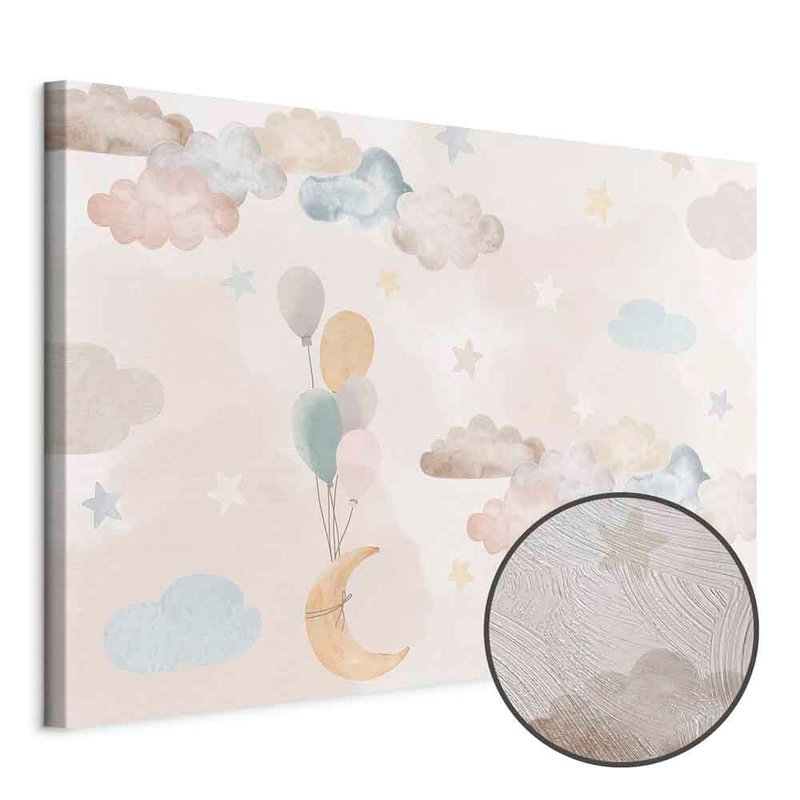
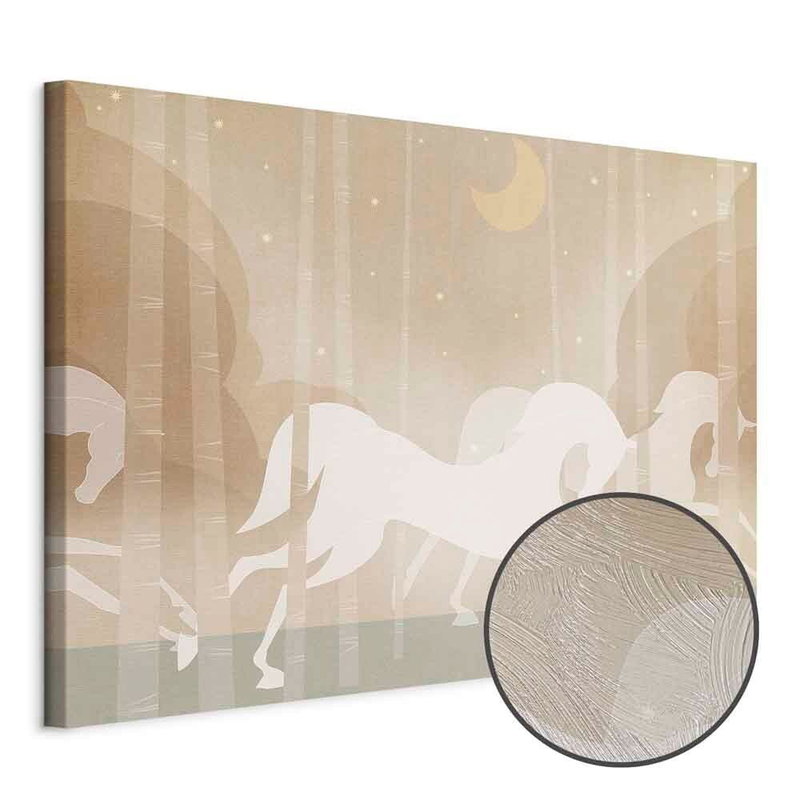
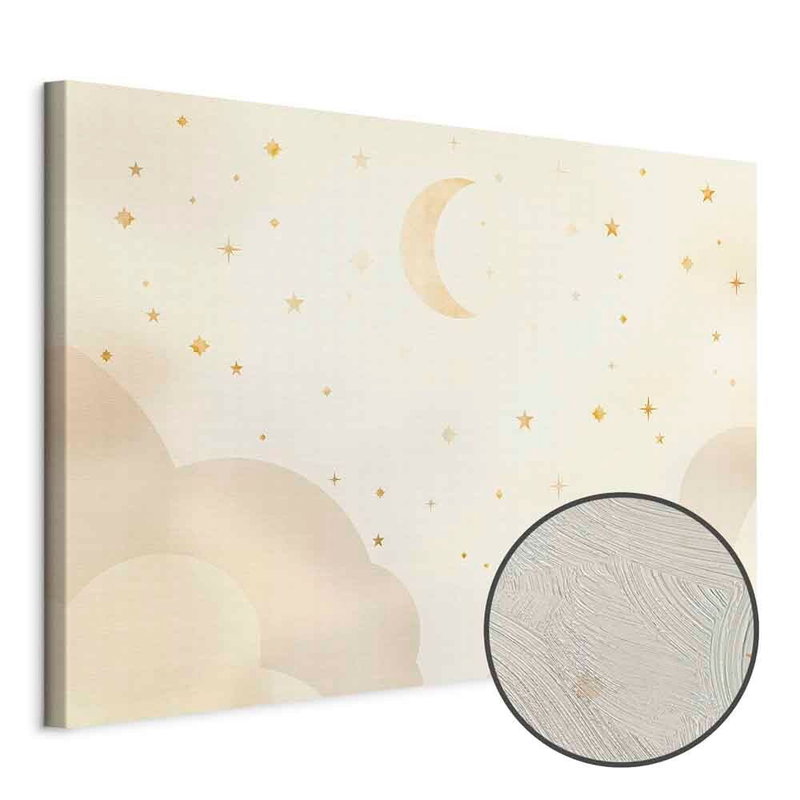
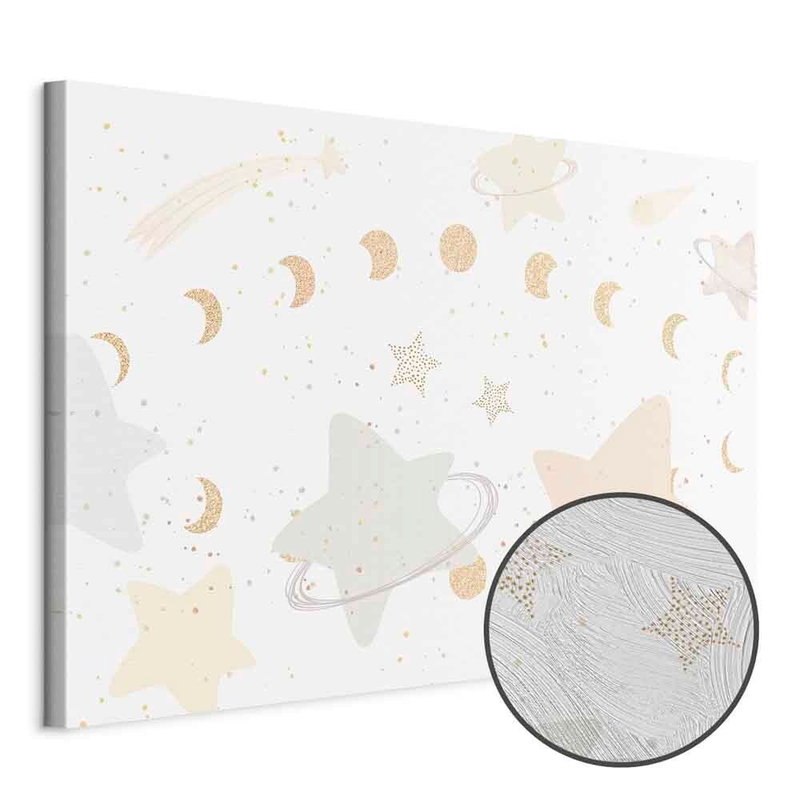
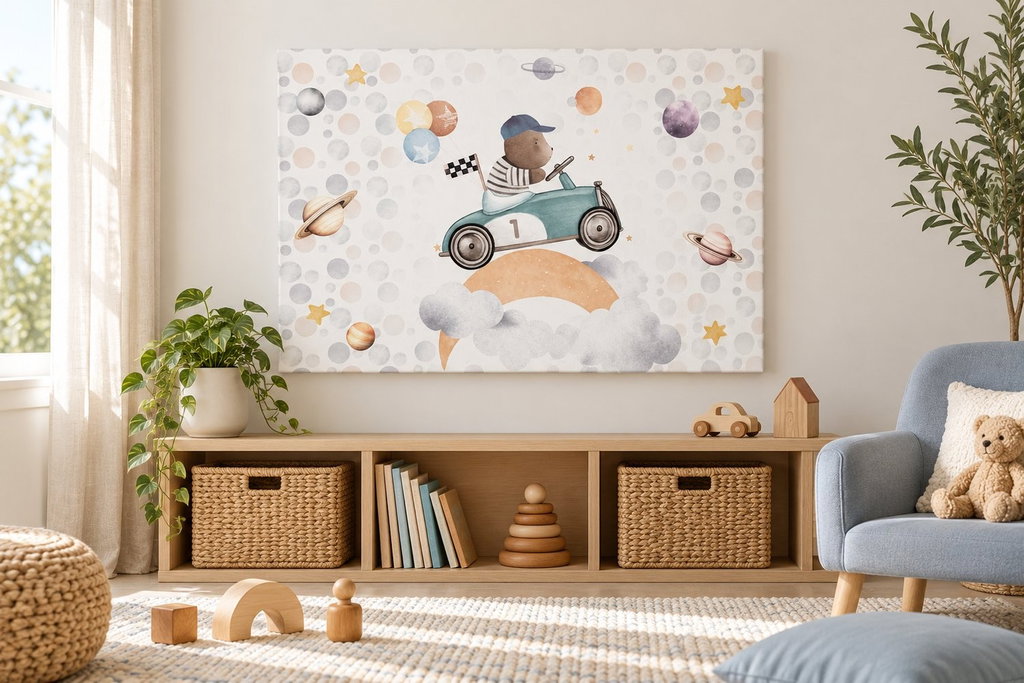
Moons, clouds, stars and planets appear in several illustrations. There are quiet sky scenes as well as imaginary journeys with animals travelling through space. Rainbows and gentle areas of colour can establish a coordinated palette, while a rocket or small racing car gives the picture a stronger sense of movement.
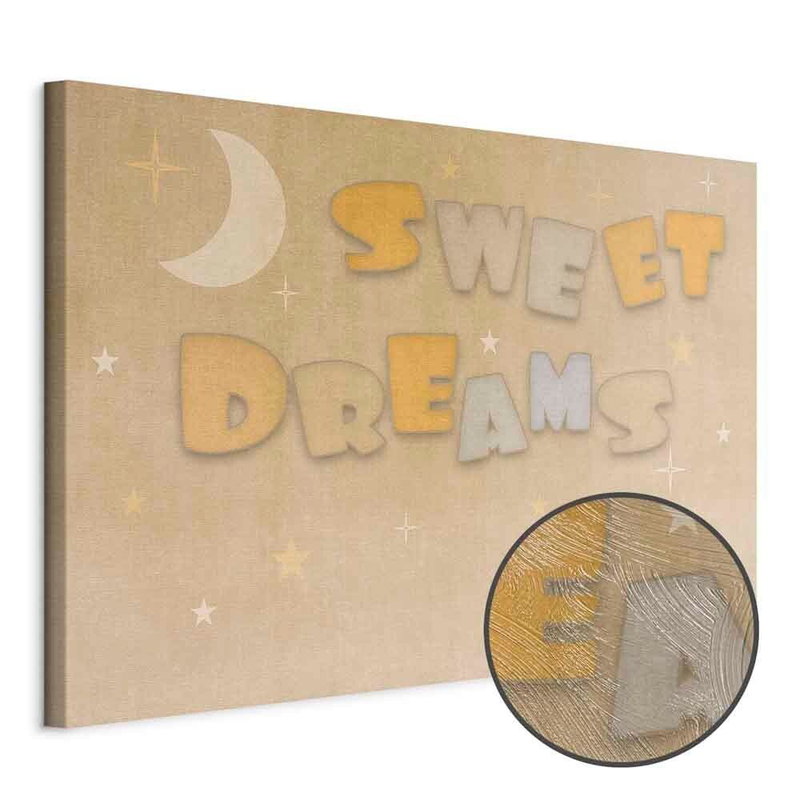
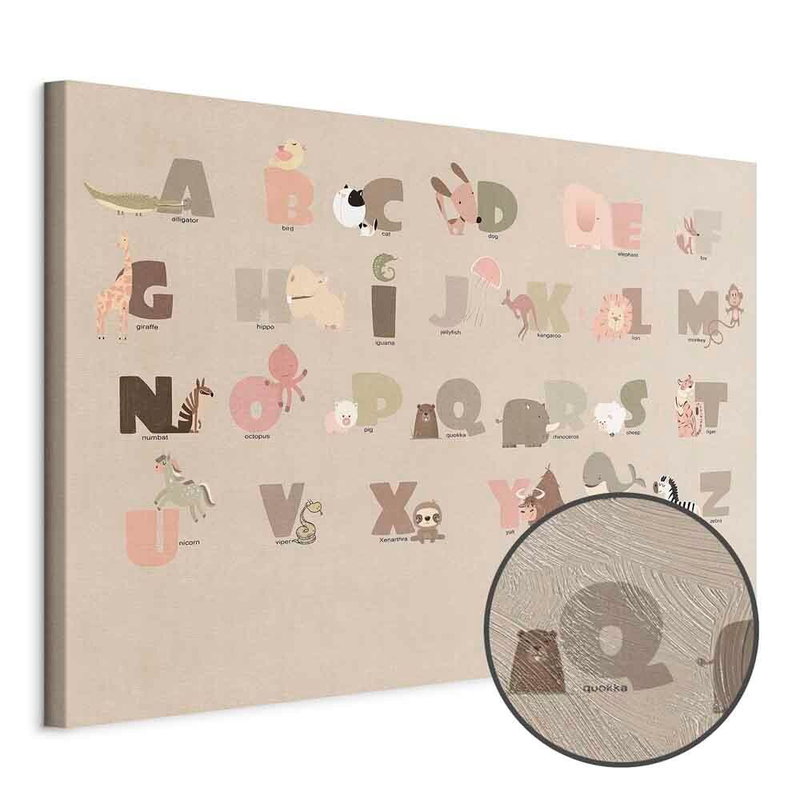
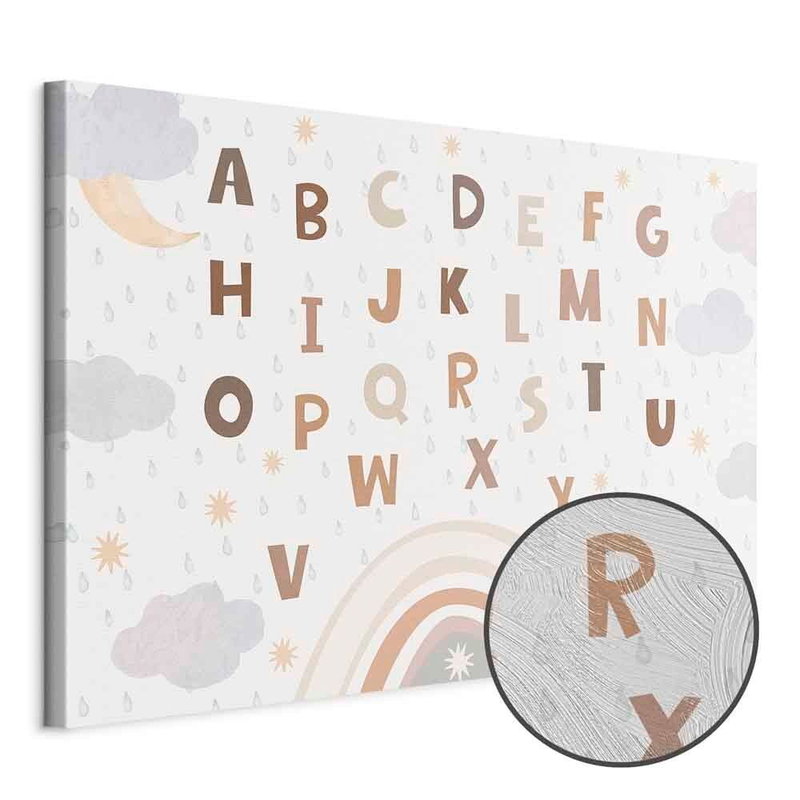
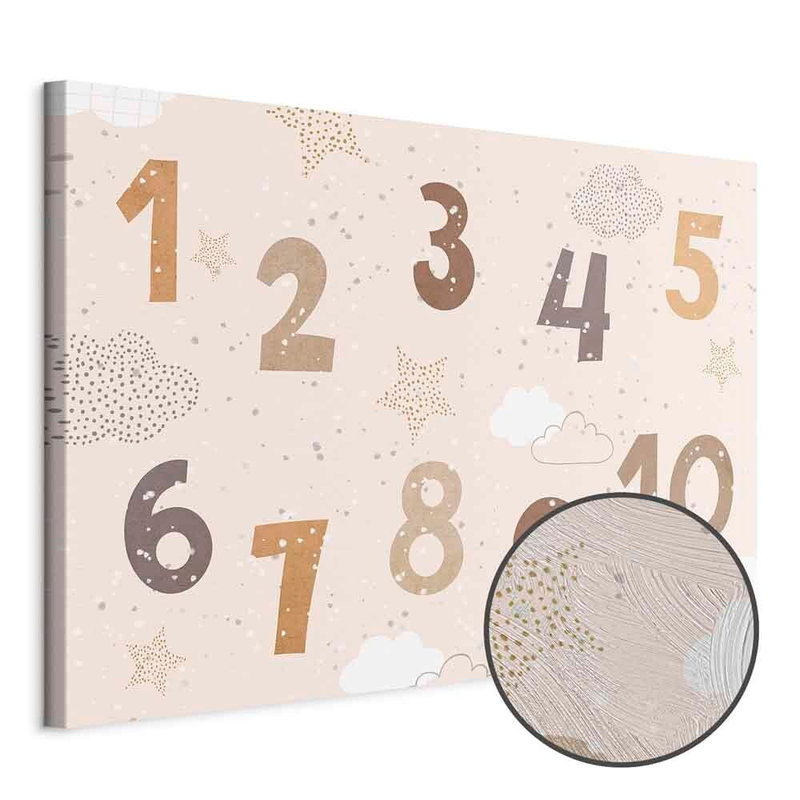
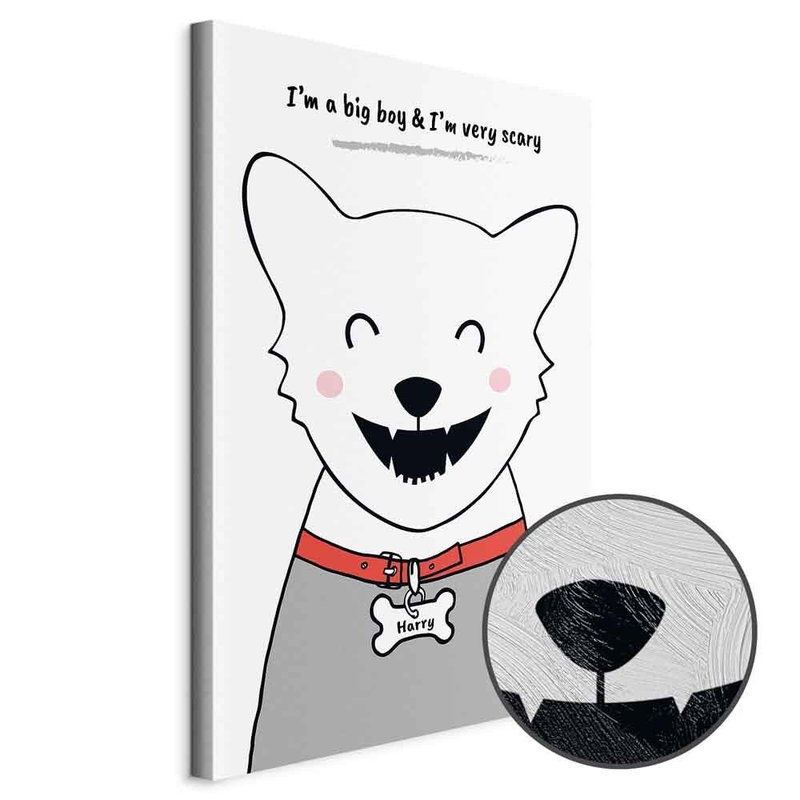
Letters, numbers and short words also appear as decorative designs. Check the actual characters and language in the print. Changing the shop language does not change the letters or wording on the picture. Choose a design that works visually at its usual viewing distance.
The premium surface is part of the finish
The pictures in this category belong to the premium range. Clear gel is applied by hand over the print to create a physical canvas surface texture. The illustration is a print with a worked finish; product detail images help distinguish the drawn shapes from the actual texture.
Sizes and formats vary between products. A landscape space scene needs a different wall area from an upright animal portrait. Some compositions are spread over several panels; check the product’s parts and dimensions and allow for the gaps when measuring the wall.
Plan the wall as part of the room
Consider repeating one of the picture’s colours in storage, fabrics or furniture. Clear space around the canvas helps the design remain readable when shelves and toys are also visible. Think about everyday use of the room and the position from which the picture is usually seen.
The sound-absorbing construction can help reduce reverberation. Its contribution depends on absorbing area, placement and the room’s other materials. Follow the product’s hanging instructions, choose fixings suited to the wall and read the care advice for the hand-worked gel surface.
Choose an interest that goes beyond a passing colour trend
A children’s design can be chosen for a character, activity or story the child enjoys. Start with a few clearly different main images rather than many almost identical options. Talk about what is actually shown and include both colours and events in the choice. An imaginary scene need not be interpreted in the same way by everyone.
Consider how the picture works with what is already in the room. When books and toys provide many small colour impressions, an image with larger continuous areas may be easier to distinguish. This is a choice of visual expression, not a promise of a particular effect on a child’s sleep or concentration.
View the design from the child’s usual positions
A picture that looks clear when you stand in front of the wall may appear different from the floor or a low chair. Assess the planned position from the places where the room is actually used. Check whether figures and small symbols remain recognisable and whether furniture will obscure an important part.
Plan placement and secure hanging together. Follow the product instructions and choose fixings suited to the wall material. Do not assume that a room photograph shows the correct dimensions or a complete solution for your room; check the chosen product’s details and the conditions on site.
Allow a picture group to accommodate change
When several pictures hang together, a shared background tone or recurring character can connect them. They do not all need the same amount of detail. A larger narrative scene can sit alongside a simpler design; assess the group’s outer edges as a whole before choosing the spaces between pictures.
Remember that the room’s use may change. Choose a position that leaves space for existing storage and makes the picture visible without arranging furniture to match an imagined room photograph. Decorative planning does not replace an assessment of how much absorbing surface the room needs.