




Nature’s perspective within a round image
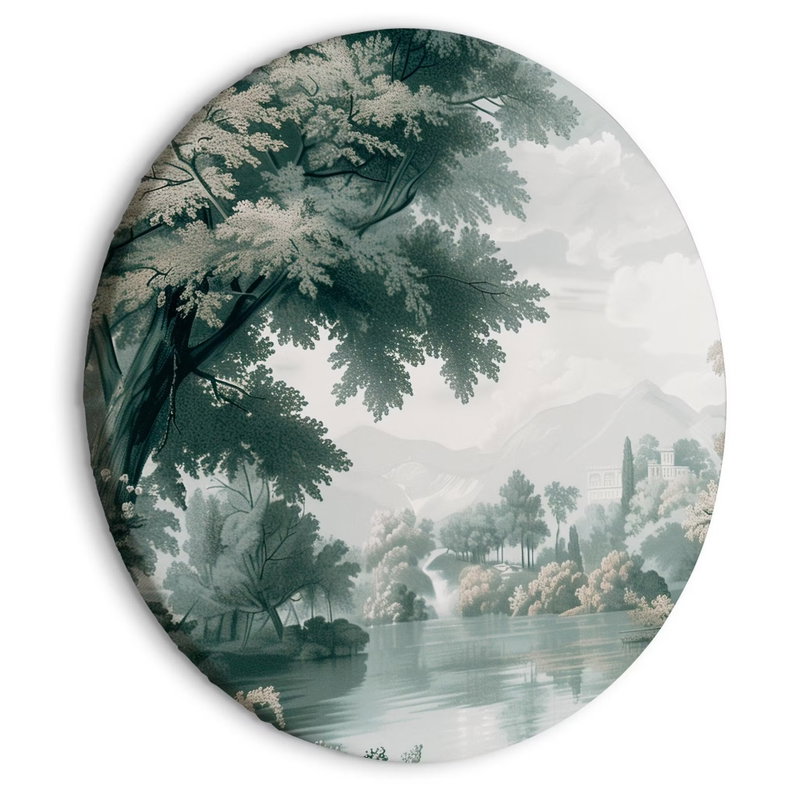
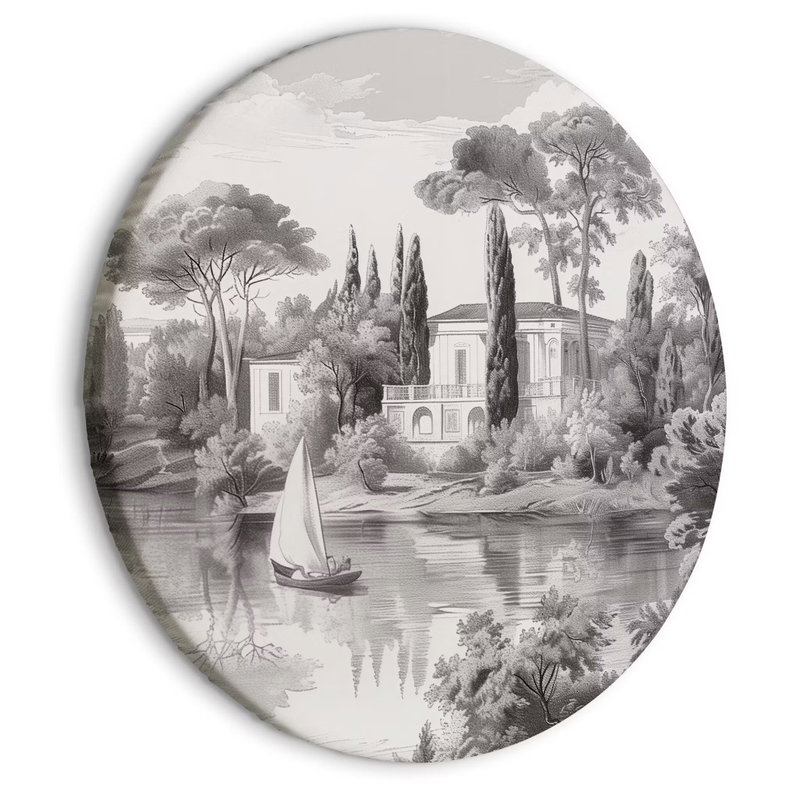
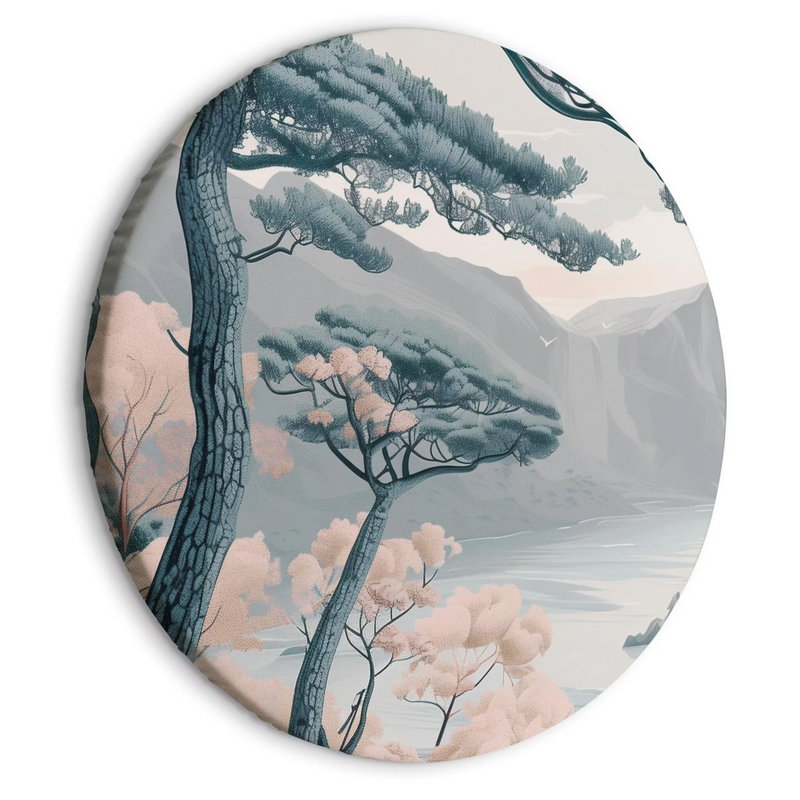
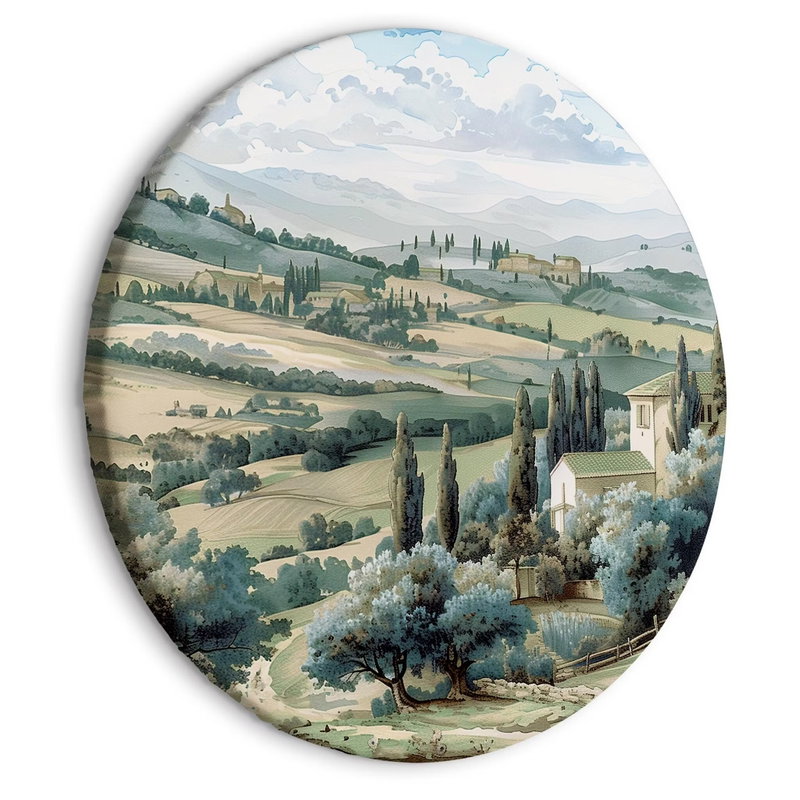
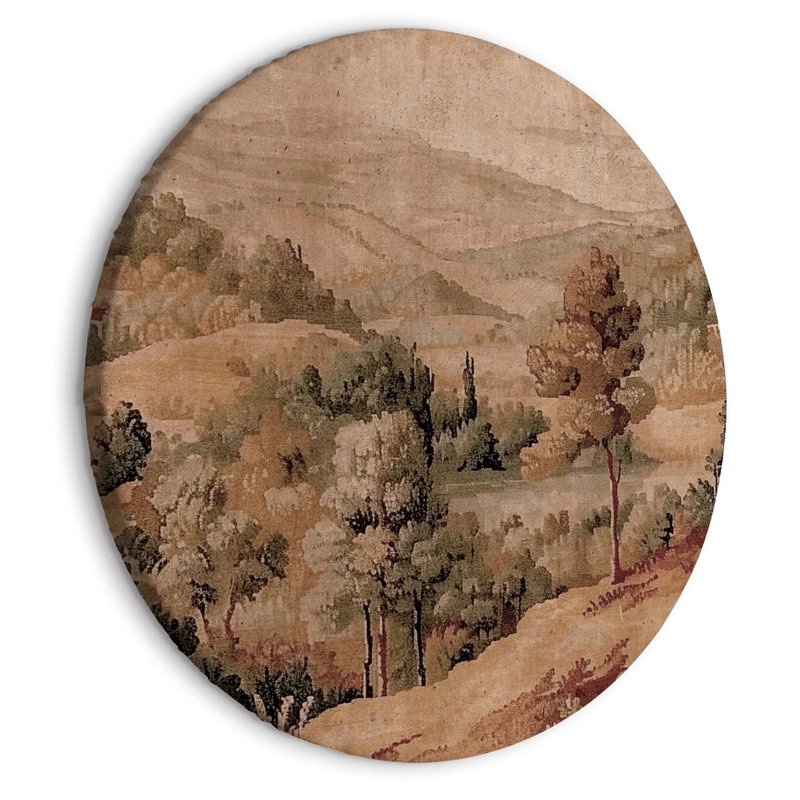
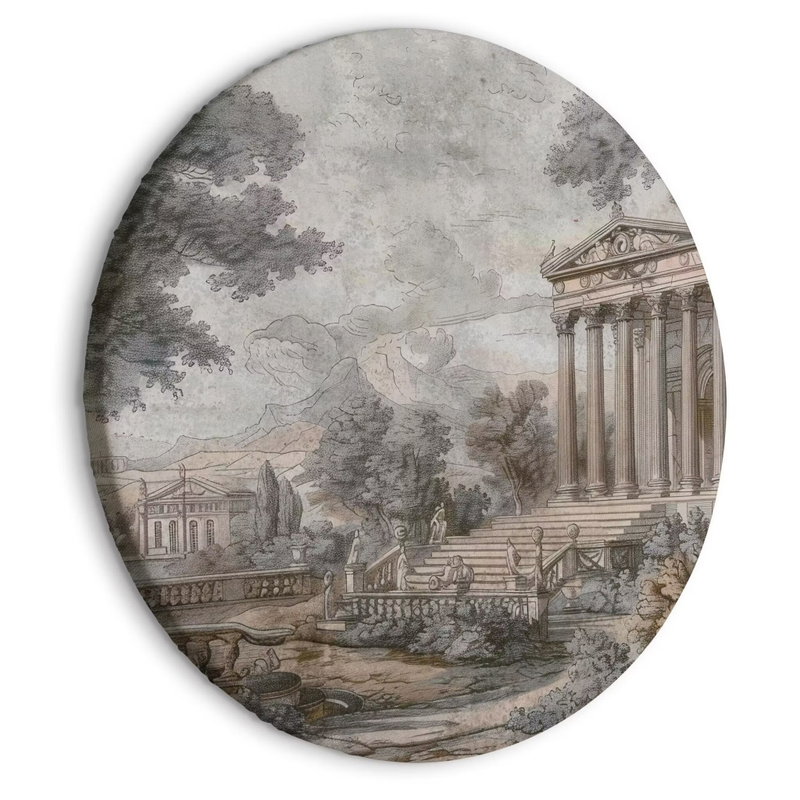
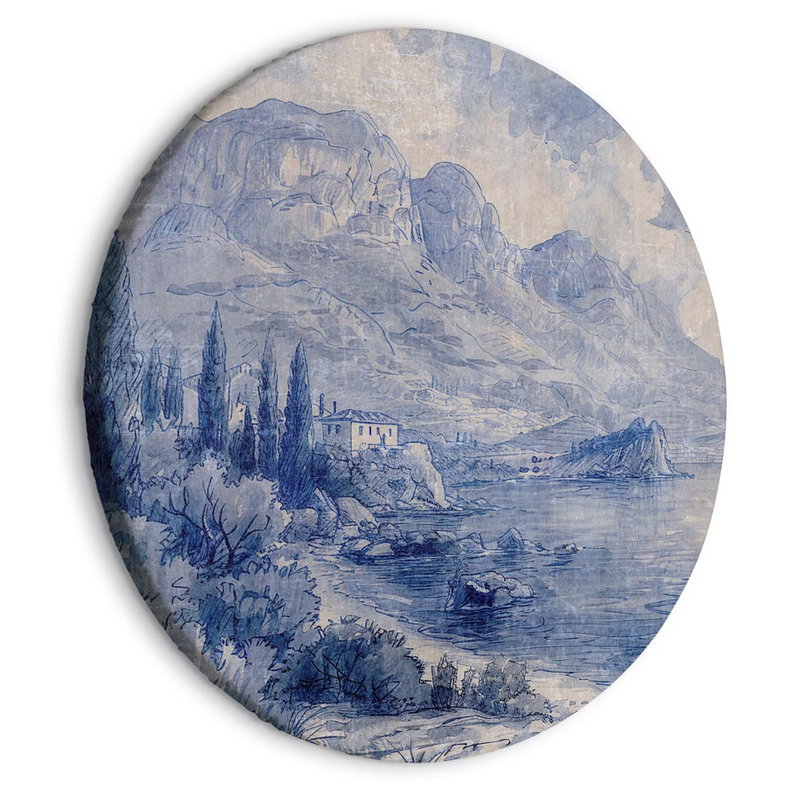
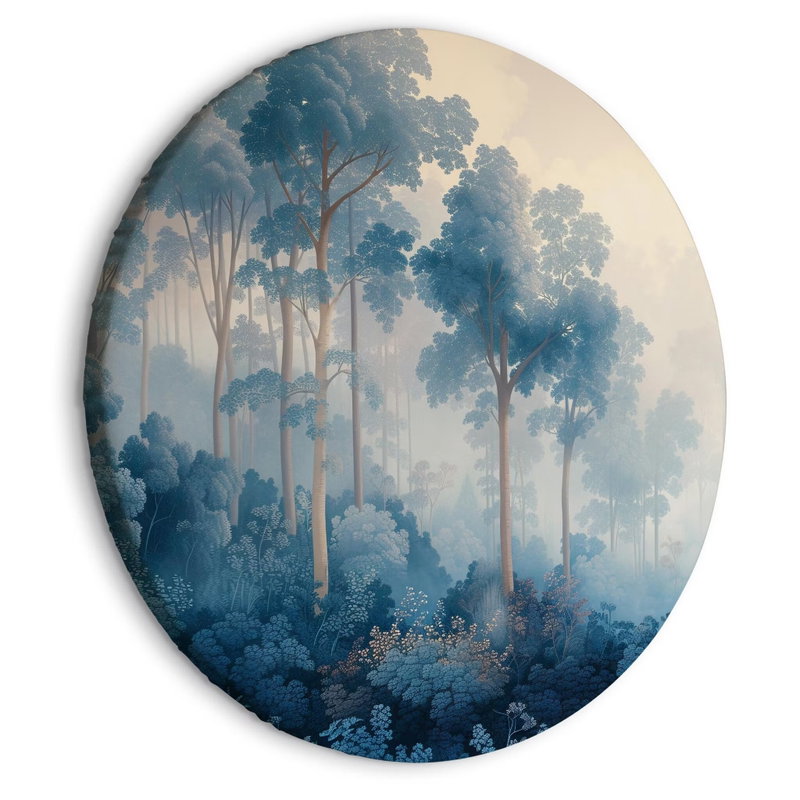
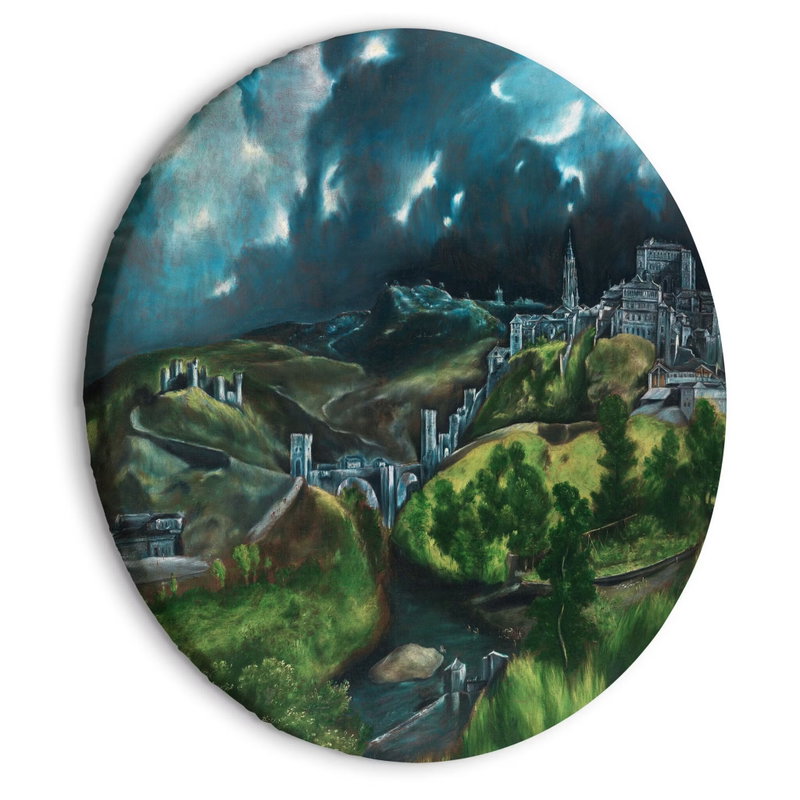
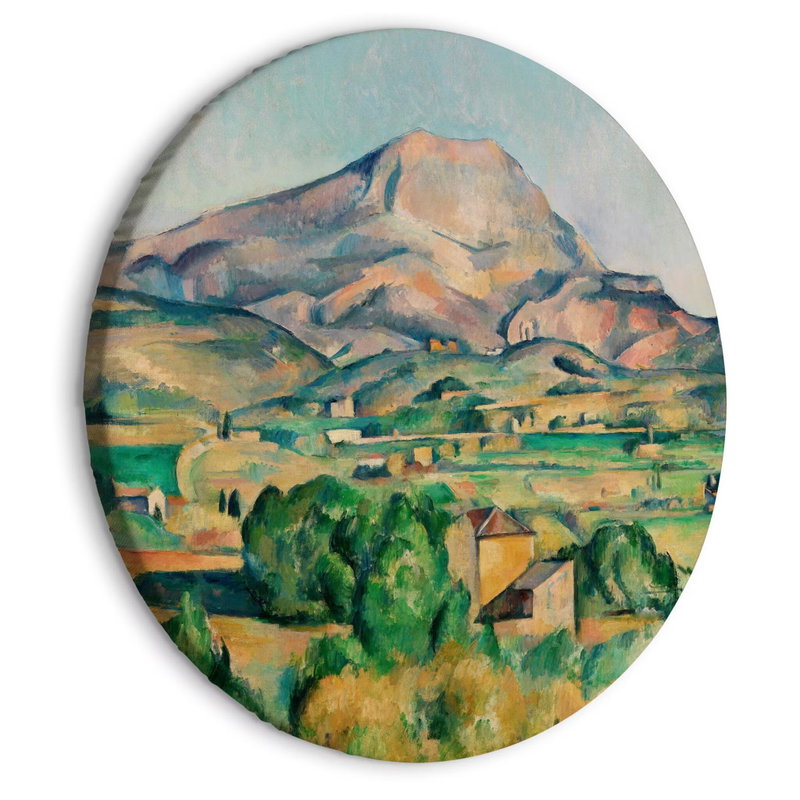
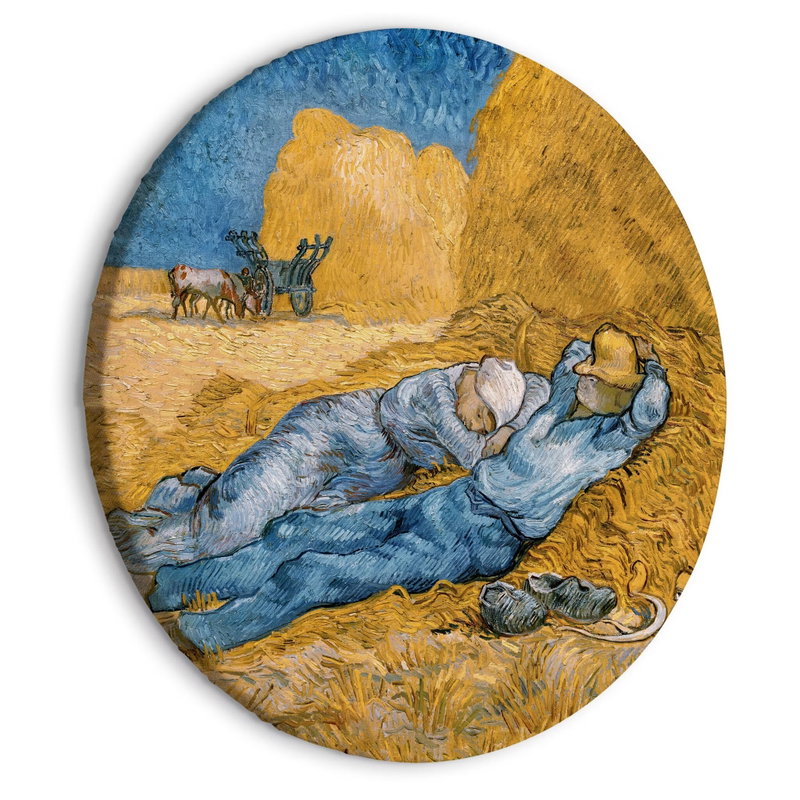
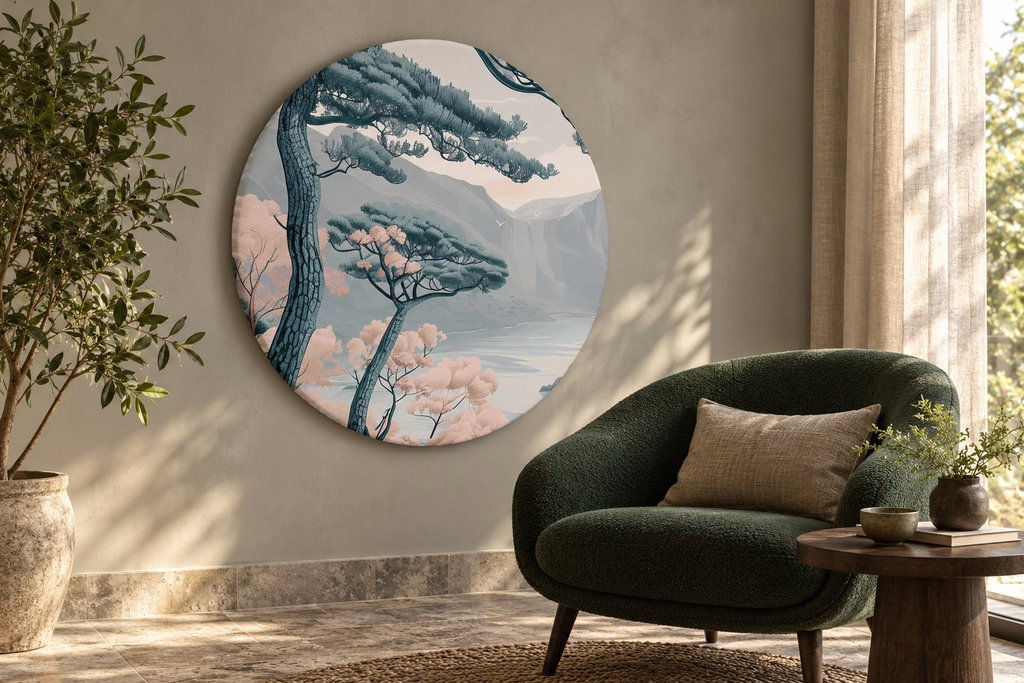
Round nature subjects may show an open view or a more enclosing scene where trees and vegetation meet the edge. The checked range includes a park beside a lake, with a large tree, reflections and mountains in the background. Different distances give several parts of the image to explore.
Consider how perspective works in that particular circular crop. A horizon through the centre feels different from a view where sky or water has more space. Choose by the actual distribution of the main landscape forms, rather than another format of a similar image.
Let the circular edge meet nature’s forms
A tree canopy or shoreline may follow the round shape, while straight trunks contrast with it. This relationship makes the shape an active part of choosing the image. Notice which details are close to the edge and which take a more central position.
Compare the image’s colours with the room’s light and furniture. A green park view can recur in textiles, while lighter sky and water areas create another relationship with the wall. Assess the full palette from the usual viewing position.
Diameter and grouping on the wall
A single round nature image can work near a seat or on a smaller clear wall area. When combining circles, a shared colour tone can connect different landscapes. Leave enough space for each circular outline to remain distinct.
Check diameter choices for the selected model. The checked round pictures come in 40, 60 and 80 centimetres, but always read availability on the product page. Try the dimensions with a paper circle and assess the group alongside windows, furniture and other wall objects.
Landscape image and absorption in one product
The absorbing core behind the print can help reduce reverberation. The landscape’s open feeling and the picture’s circular shape do not themselves imply a particular acoustic performance. Total area, placement and other room materials need to be assessed together.
Follow the model’s mounting and cleaning instructions and choose fixings for the wall. A lake or other water element in the image says nothing about moisture resistance. Let documented use guide the position while choosing the nature image for its expression.
Follow the view from foreground to background
A landscape can contain several distinct distances even within a limited image area. A nearby tree, water in the middle and mountains farther away can give the eye different reference points. Notice which matters most to you. If an open outlook is your main aim, a large dark foreground may feel different from an image dominated by sky.
Also compare how details work when the image is viewed as a small whole. The smallest product image can show the overall balance, while an enlargement helps you examine shorelines and branches. Use both views before choosing the nature image for your wall.
Choose a sense of place without guessing the location
A lake, park or mountain can suggest a familiar setting without showing a particular place you recognise. If the location’s identity matters, it needs to be stated in the product information. Otherwise, choose by visible qualities: open or dense, light or dark, still water or more distinct movement.
This makes it easier to compare nature images through what is actually offered. An image can provide the right colour and depth without representing a particular trip or geographical point. You can then choose it as part of the interior, supported by the documented subject description.
Let straight lines and a round shape work together
In a room with rectangular windows, cupboards and tables, a circle can give the wall a different rhythm. Look at how it meets the nearest lines. Its position may start from a piece of furniture’s centre, but should also account for the landscape’s focal point sitting to one side of the circle’s centre.
Try both the outer shape and the image’s intended visual weight before hanging. Two round subjects of equal size can feel different in weight through their colours and distribution of detail. Assess the gaps visually and give each nature picture a clear space of its own.