




Stairs that guide the eye through the picture
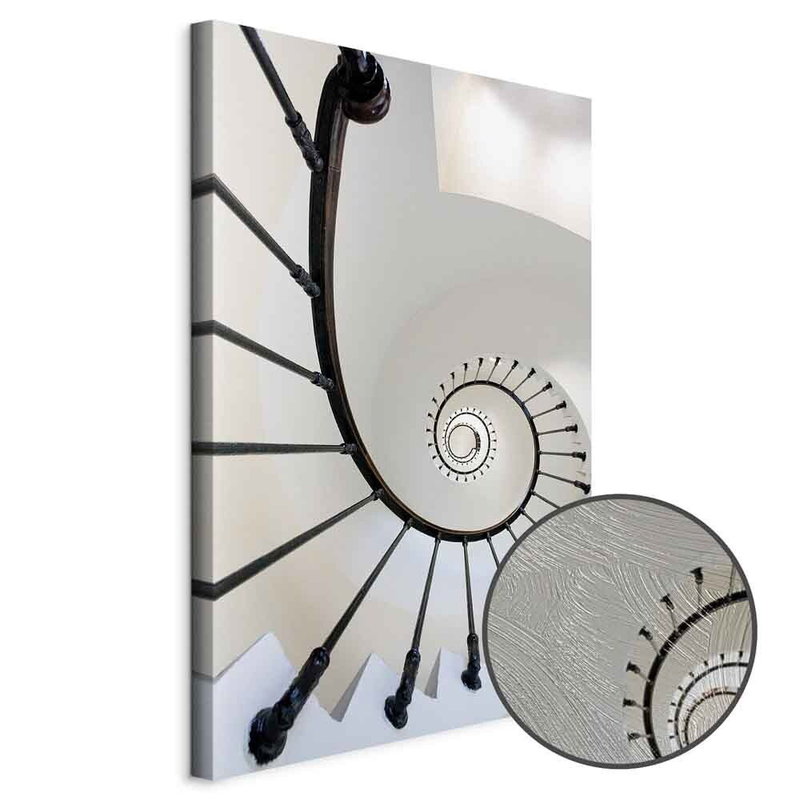
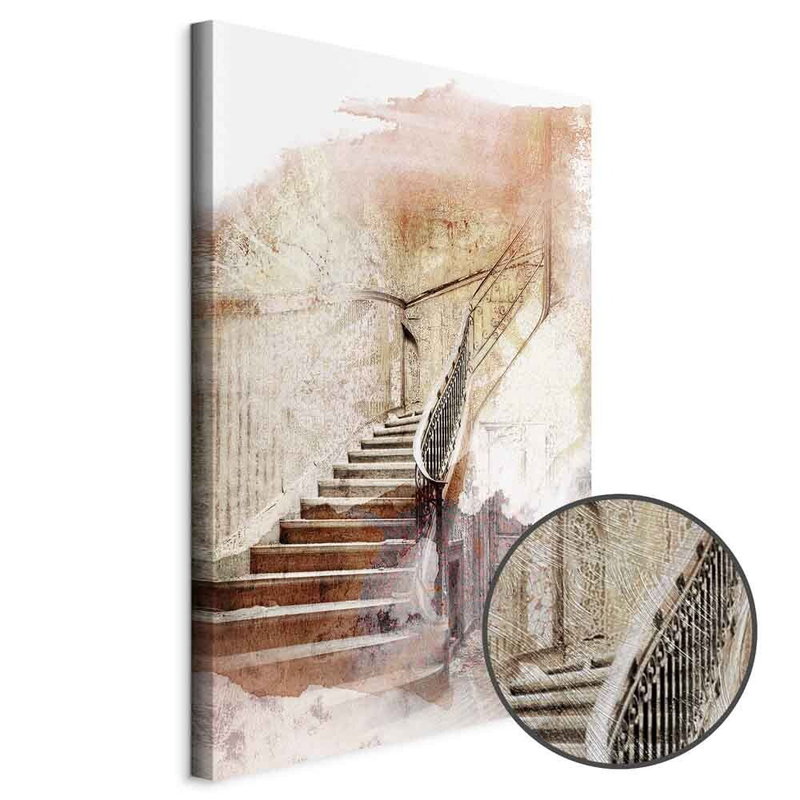
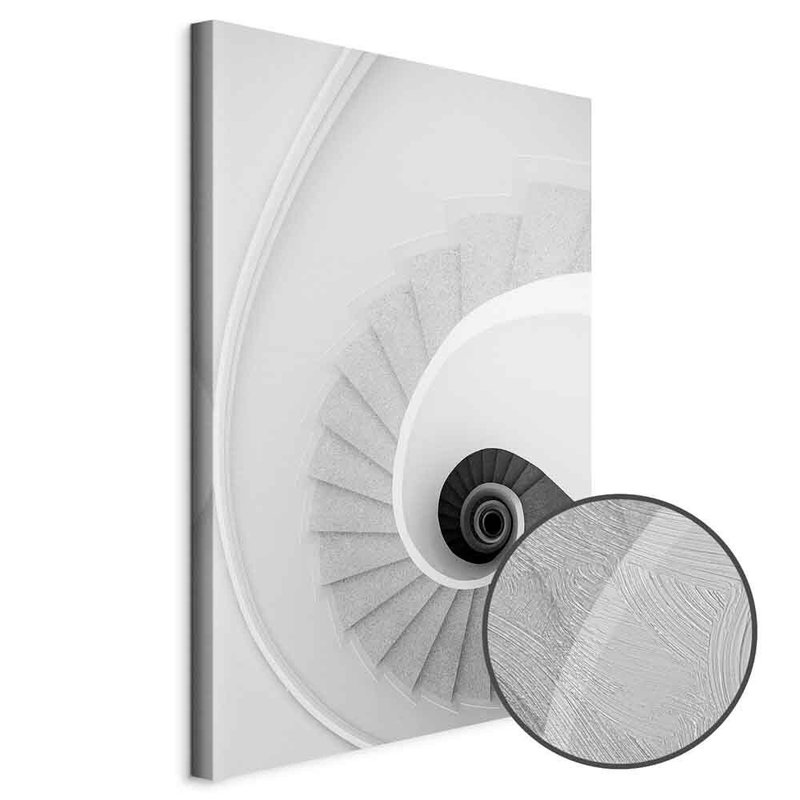
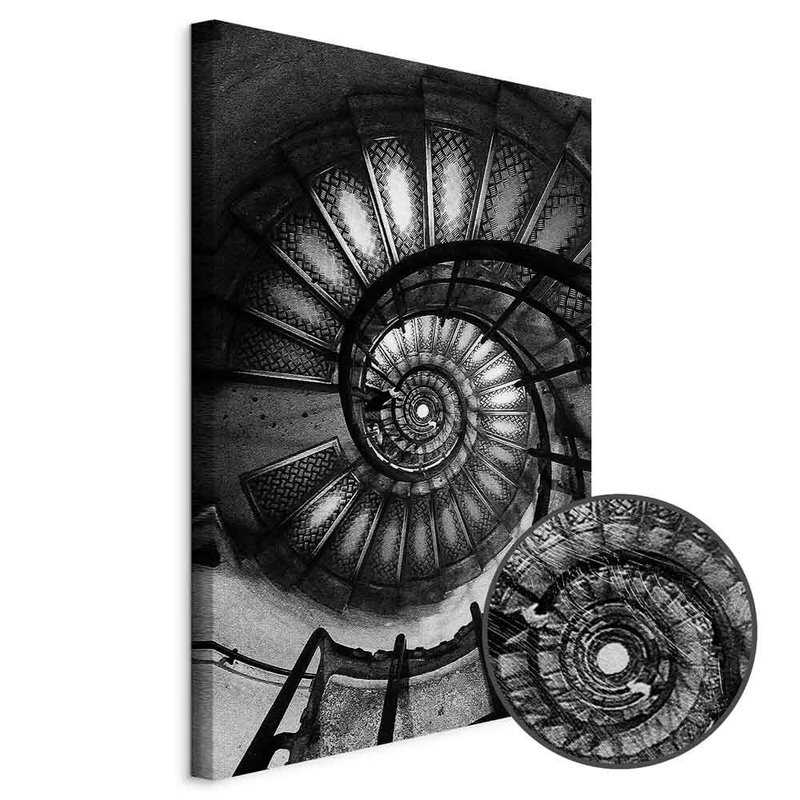
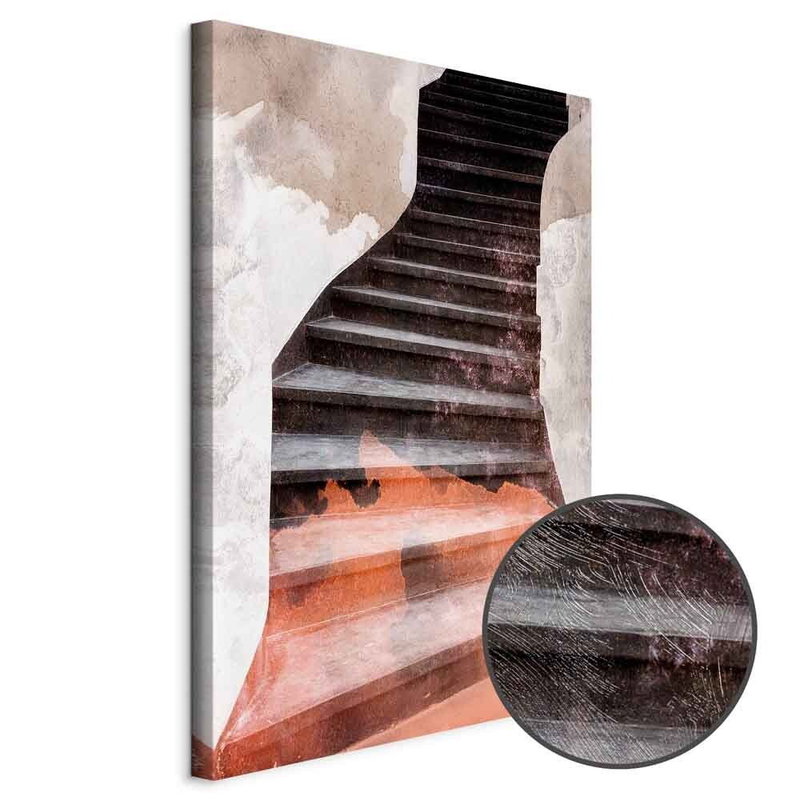
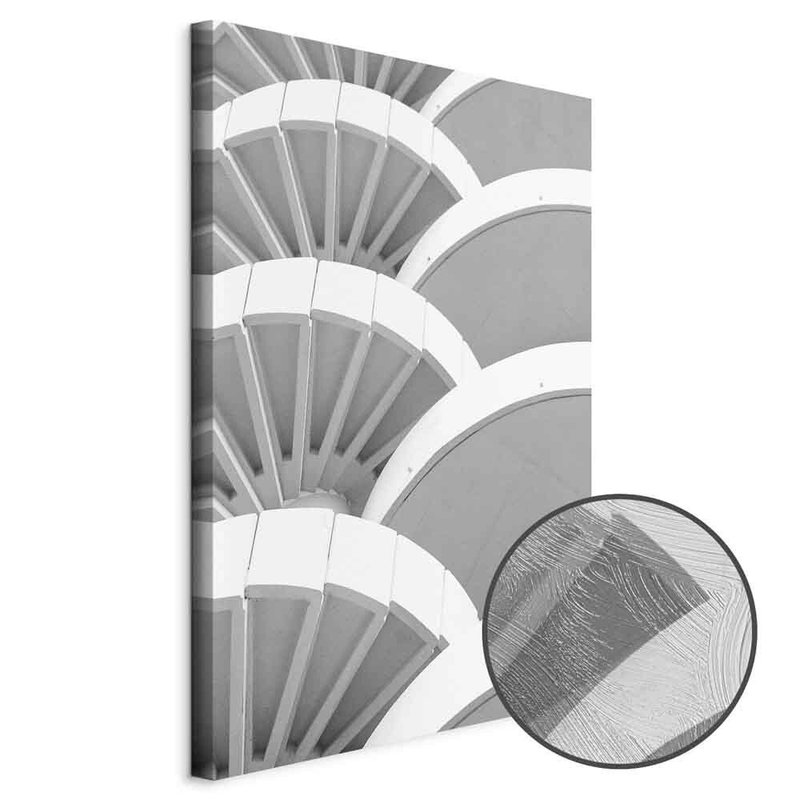
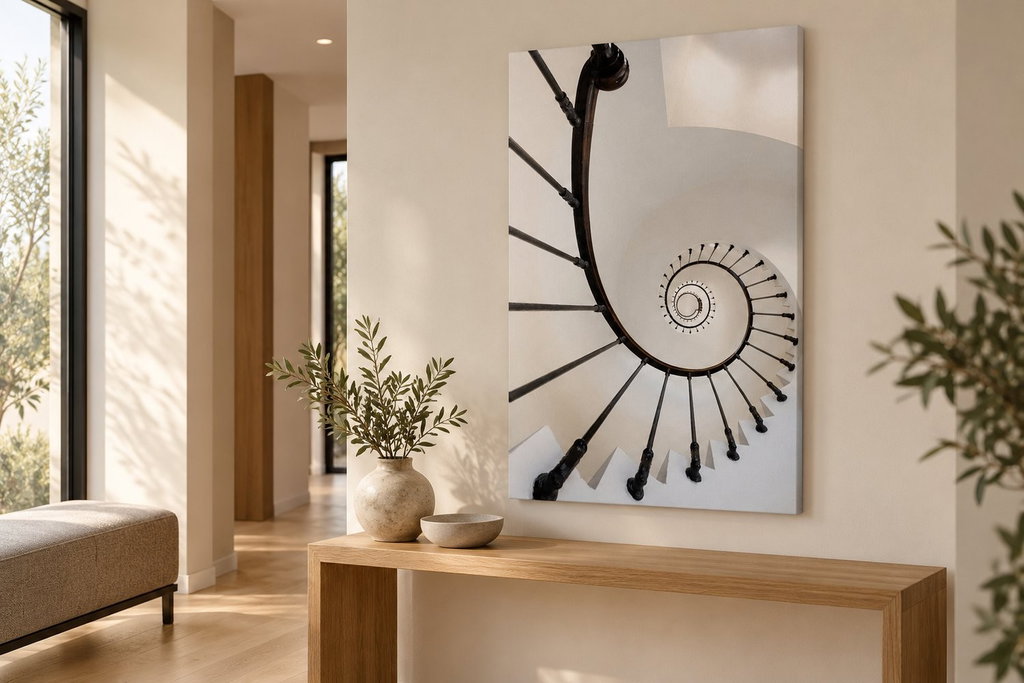
Spiral stairs appear in several different compositions. Sometimes you look down towards a small centre; elsewhere the steps rise along a worn wall. Railings, treads and light create direction without showing the whole building. Compare the density of the spiral and the amount of space around it.
A dark railing against white plaster creates strong contrast, while warm-toned stairs can connect with wood and textiles. Consider the usual viewing distance. Small details may need a larger format to remain clear from a seat farther away.
Façades, columns and constructed patterns
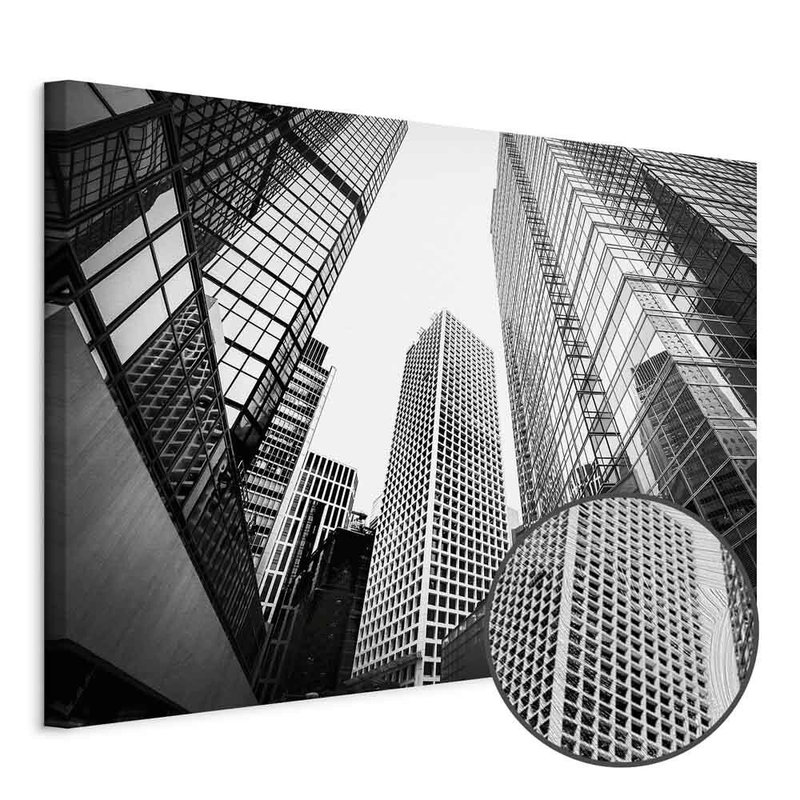
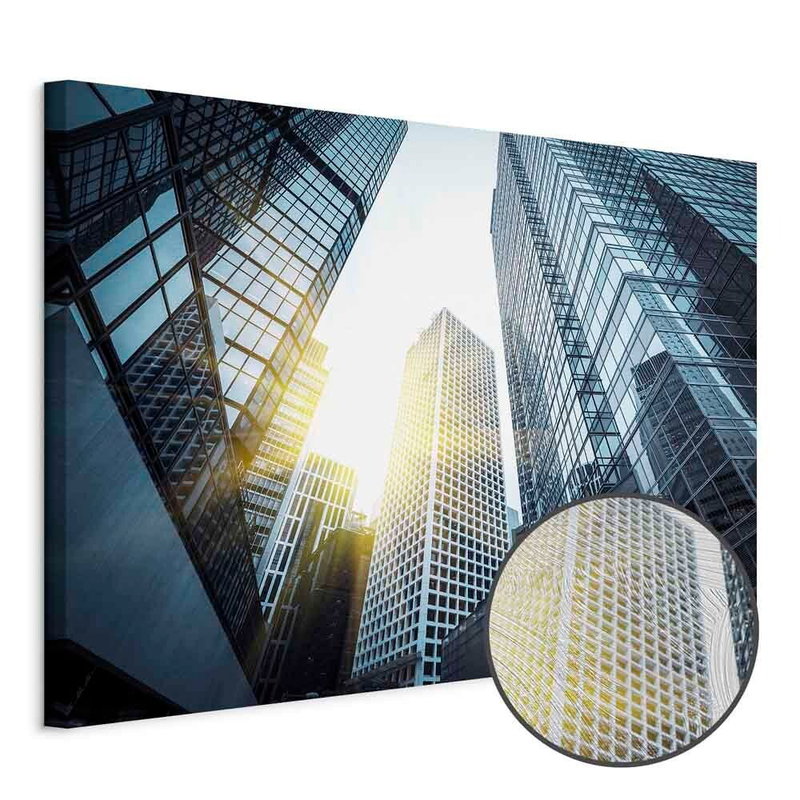
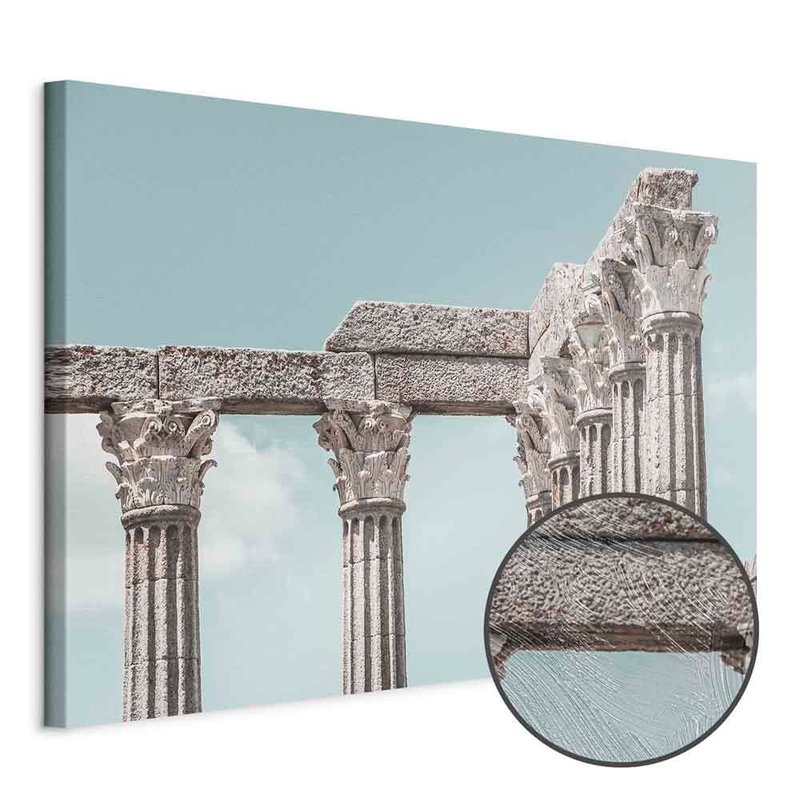
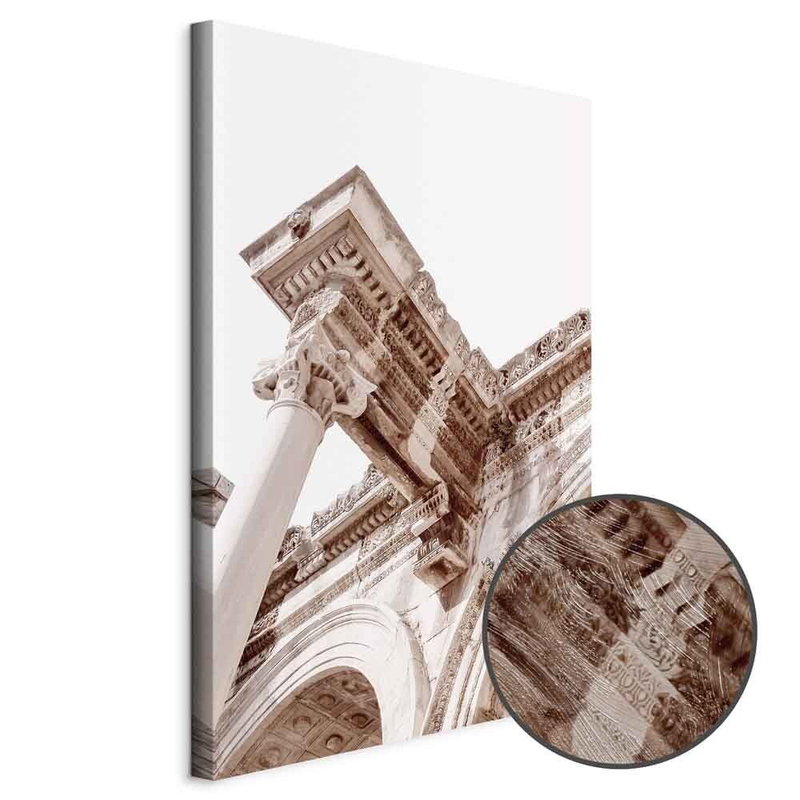
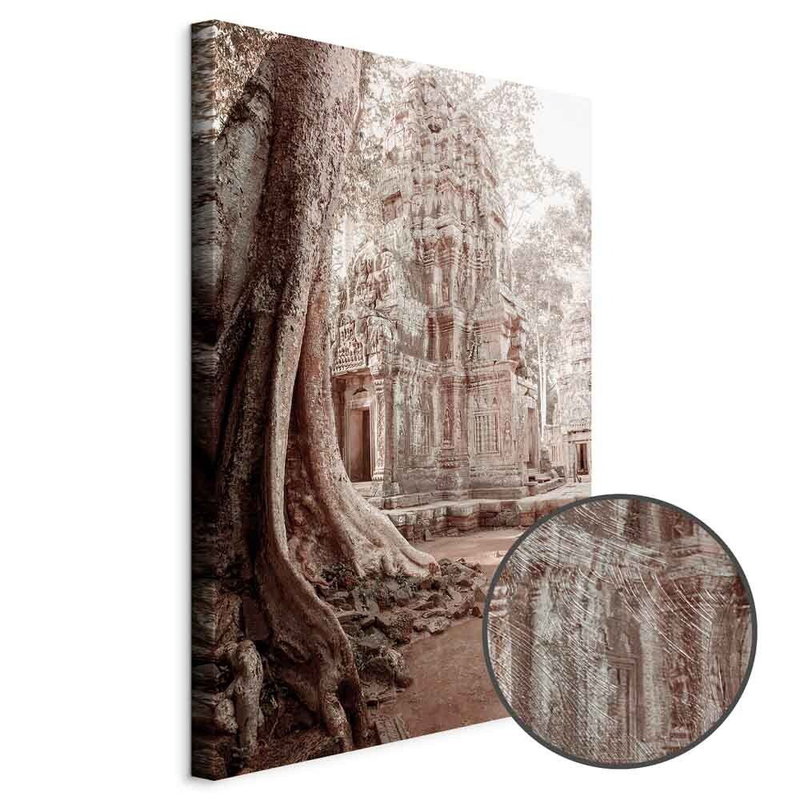
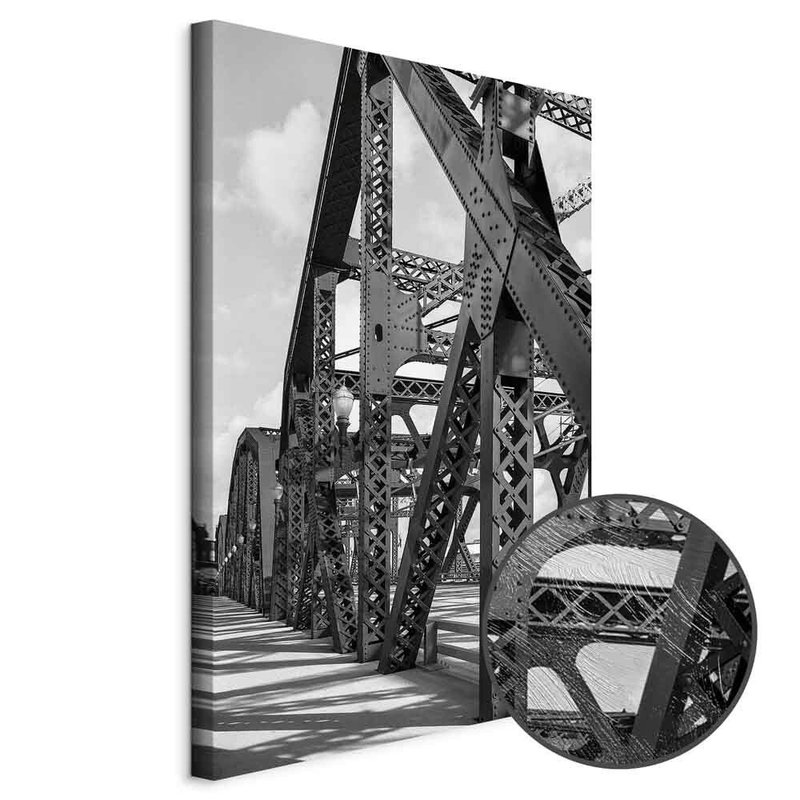
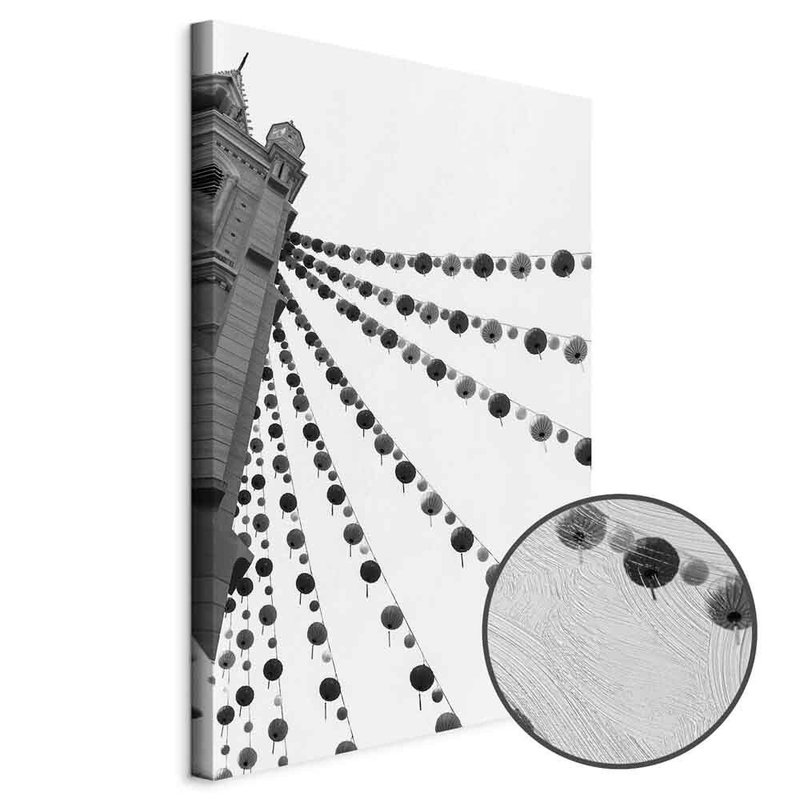
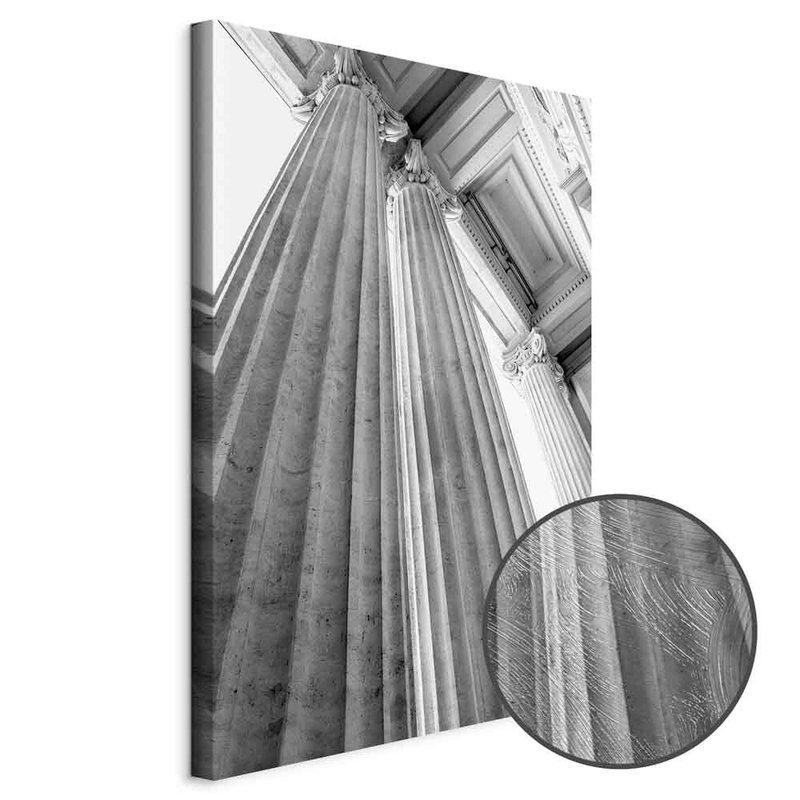
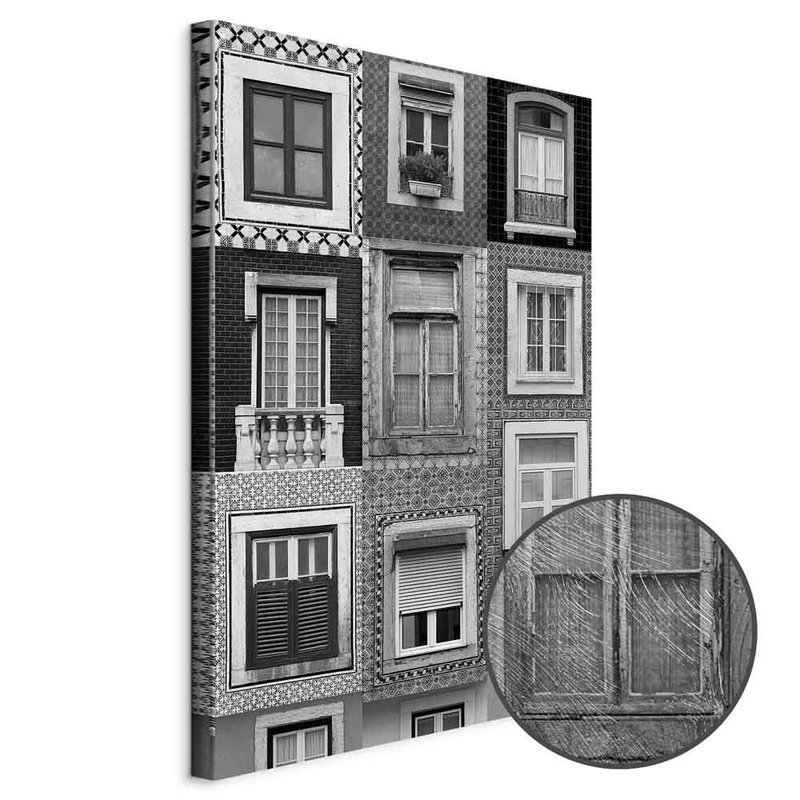
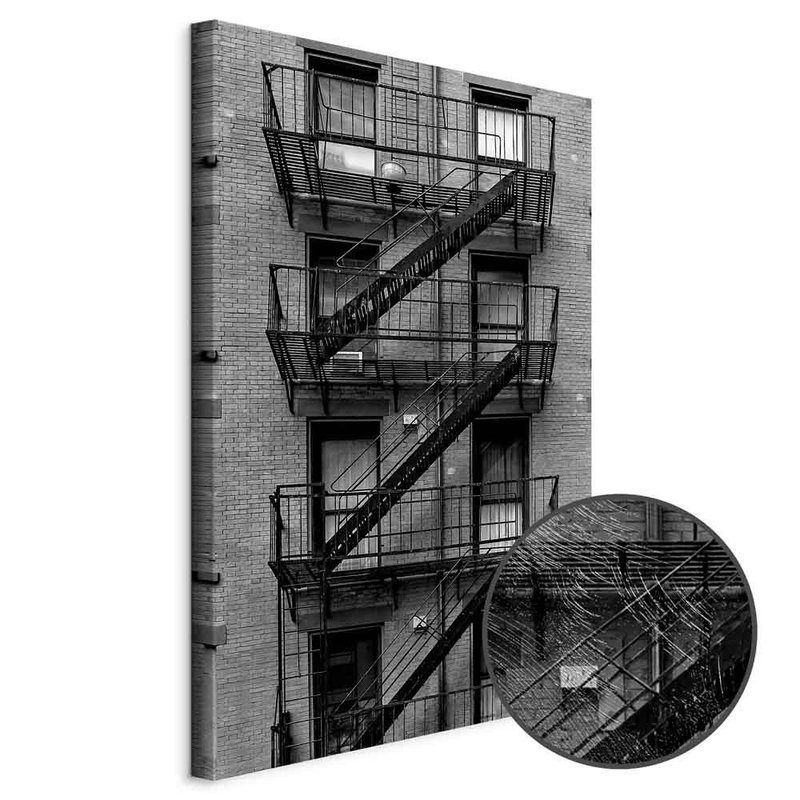
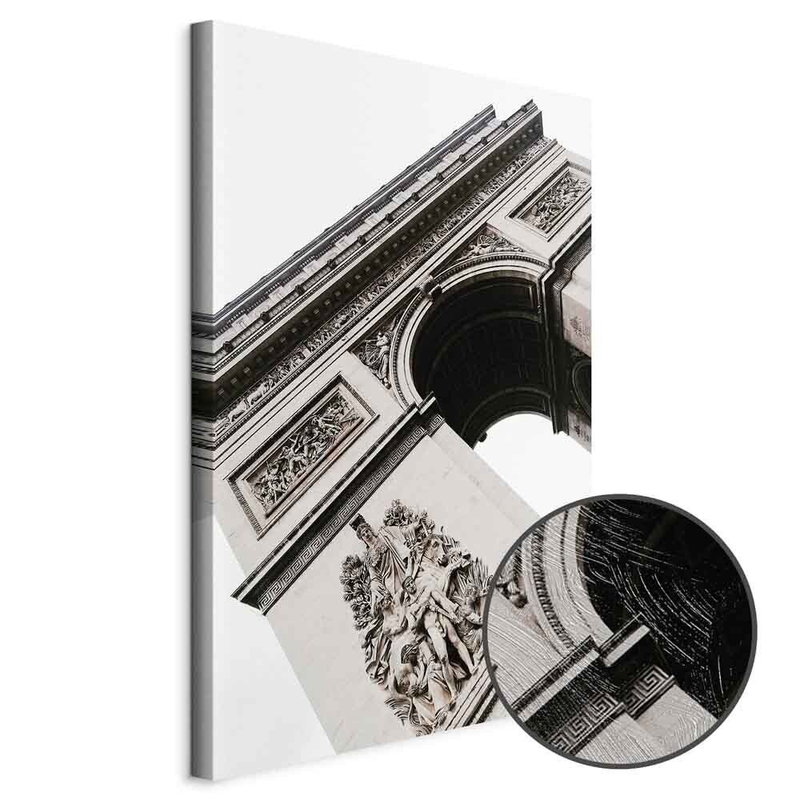
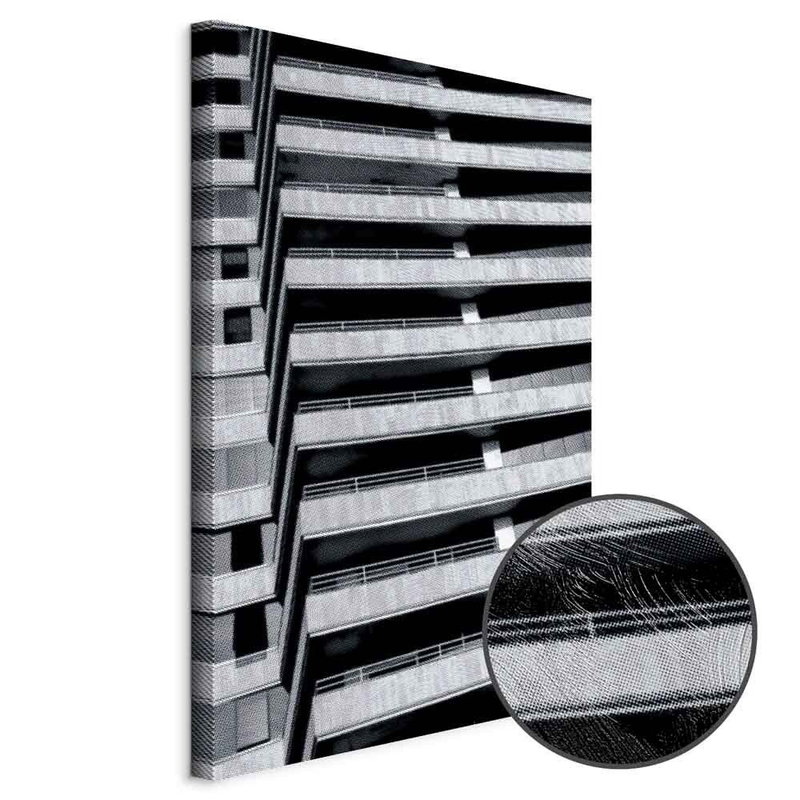
The selection also includes large glass façades, repeated windows, stone columns and steel beams. Some pictures use dense repetition; others concentrate on a single corner or decorated opening. They can relate geometrically to furniture without giving the wall the same expression as a city panorama.
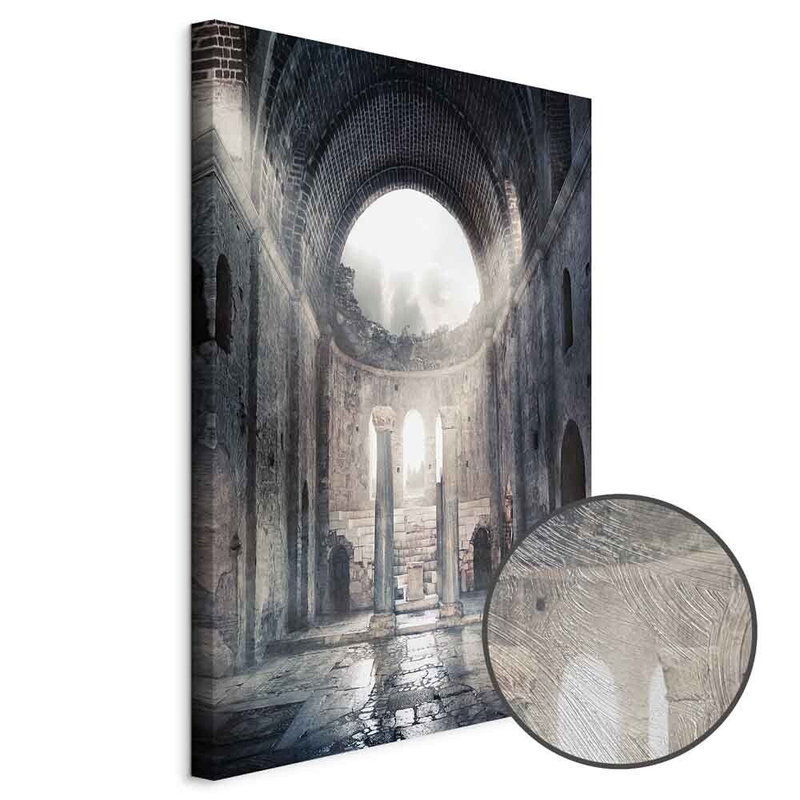
Compare the actual images when considering materials. Stone, metal and plaster are depicted subjects, not the materials of the picture itself. A print showing carved ornament does not become a real stone relief. Colour treatment and perspective also affect how heavy or airy the architecture appears.
A printed motif with a worked premium surface
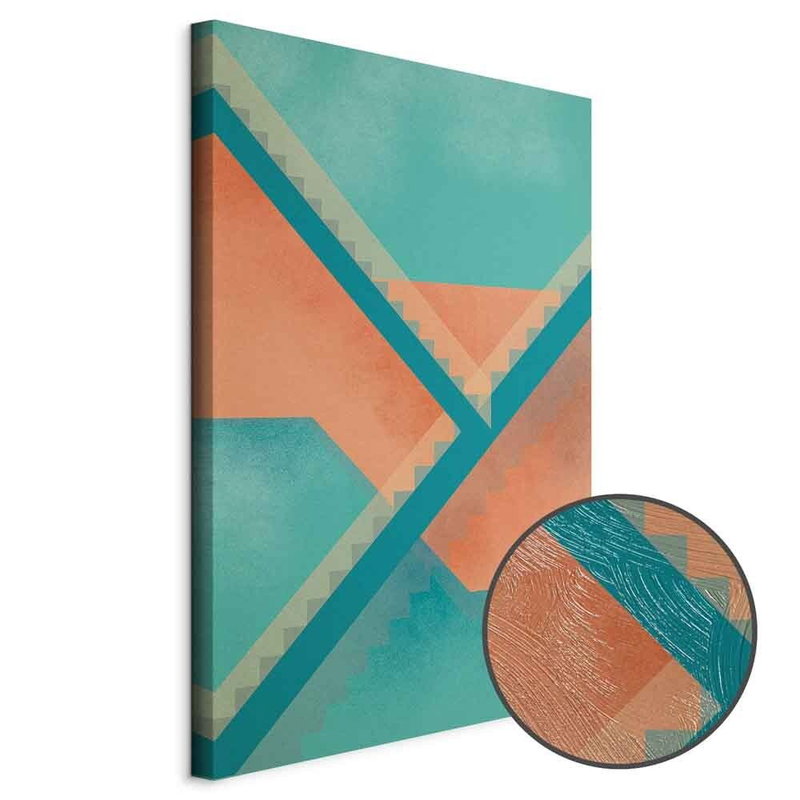
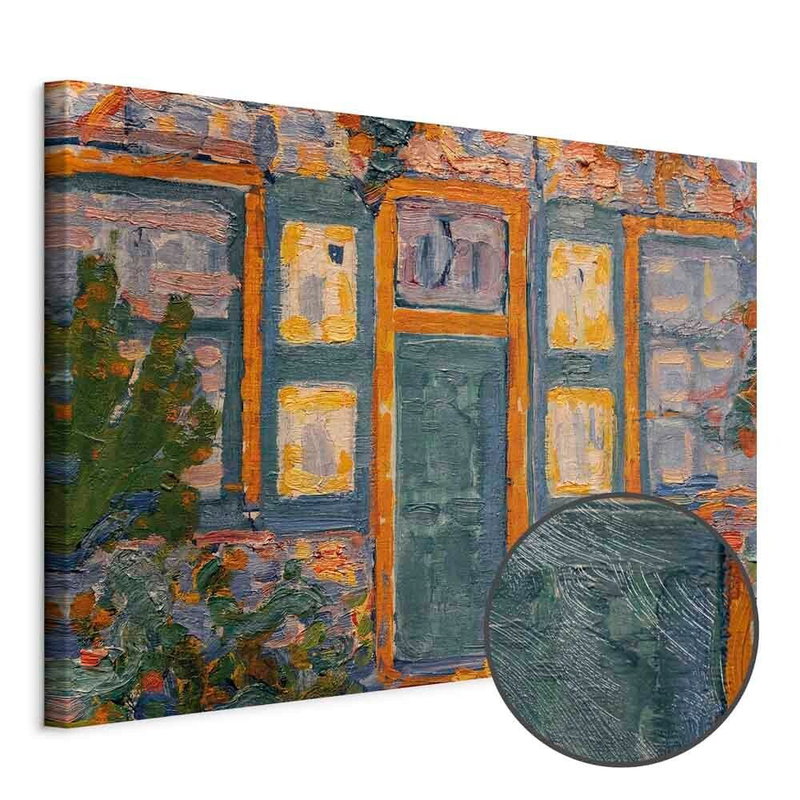
In the premium collection, clear gel is applied by hand over the printed motif. This gives the canvas physical texture, while the building’s lines remain part of the image. Product close-ups help distinguish depicted materials from the texture of the hand-worked surface.
Check the size and format on the individual product page. A tall stairwell, a broad row of columns and a squarer façade need different wall spaces. The room photograph suggests a placement; use the stated product dimensions when planning distances to furniture and other pictures.
Connect the picture’s lines with the room
You can echo one of the image’s directions in the interior: a low console below tall stairs, for example, or straight shelves beside a curved railing. Clear wall space around the canvas makes the perspective easier to read. Avoid having too many small linear patterns compete on the same wall.
The absorbent construction can help reduce reverberation indoors. Its contribution depends on area, placement and other room materials, rather than whether the print shows stairs or a façade. Follow the product’s mounting and care instructions for its hand-worked gel surface.
Choose depth or a flatter pattern
An architectural detail can read as a space to look into or as a pattern on the wall. Follow the lines in the main image and see where they meet. A strong perspective centre draws the eye to a particular point, while repeated windows or columns can spread attention across the whole image.
Choose for the proposed position. Behind a desk, a simple rhythmic design may be easier to coordinate with objects than a crop containing many small focal points. This concerns the picture’s expression and the overall interior, not a guaranteed effect on concentration.
Light and shadow shape the building element
Look at how bright openings and dark areas are distributed. A small light area in a stairwell can be the picture’s most important point despite taking up little space. Compare more than the dominant colour: the same grey palette can create very different impressions depending on contrast and framing.
The room’s actual lighting comes into play once the picture is installed. Assess windows, lamps and how the design will be seen throughout the day. Use product photographs to inform your choice, but do not expect the hand-worked surface to produce exactly the same light effect on every wall.
Define an architectural picture group
Several detail designs can form a coherent group without showing the same building. Choose a shared tone or recurring direction, for example, and allow one picture to be more detailed. Make sure the group remains readable from the room’s normal viewing positions.
Check each product’s format and panel count before deciding on the group’s outer edges. A divided picture is a composition to plan as a whole; a separate canvas beside it should not be mistaken for another part of that product. Work from the product instructions and available wall space.