



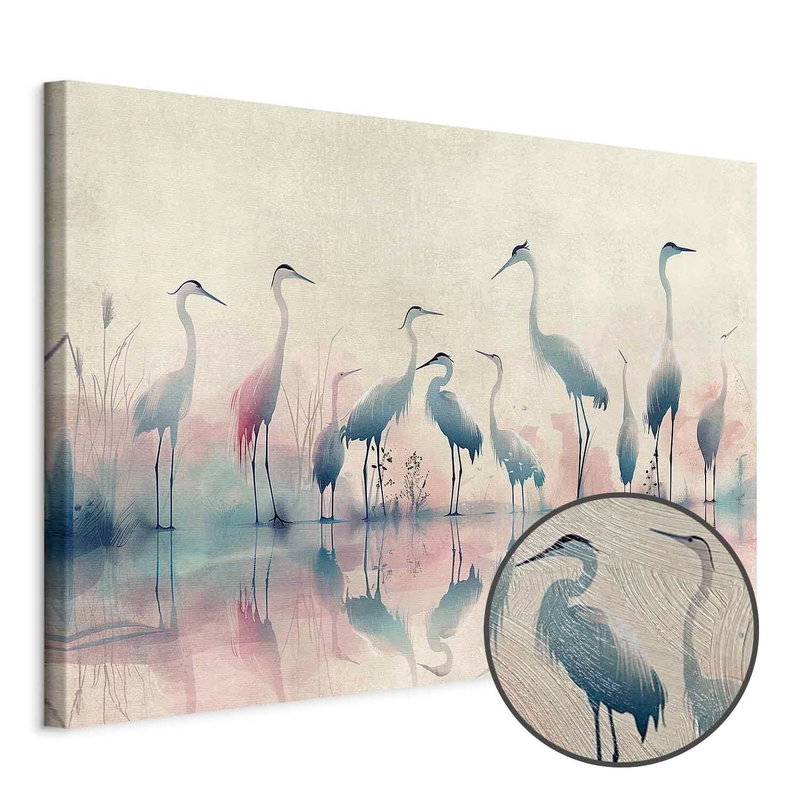
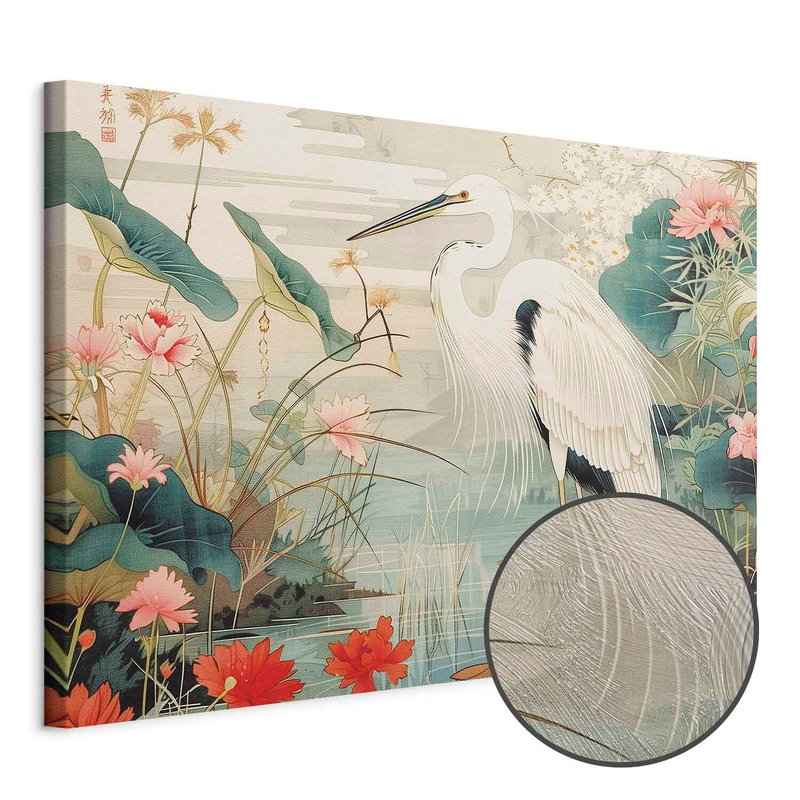
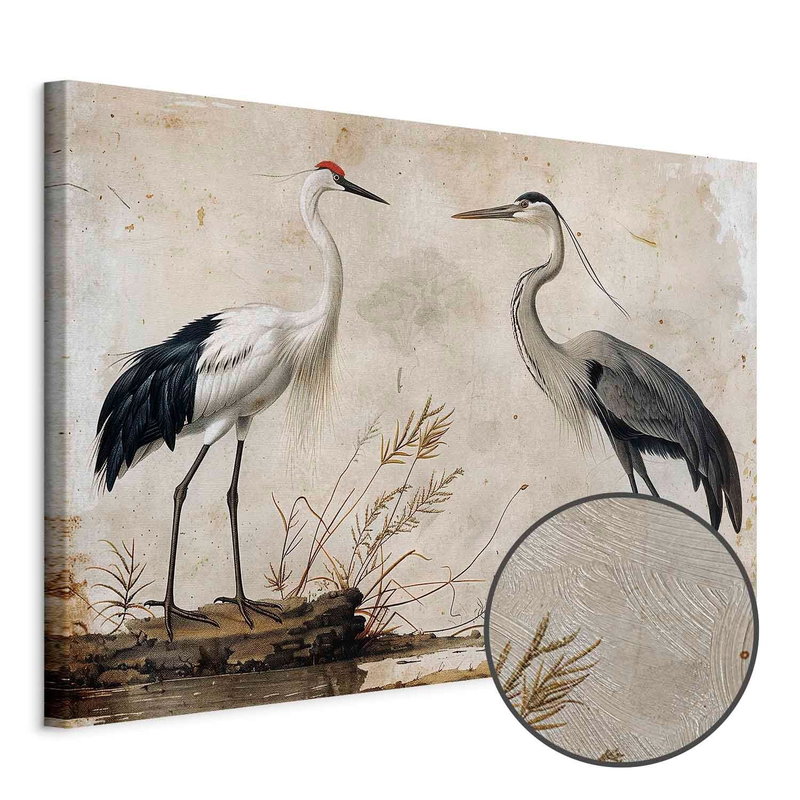
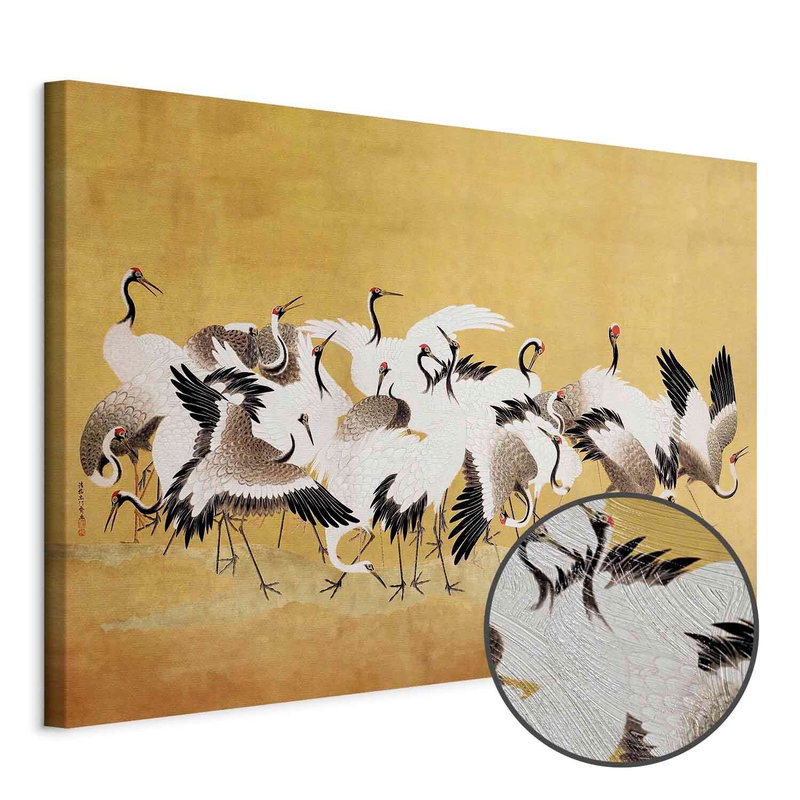

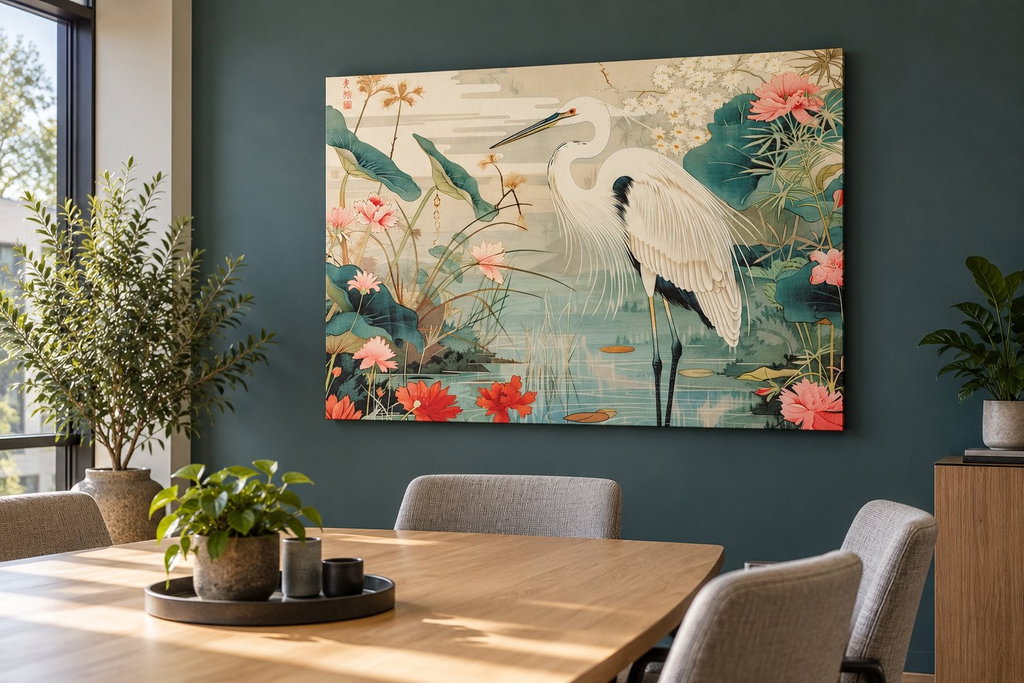
Birds in movement or at rest
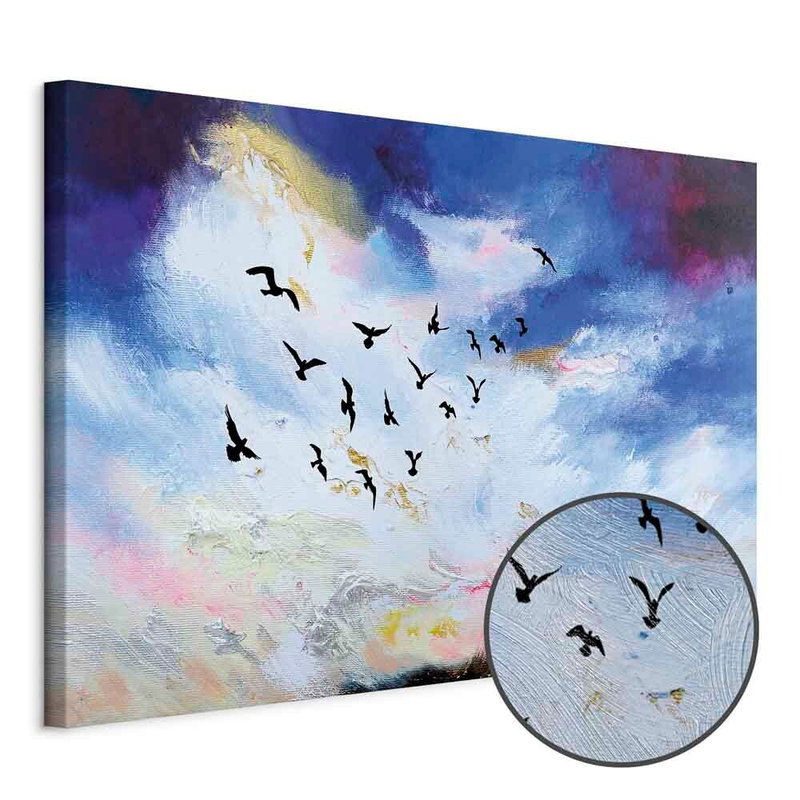
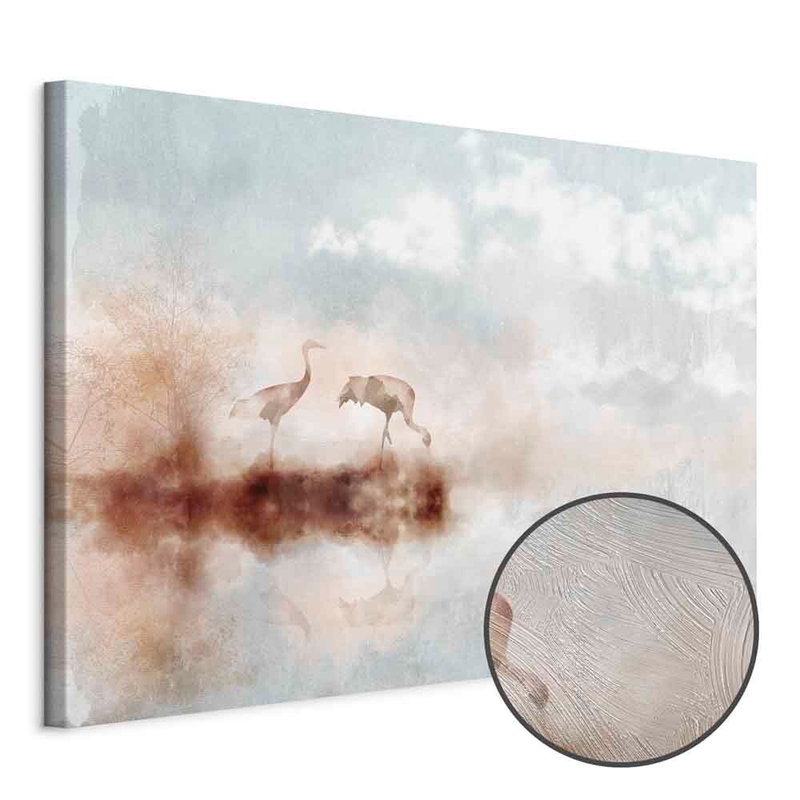
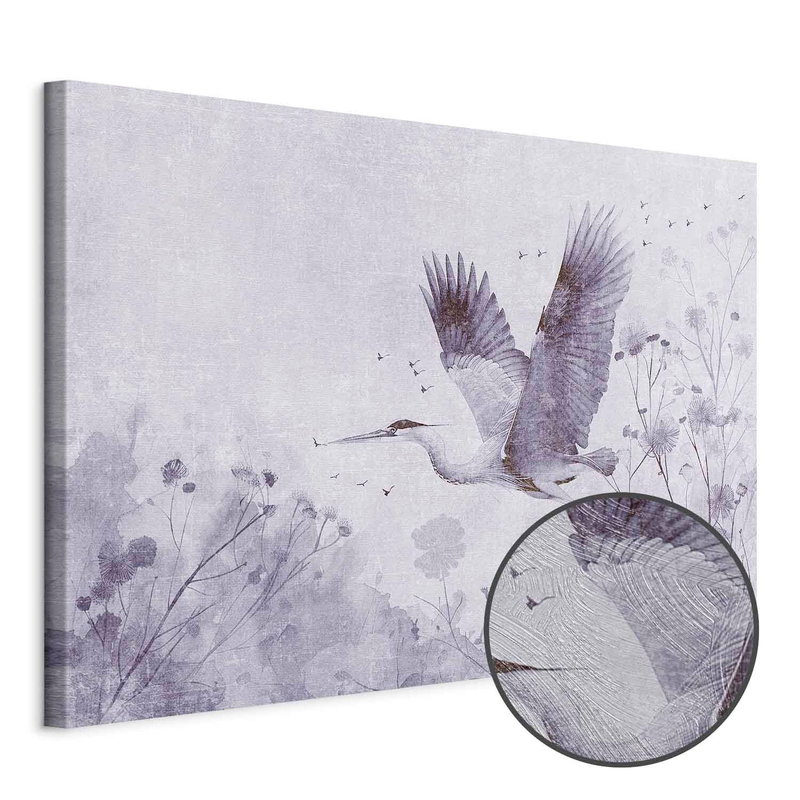
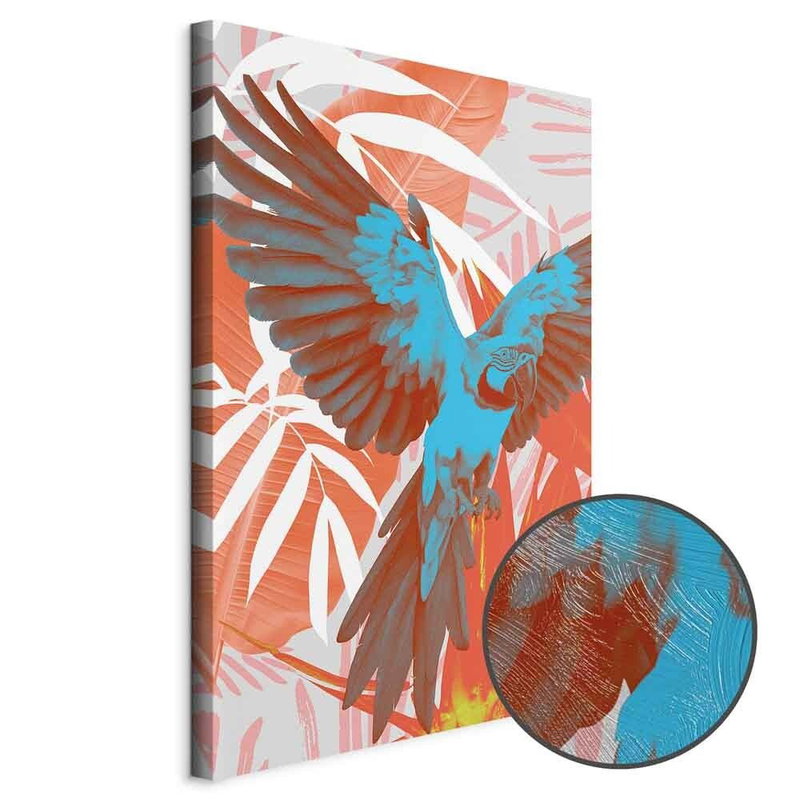
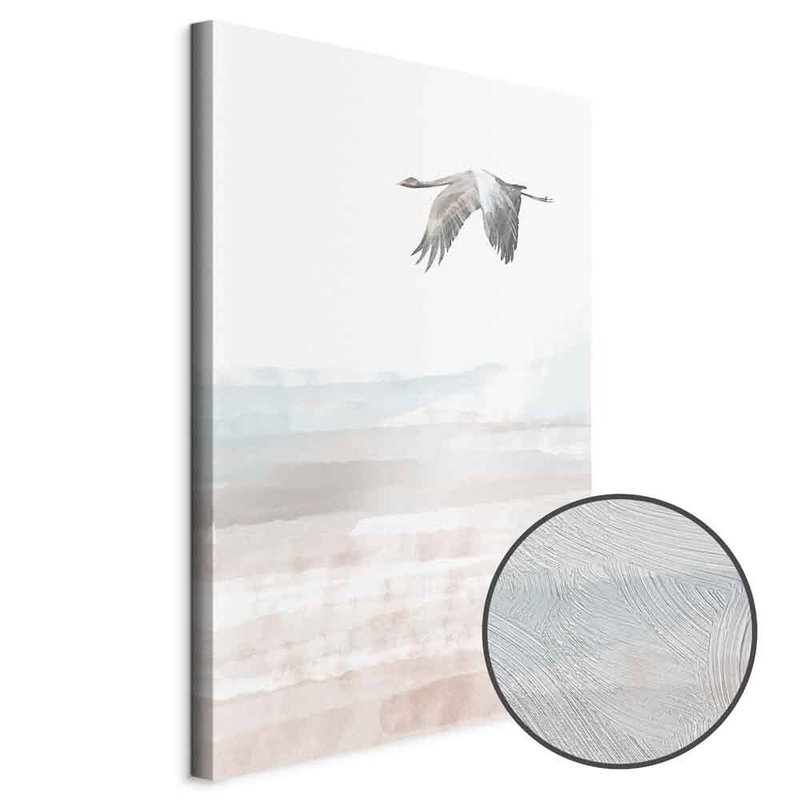
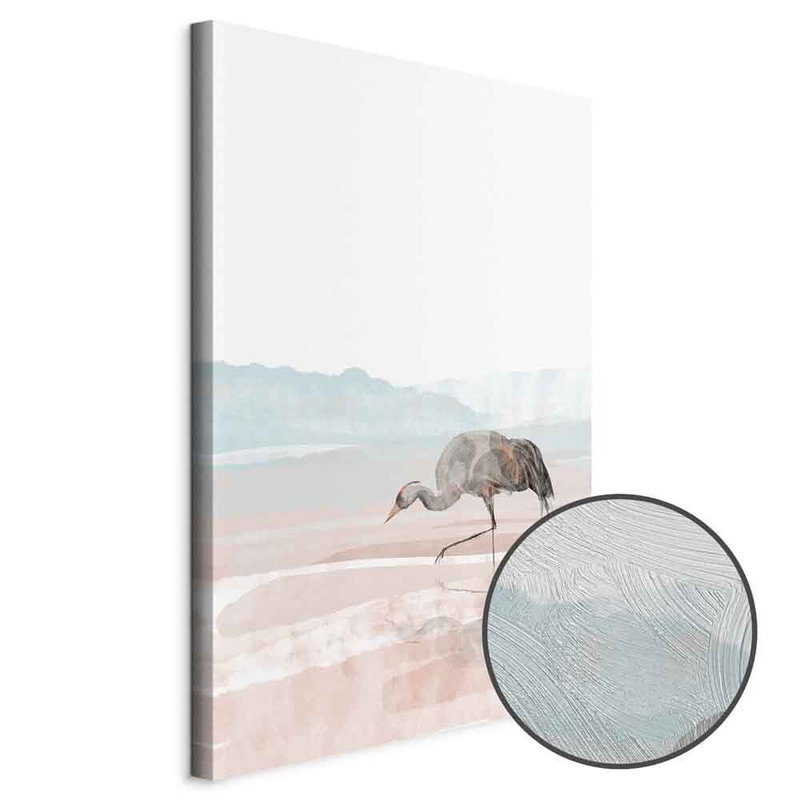
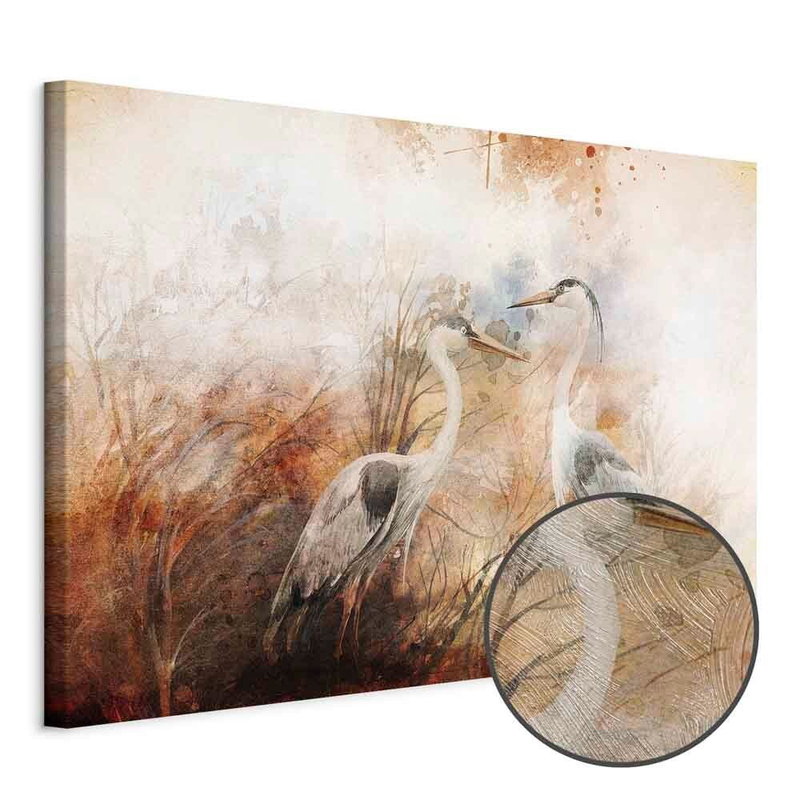
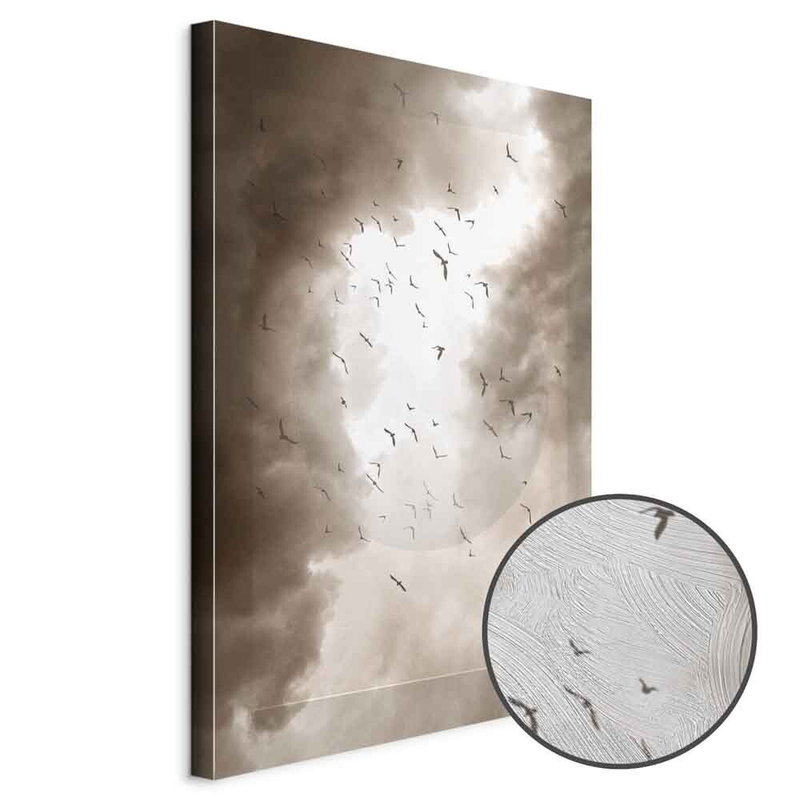
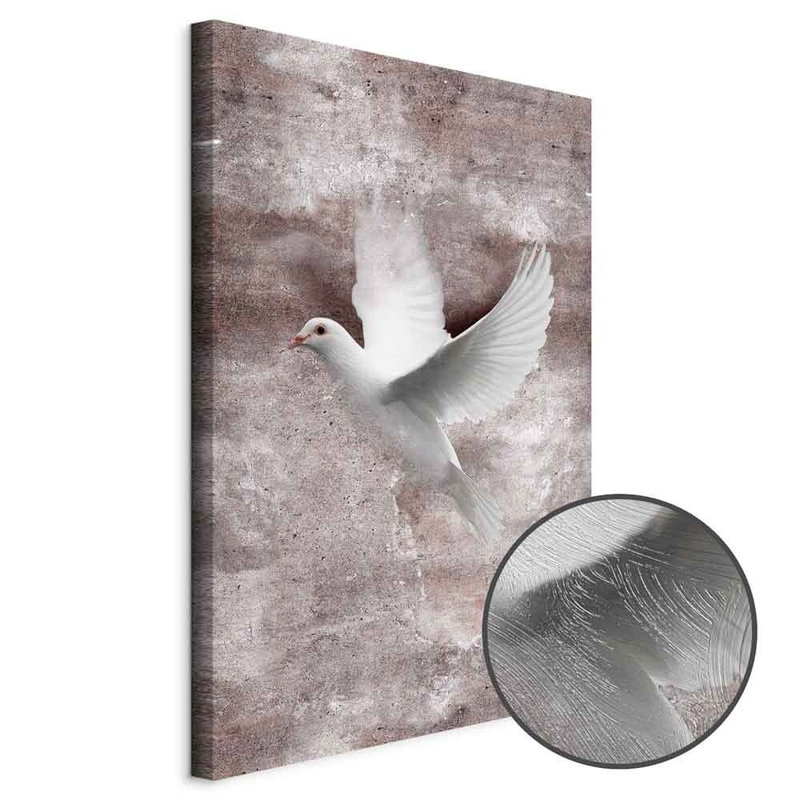
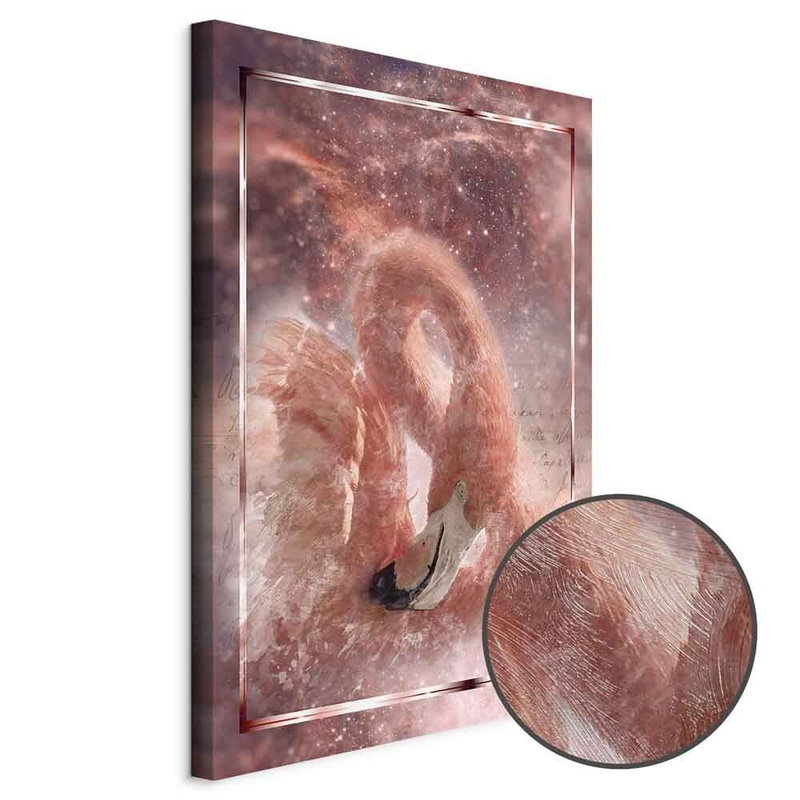
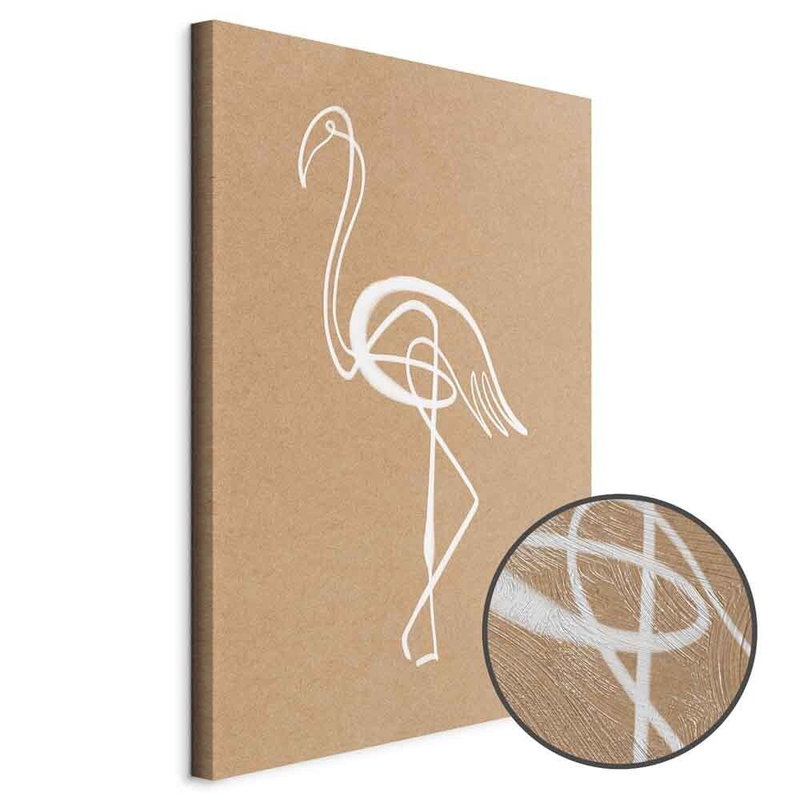
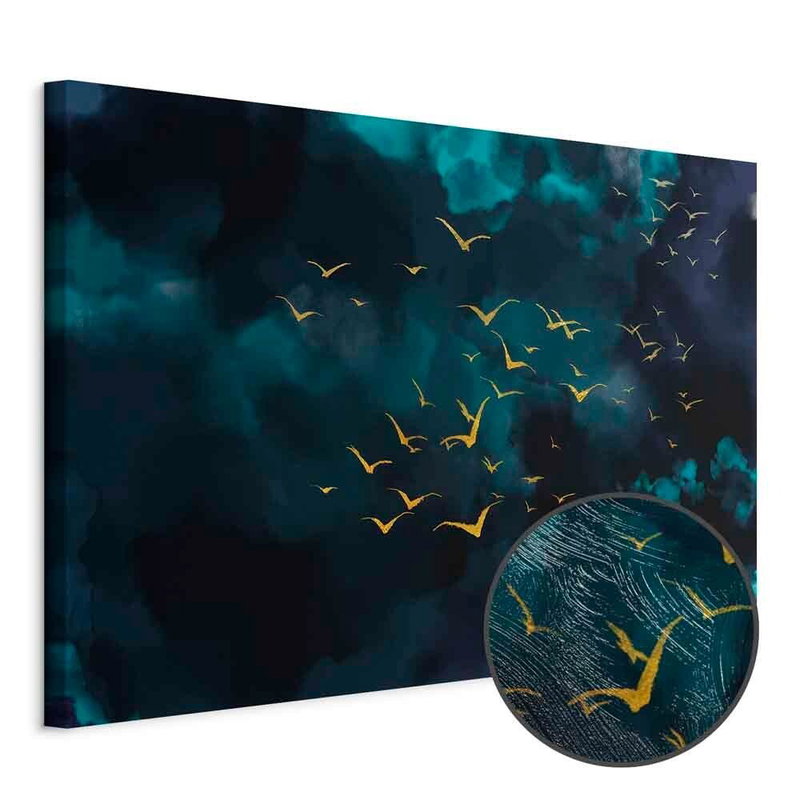
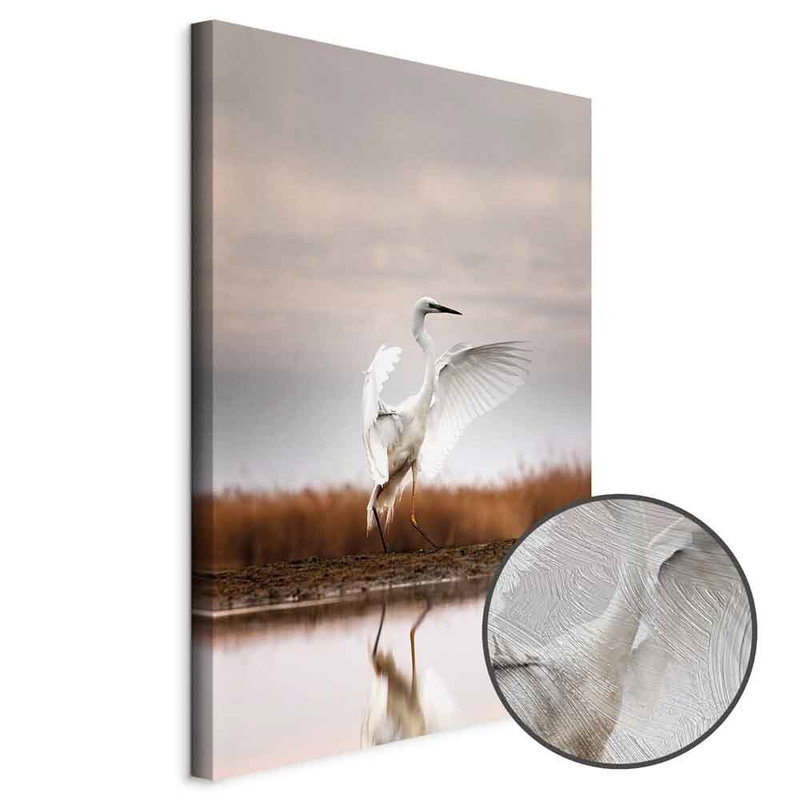
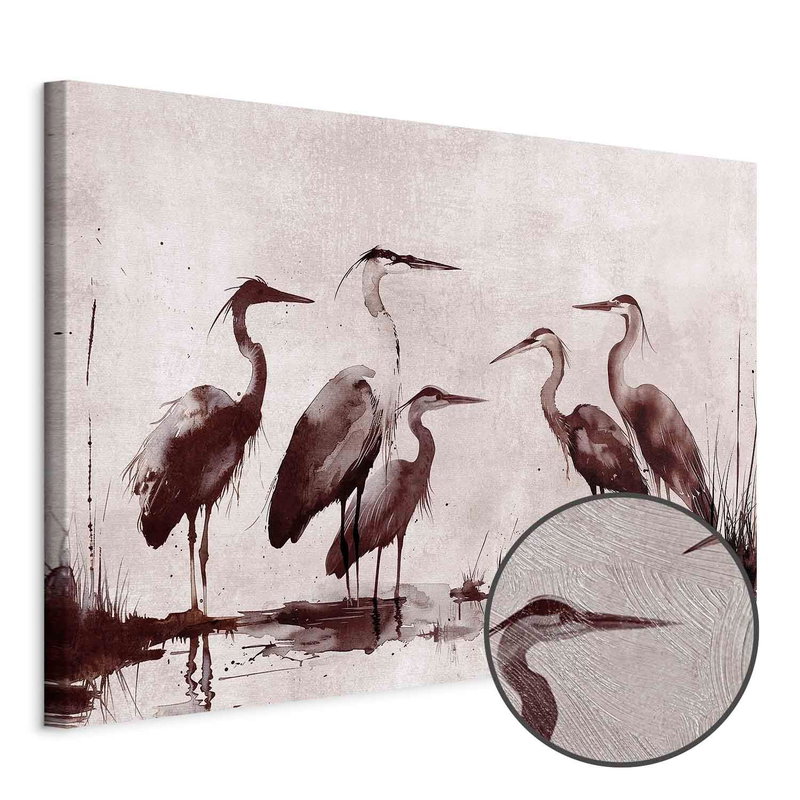
Open wings and a flying flock give the image direction. A standing bird with a curved neck can instead create a calm, clear figure against water or plants. Consider how body and gaze lead through the composition and how the movement relates to doors and furniture. A bird image need not be a close portrait: a gathered flock can also be its central subject.
The bird and its surroundings
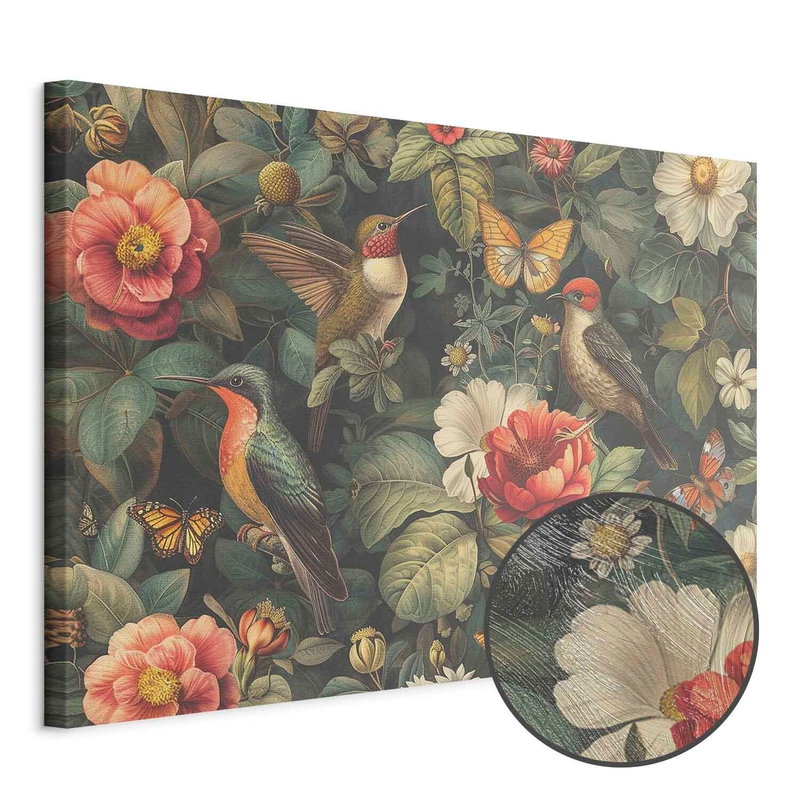
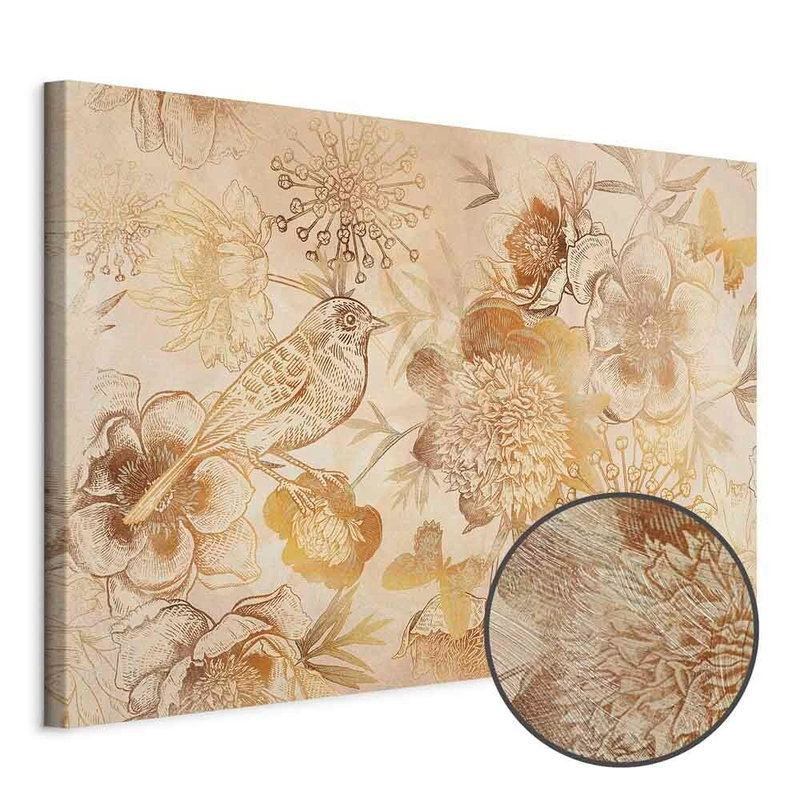
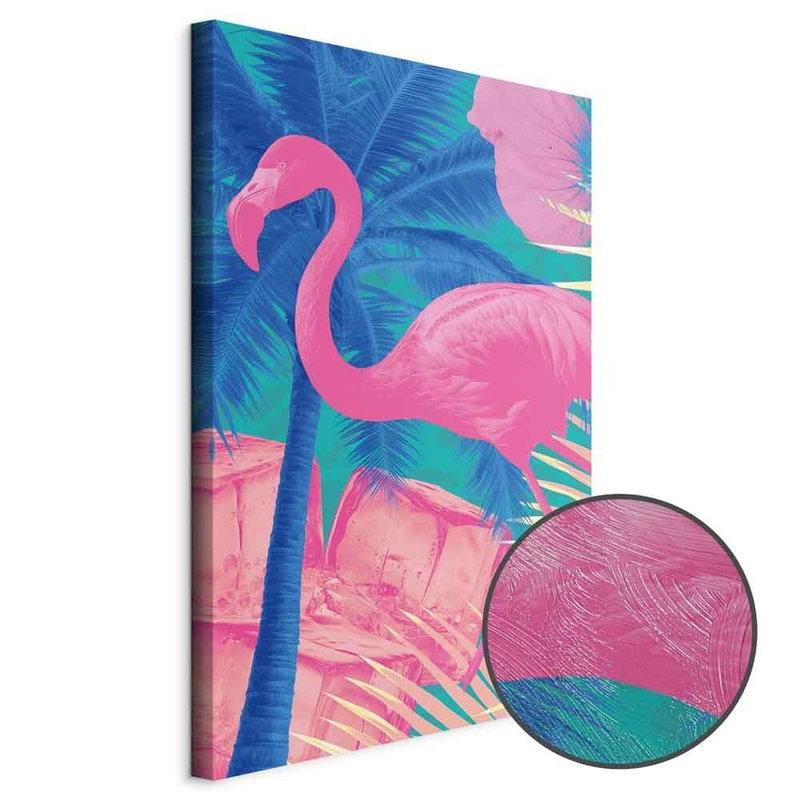
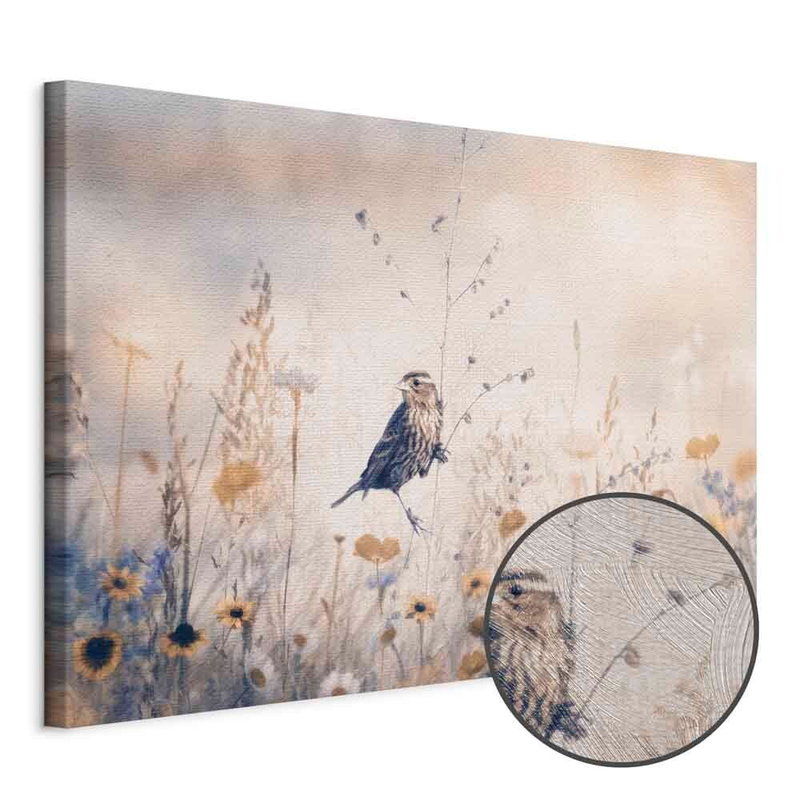
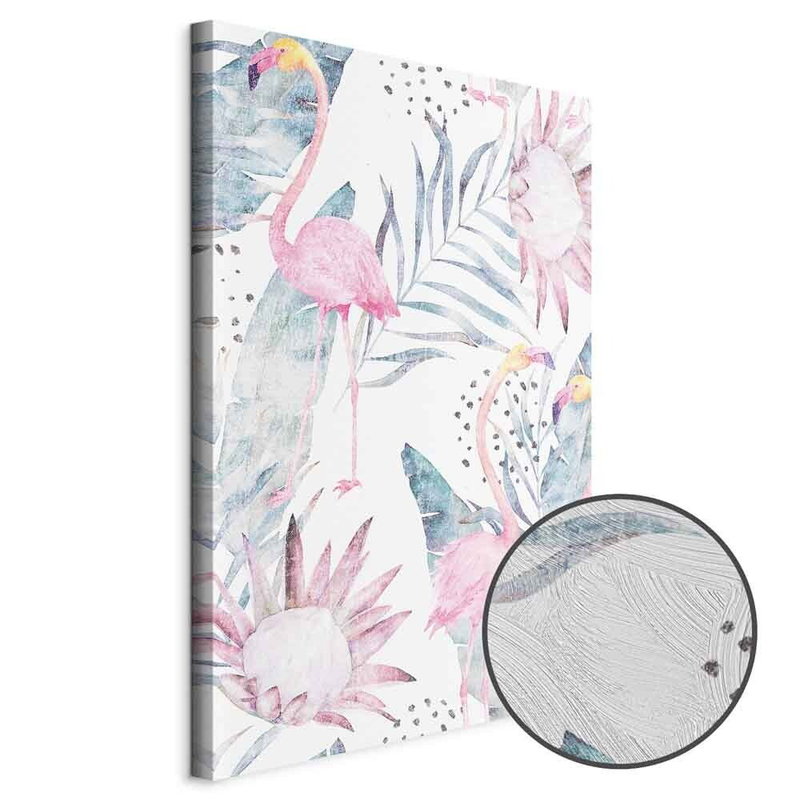
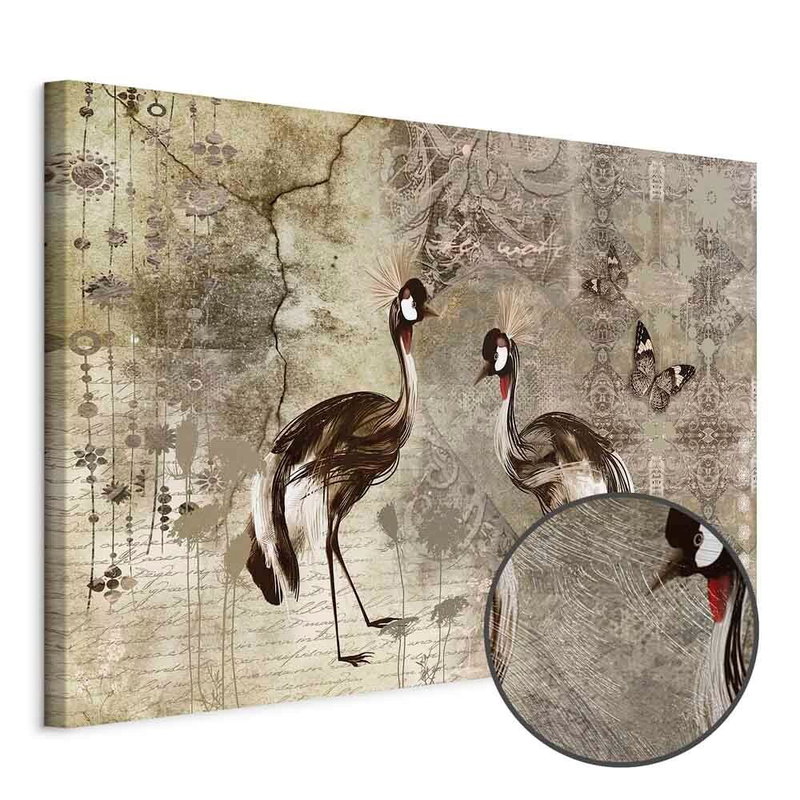
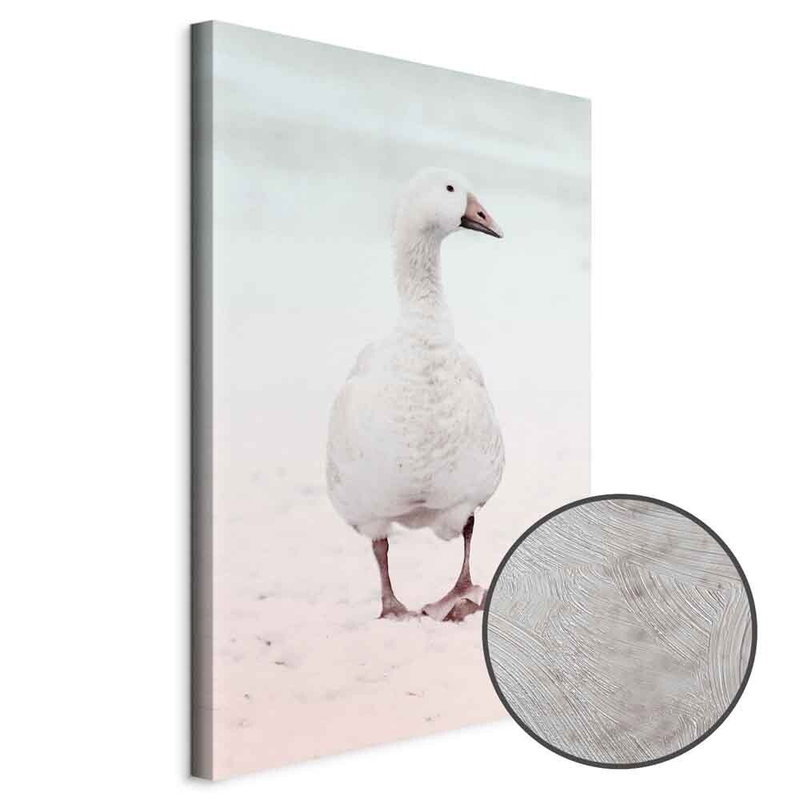
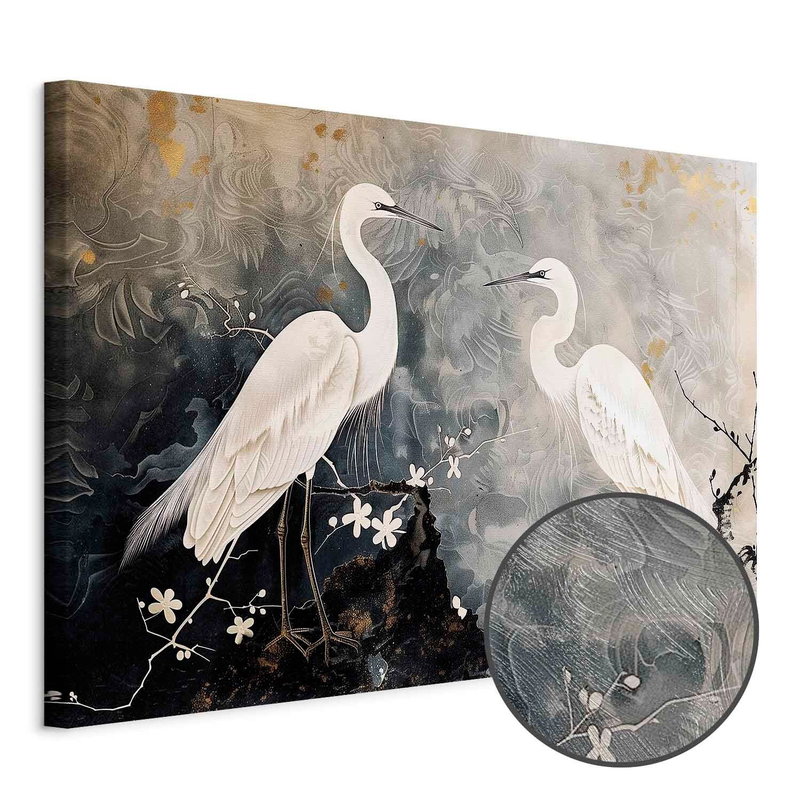
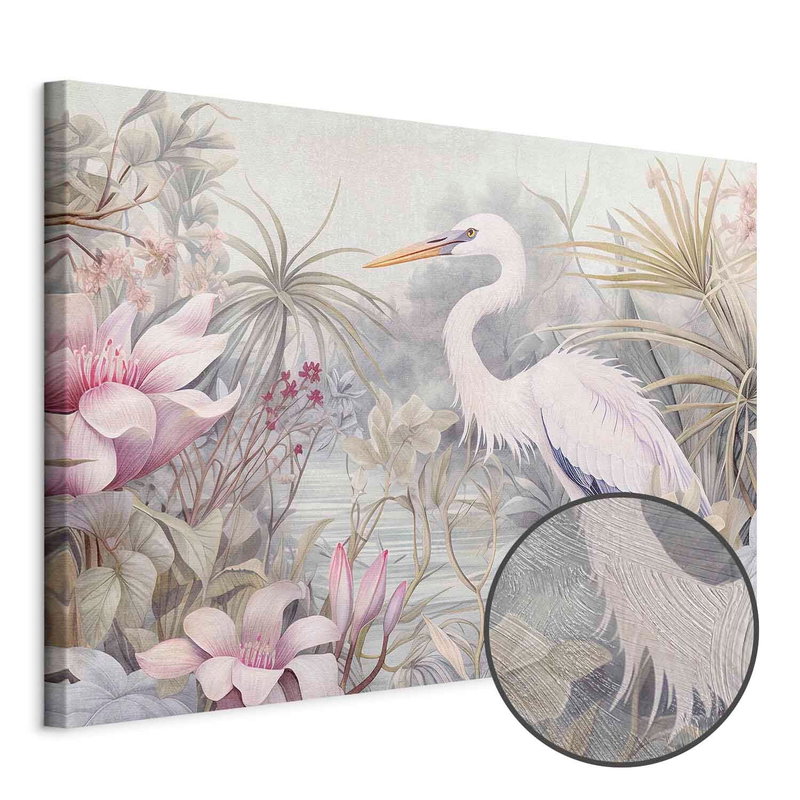
Several images combine prominent birds with pond plants, flowers or decorative stems. The setting is then an important part of the whole. Other pictures leave larger pale areas around a bird or slender branch. Choose a dense botanical composition or a more open effect according to what the wall already contains and how much detail you want to introduce.
Work with contrast and colour
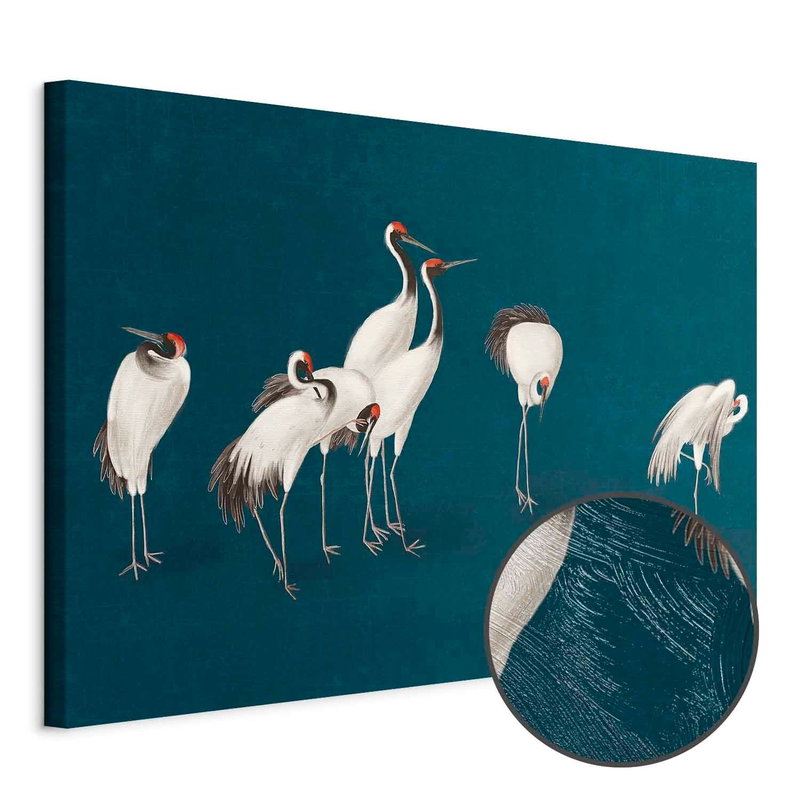
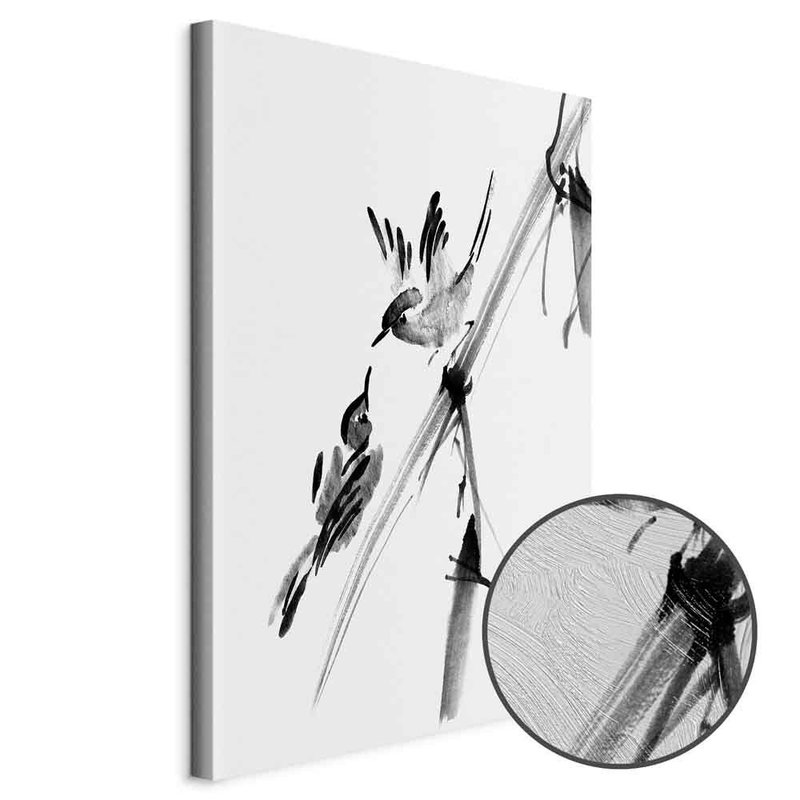
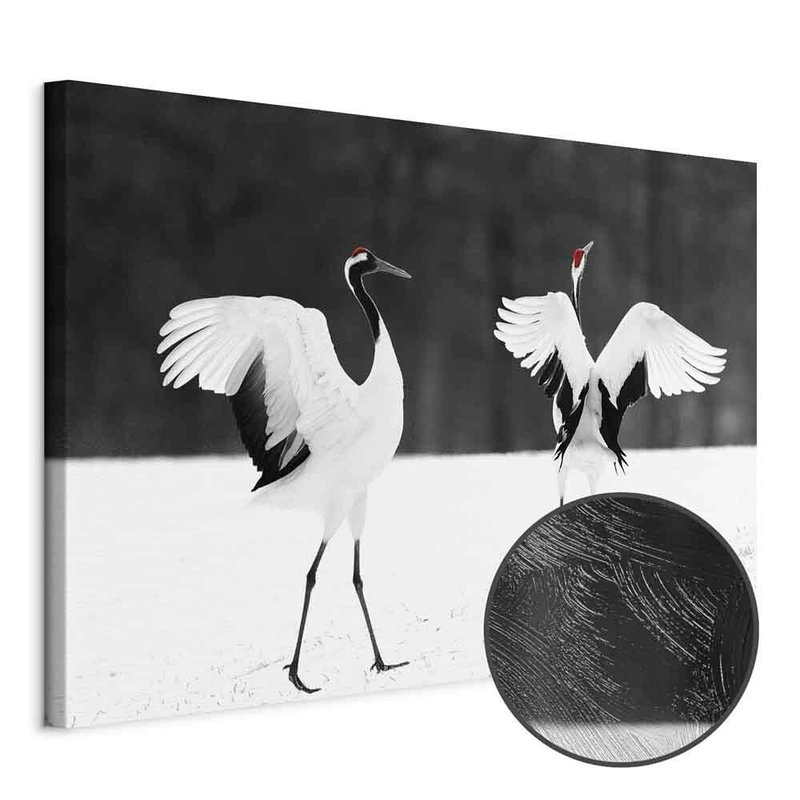
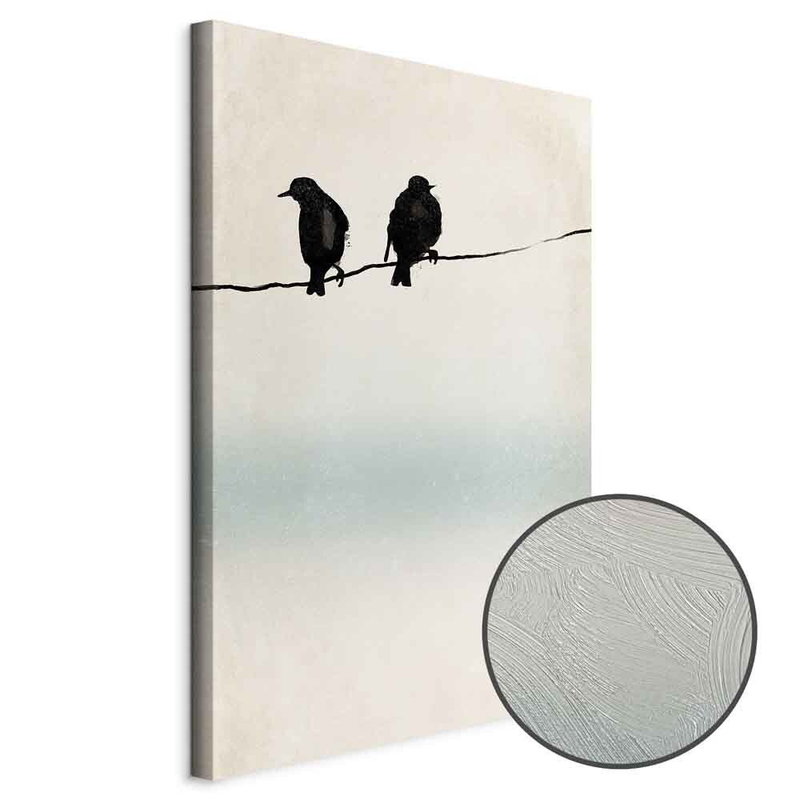
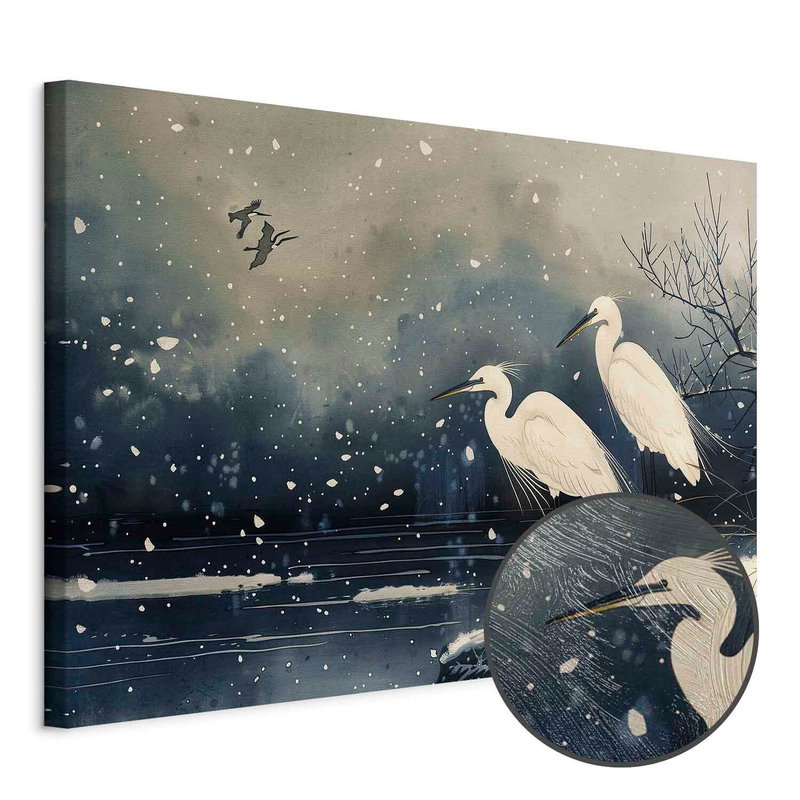
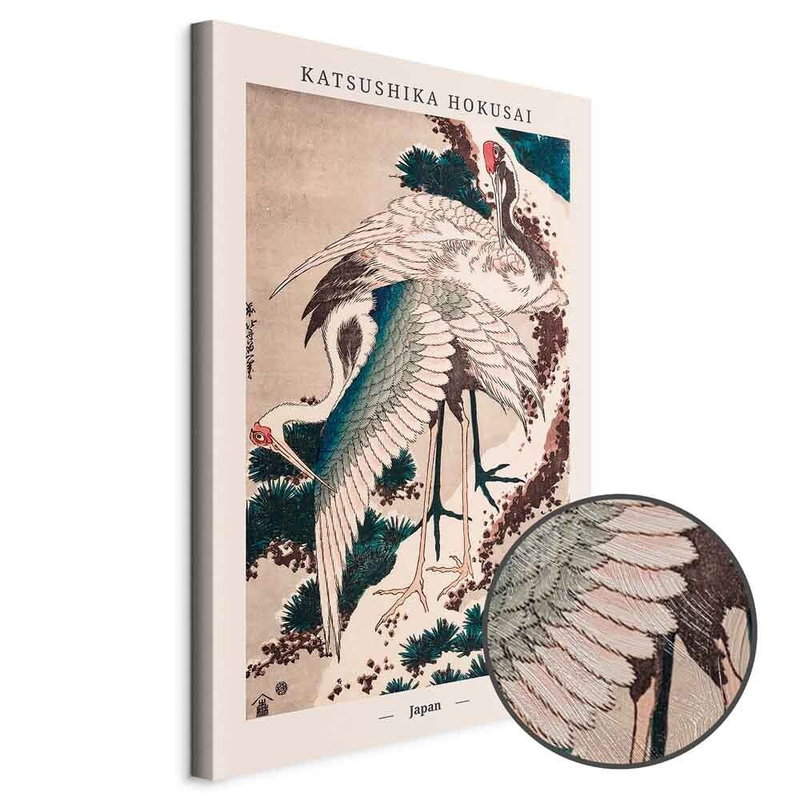
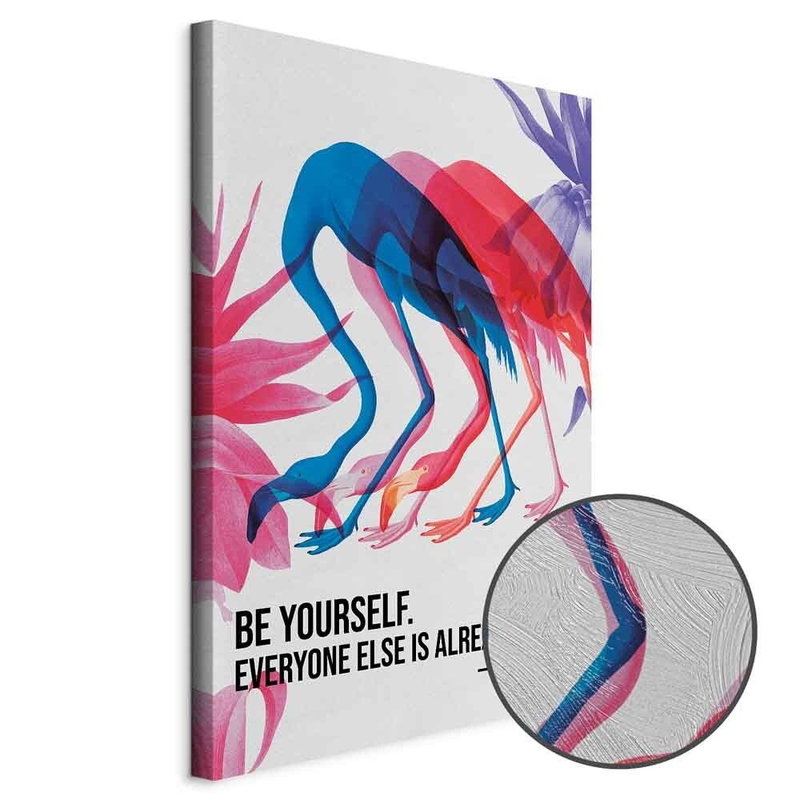
A white bird can stand out against dark teal, while black silhouettes read clearly against a pale sky. Pink and other strong colours create a different focus from monochrome bird pairs. Compare both the bird and larger background areas with the room’s palette. Small details reward close viewing, but contrast and the main shape are often the first things visible from a distance.
Printed feathers and a real premium surface
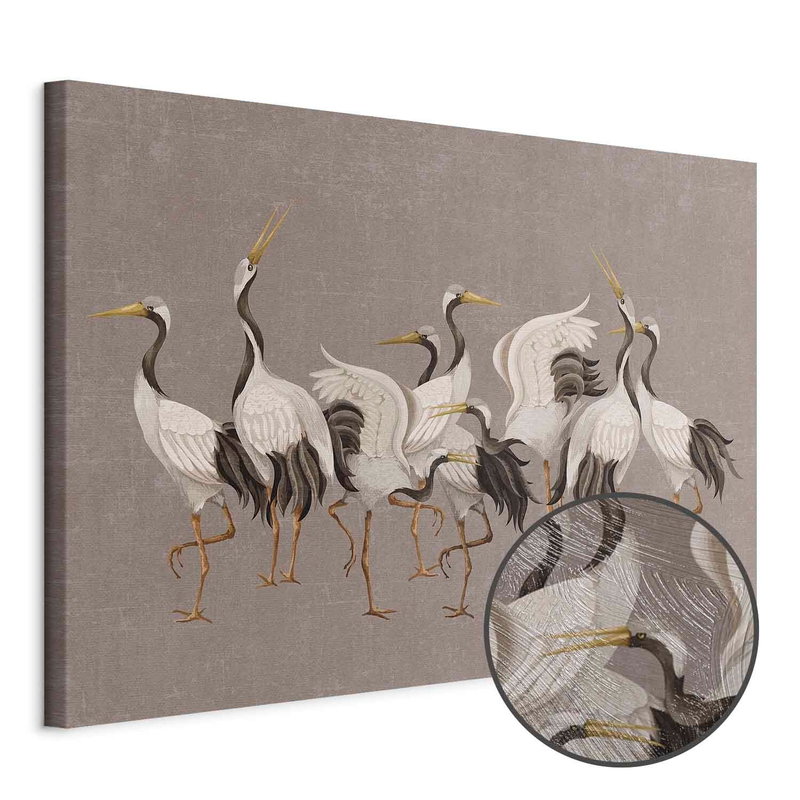
Feathers, birds’ eyes and pictured water reflections belong to the print. The premium finish’s clear gel is worked by hand over the canvas to provide physical surface texture. Read the product’s material, size and hanging information when choosing. Detailed plumage does not tell you which materials the canvas is built from, and the image’s colours do not measure its sound-absorbing properties.
Leave room for wings and long necks
Check that furniture does not hide heads, wings or parts of the composition that provide balance. A landscape format may give room to a flock; an upright picture may follow a long neck or single bird. The absorbing construction can help reduce reverberation. Placement, other room surfaces and total absorbing area determine the requirement. Always follow the mounting instructions for the chosen product.
Choose the individual or the flock as the focus
A single bird creates a clear relationship between body and background. In a flock, distances and differences between the birds may make the picture interesting. Look at the distribution of figures and what happens at the image edges before choosing the expression for your room.
A pair of birds may have a relationship that is lost if furniture hides one of them. Assess the entire main image in the intended position. An enlarged detail helps show the surface, but does not convey the same balance between animals and surroundings as the full image.
Distinguish natural observation from decorative interpretation
Bird pictures can be naturalistic or use freer colours, plant shapes and proportions. Therefore choose what appeals without assuming that every painted bird represents a species precisely. If a particular species matters to your choice, it should be confirmable from the product image and information.
A decorative composition can combine birds and plants without representing a documented habitat. Treat their shapes and colours as parts of the visual expression. You can appreciate the image without making unsupported assumptions about place, season or species.
Let the background connect the interior
When comparing bird designs, the background tone can provide a stronger connection than the birds’ colours. A recurring light area or darker water tone can bring different compositions together. At the same time, give each main figure enough visual space.
View the planned group from the doorway and a normal seat. Check each product’s dimensions and any panel division before choosing gaps. A beautiful bird image does not replace practical assessment of the wall’s load-bearing capacity, suitable fixings and the room’s need for absorbing area.