




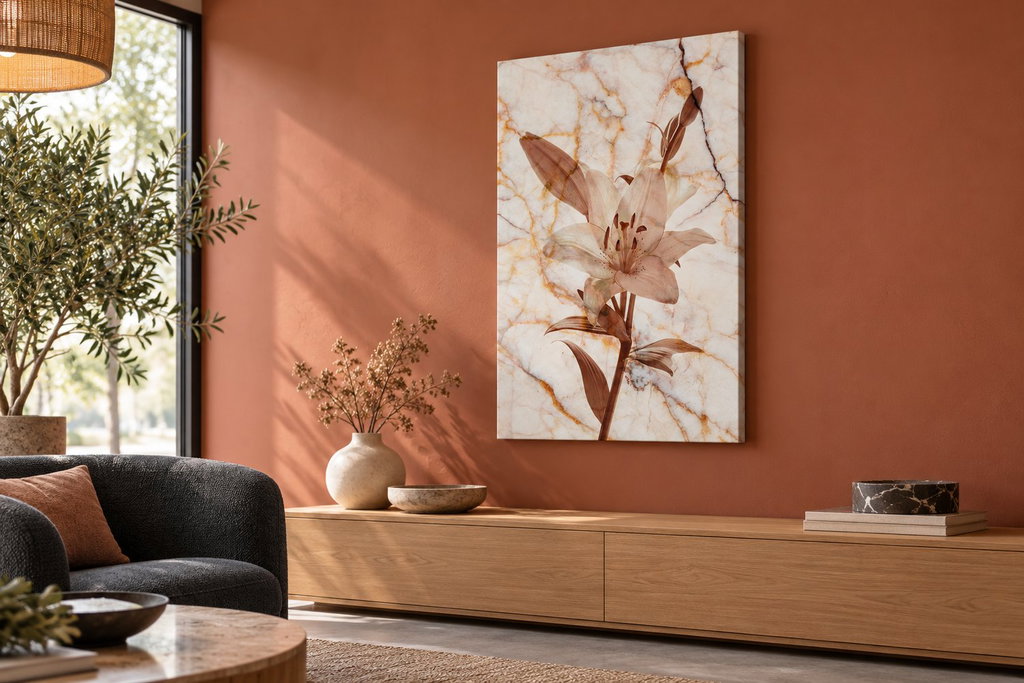
Lilies – premium acoustic wall art
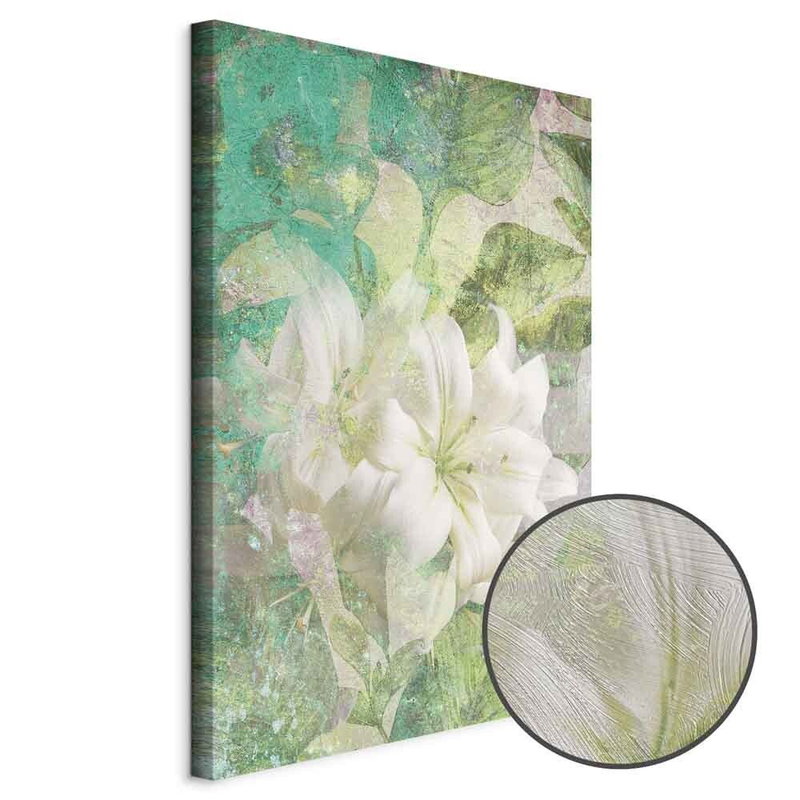
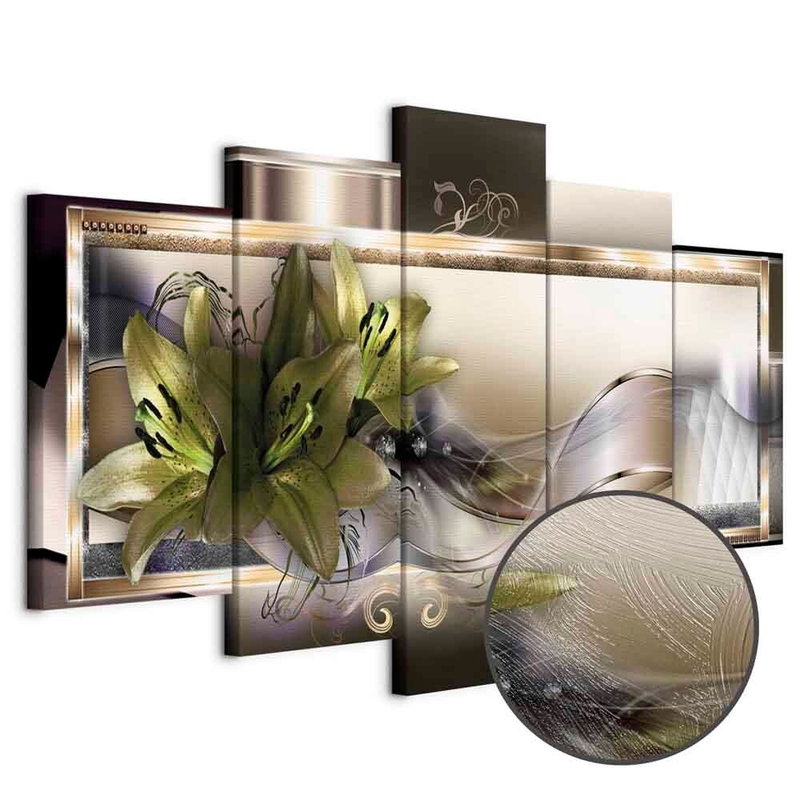
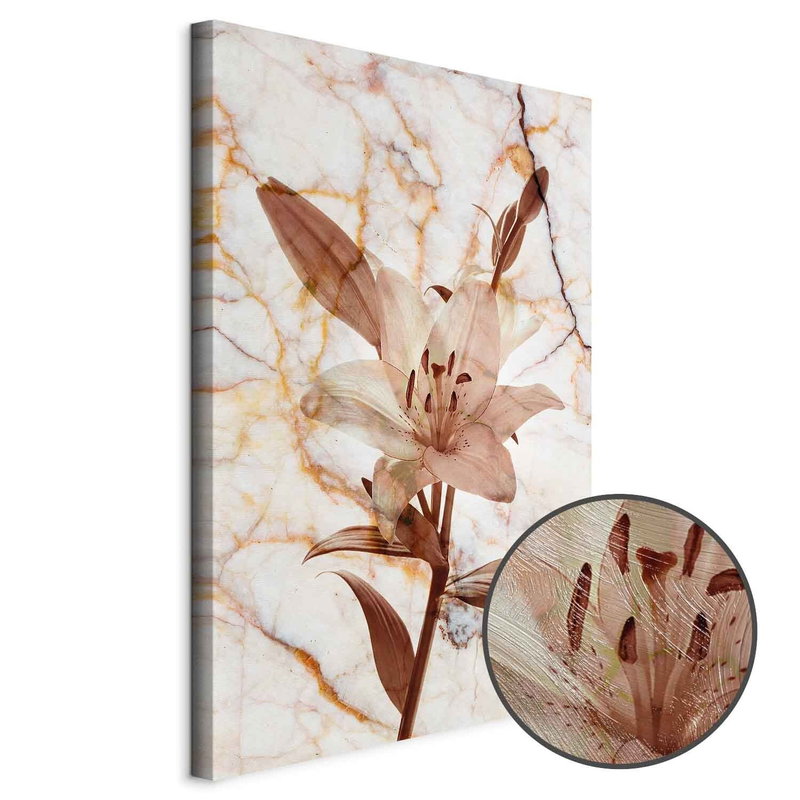
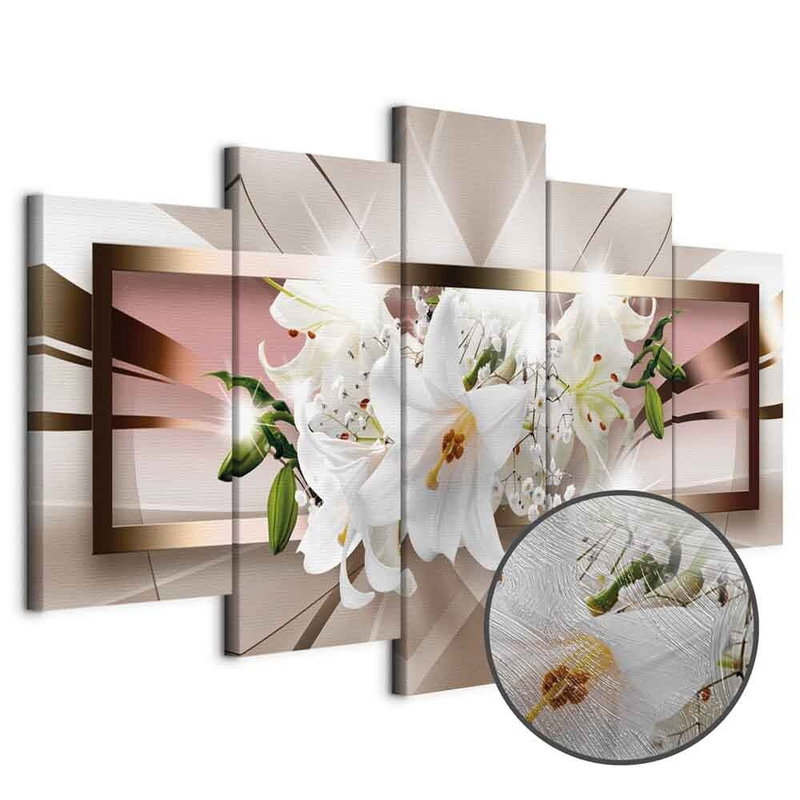
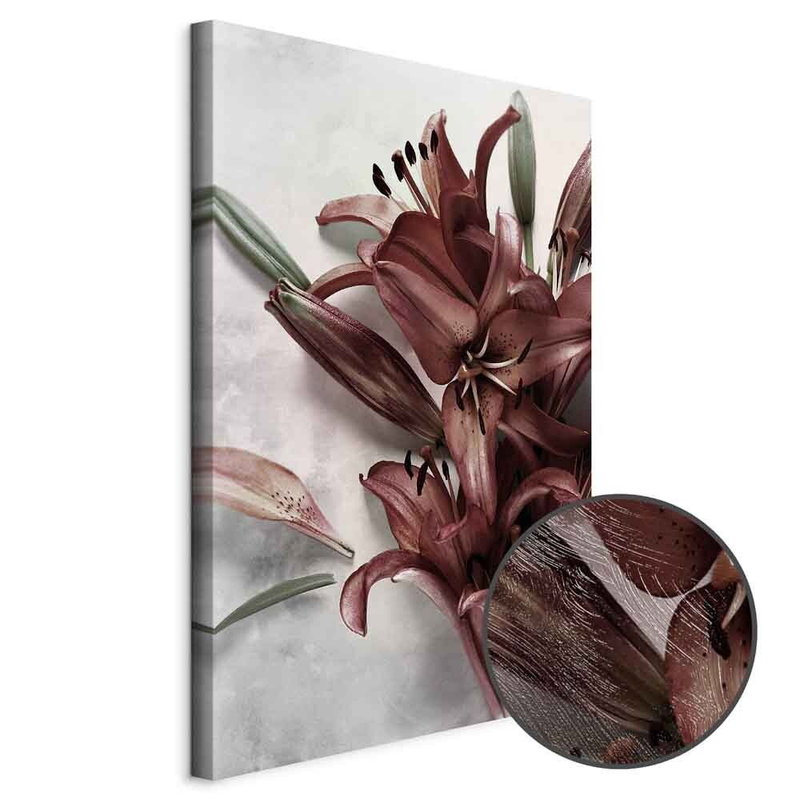
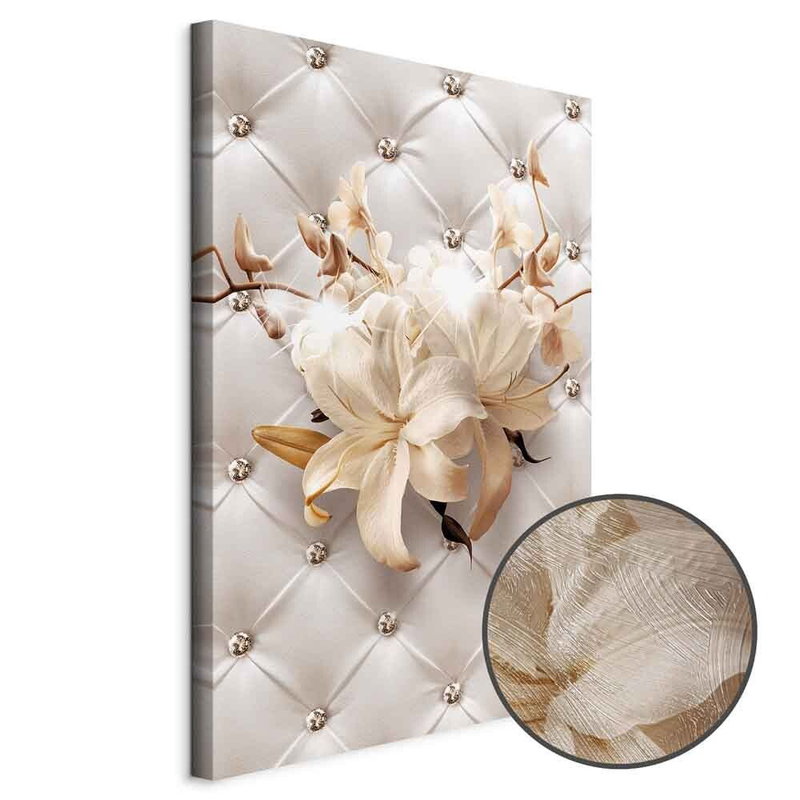
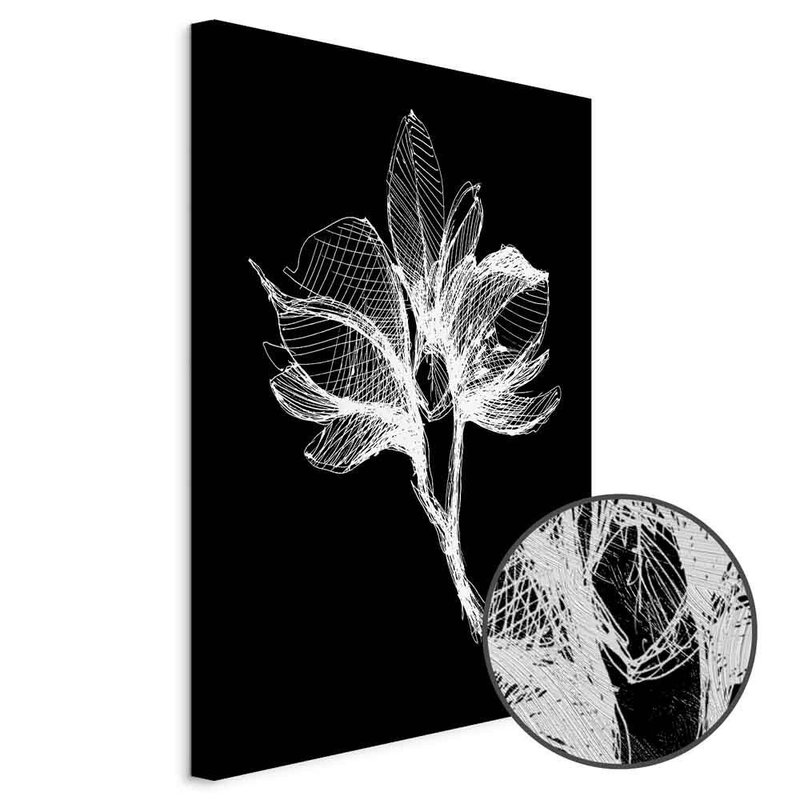
This group includes pale flower forms and more decorative interpretations against different backgrounds. Follow the direction of the flower and stem when planning its position. Compare the background lines with the other objects in the room too.
Choose the design and its position
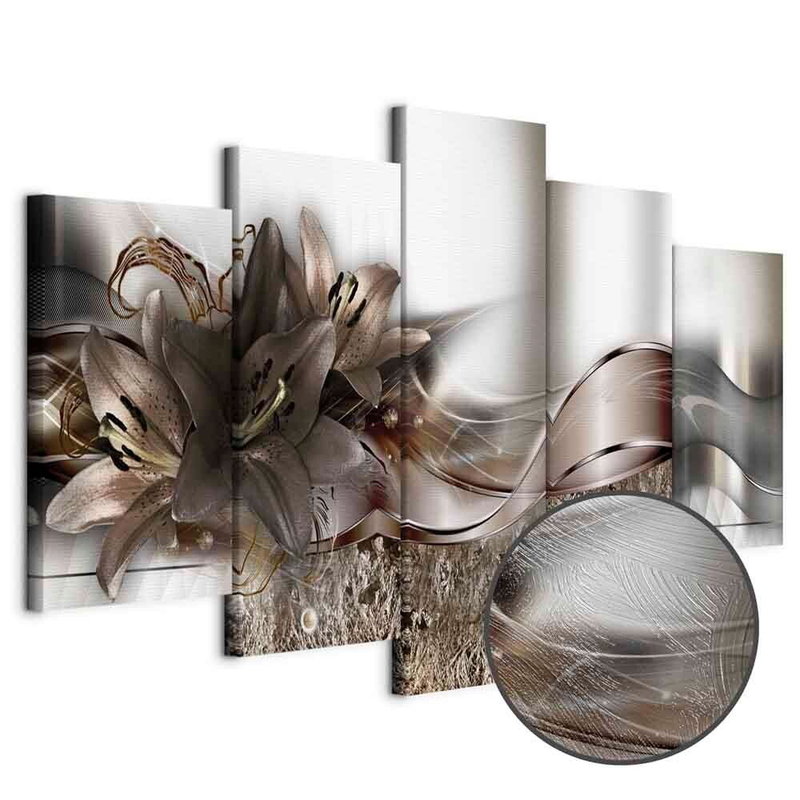
Compare the dimensions and number of panels on the product page before planning installation. Separate panels need suitable spacing, and the whole design should work from the usual viewing position. Follow the installation and care instructions for your selected model.
The premium surface and room acoustics
The printed design is combined with hand-applied clear gel that gives the surface physical texture. The sound-absorbing construction can help reduce room reverberation; the plant subject itself does not provide a particular acoustic rating. The effect depends on the absorbing area and the other materials in the room.
The lily's lines and the room's sightlines
The lily's open flower shape can become a clear focal point on the wall, while stems and leaves lead the eye through the picture. Start by considering the whole design, rather than just the flower in the centre. A slanting stem can introduce movement into the composition; a more upright flower can feel like a calmer vertical line. Then look at the intended wall from the room's usual seats and from the entrance. This lets you see how the design's direction works with tables, cupboards, doors and other lines in the interior, without moving anything solely for the picture's sake.
Your distance from the artwork affects which details stand out. Close up, transitions between petals and the premium surface's physical texture become noticeable, while areas of colour and silhouette matter more from further away. Use both the overall product image and detail photographs where available. A small picture on a screen is not enough to judge how much wall space the artwork will occupy. Consider marking out the chosen external dimensions with paper or a tape measure and checking the whole arrangement from the place where you will see it most often.
Background, flower colour and existing materials
The background makes up a substantial part of a lily design. A pale flower against a dark surface creates a different contrast from similar petals against a pale or marbled background. Compare the brightness of the entire image with the wall, rather than just the first colour you notice in the flower. Consider whether the artwork should bring together the room's existing colours or introduce a clear accent. You can connect the design with a piece of furniture or a textile, for example, without every shade needing to be identical. Always assess the colour and composition of the specific product you choose.
In a room with many patterns, a clearly defined flower head can give the eye a coherent point to rest on. On a larger, quiet wall, a more detailed lily design can have room to unfold. Neither approach requires a particular interior style. Instead, start with proportion, contrast and how much of the wall you want the picture to occupy. Consider the direction of the lighting too, and check the installation instructions when deciding on placement. The premium surface's gel is part of its construction, but should not be confused with a new plant design or a different flower species.
Plan a coherent arrangement
If your chosen product consists of several parts, plan the width and height of the entire group, including the gaps. Check which dimensions refer to an individual part and which describe the overall arrangement. Do not automatically add the same spacing for every model. Follow the product information and instructions so that the flower's lines continue through the composition as intended. Compare the design's visual centre of gravity with the furniture beneath it as well; the whole group of pictures needs to work with the wall.
This category brings together lily designs; it does not promise that every image is available in every size or construction. Open the relevant product page and check the available options before planning the installation. Then choose the absorbing surface area according to the room's needs, alongside its other furnishings and acoustic treatment. A larger depicted flower does not in itself provide better sound absorption. If you are mainly looking for a different flower shape, compare the other plant groups rather than choosing a lily solely for its colour.
Free shipping refers to delivery to a collection point where offered. Existing terms apply to other delivery methods.