




Dandelion seeds and delicate lines
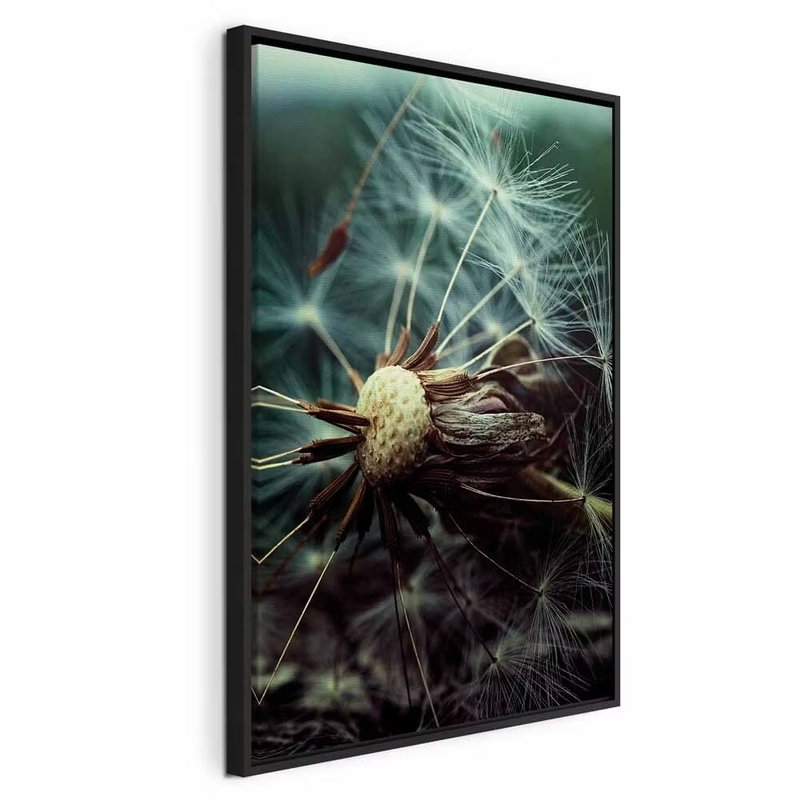
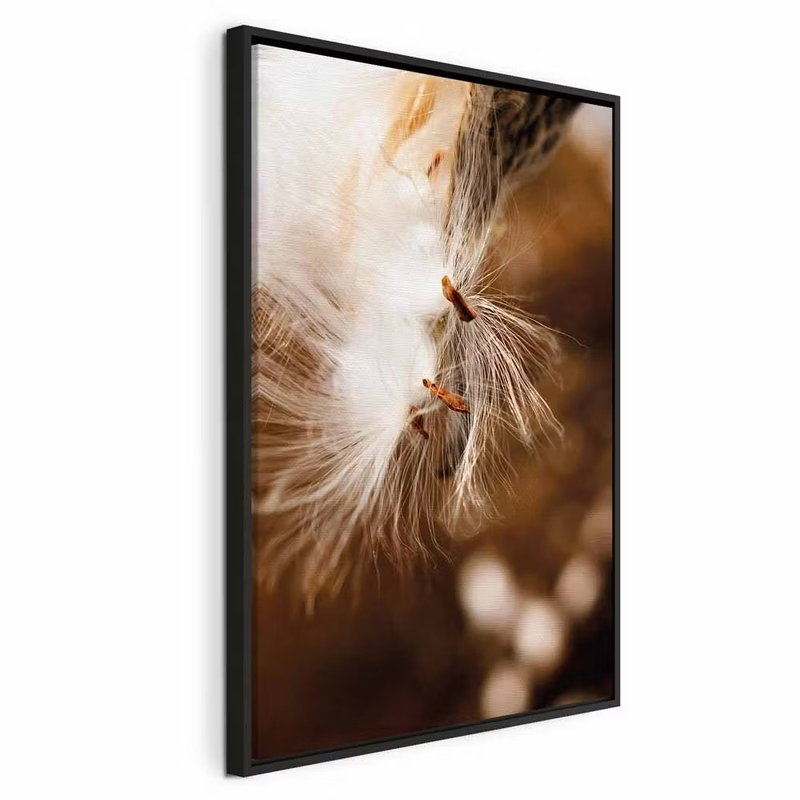
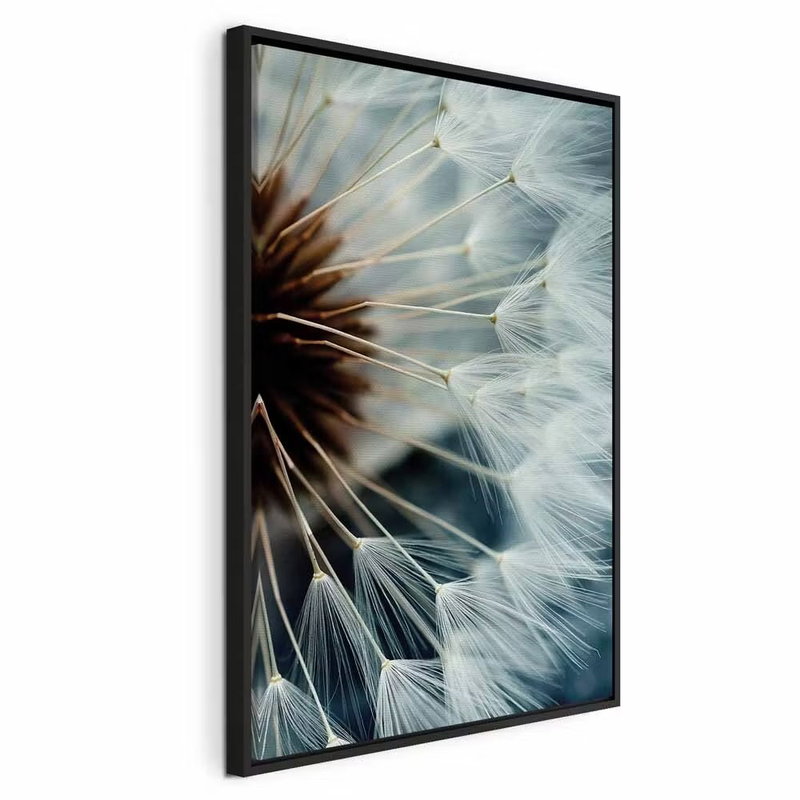
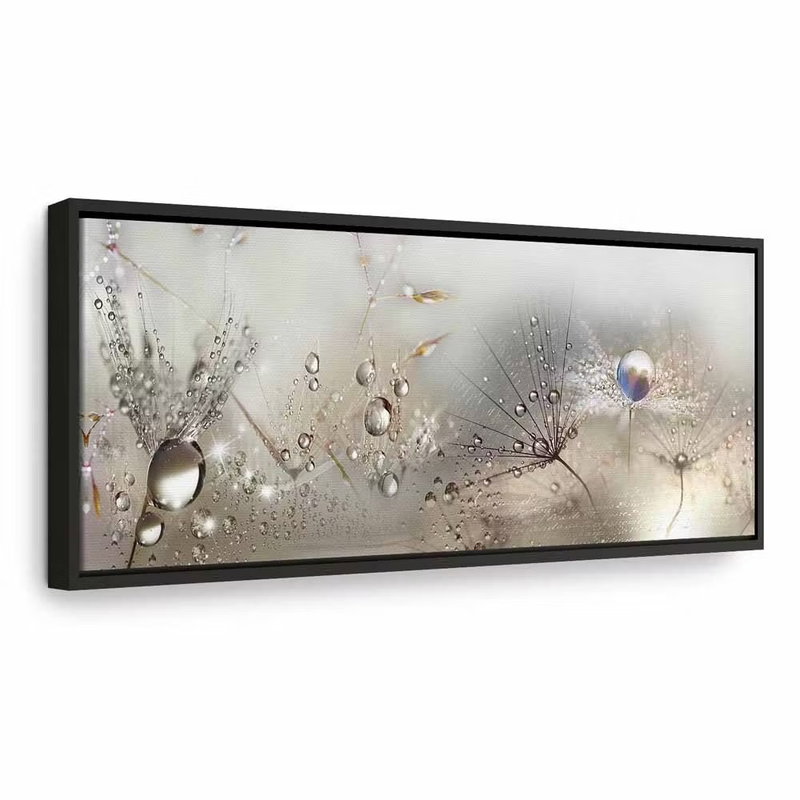
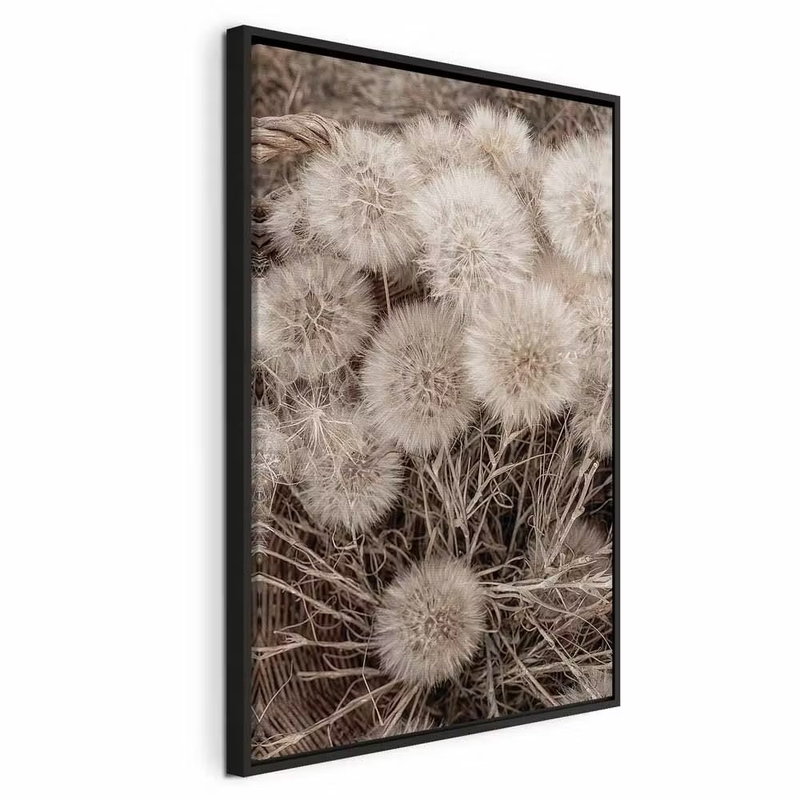
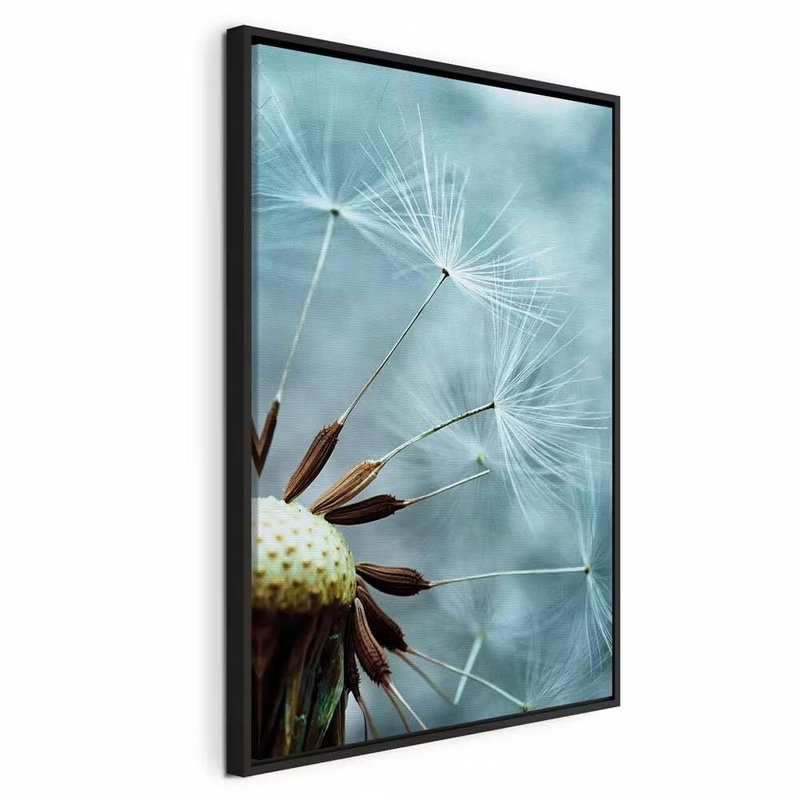
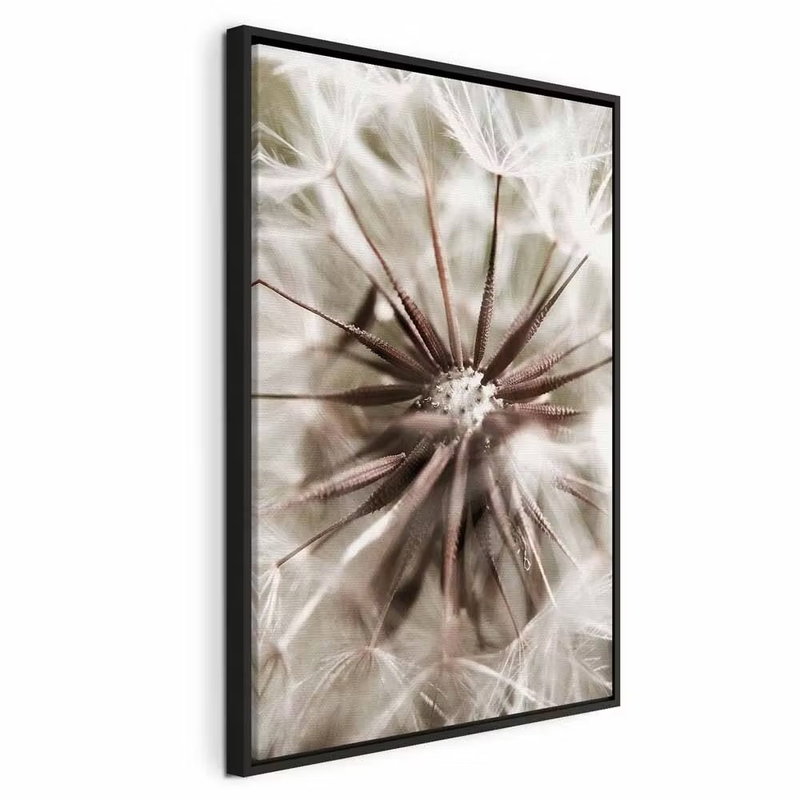
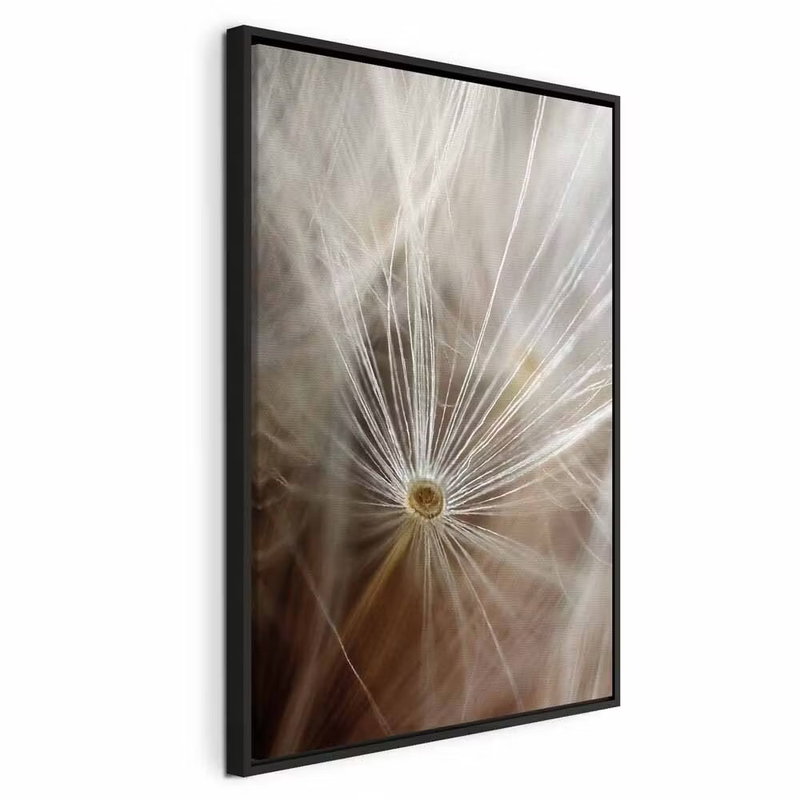
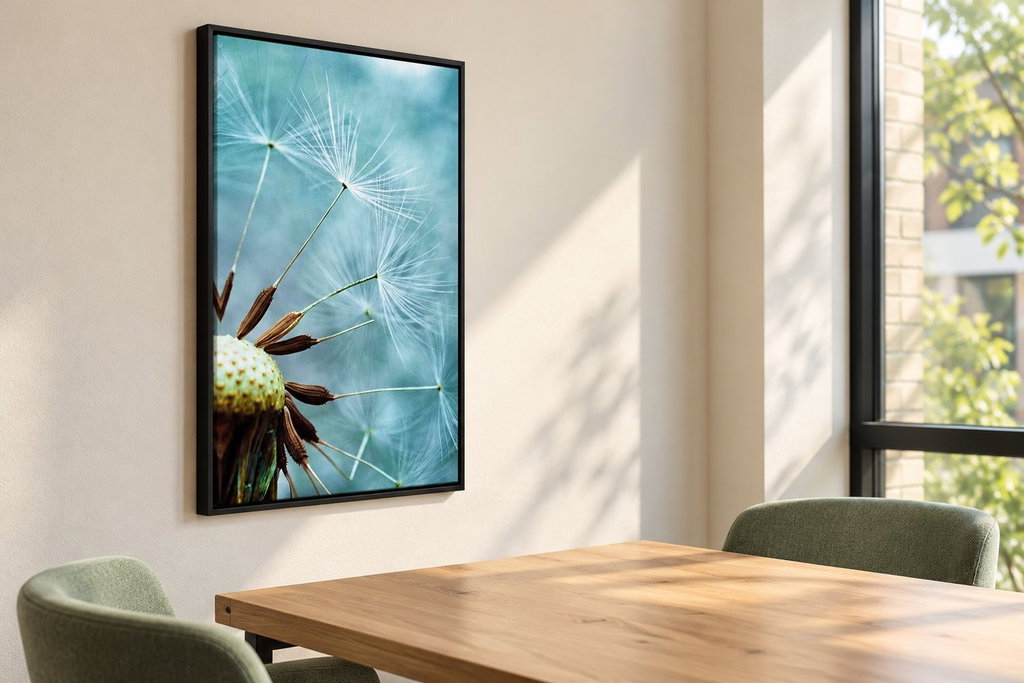
Dandelion pictures turn the familiar seed head and its fine parachutes into wall art. The selection includes whole seed heads viewed from a distance and close crops where a few seeds fill the picture. A blue close-up shows how slender white lines stand out against a softly coloured background.
Compare whole seed heads and close-ups
A complete seed head creates a rounded shape, while a closer crop gains direction from the stems and fine hairs. Look at the open background and how its colours sit against the wall. Check the orientation, available sizes and frame options on each product page. Related crops are not automatically counted as separate motifs.
Positioning for conversation and relaxation
Place the picture where its fine lines can be seen from the usual viewing position. The sound-absorbing construction can help reduce reverberation. Choose the quantity and size with the room’s other surfaces and the documented product construction in mind. Follow installation and care instructions; the light appearance of the motif is not a claim about sound insulation.
Choose the round whole or the seed’s individual lines
A complete seed head offers a quickly readable form; a close view may make fine strands the subject. Notice what first catches the eye and what requires closer viewing. Choose for how the picture will be seen in the room, not merely as a small preview.
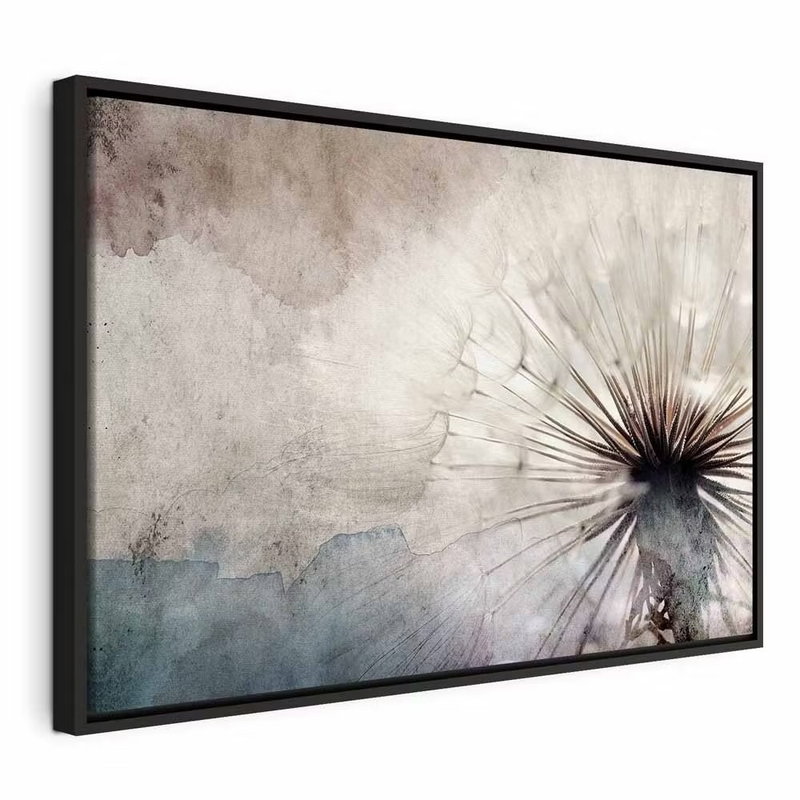
Seed direction can introduce movement across clear background. Compare the spread of lines and their meeting with the edge. A central ball and a freer few-seed composition may need different balance above furniture despite similar outer dimensions.
Include background colour in the image choice
Soft blue background in a close-up may strongly shape the whole. Compare it and the white strands with wall, flooring and textiles. Pale lines may be most recognisable without taking most space. Assess colour distribution rather than one seed detail.
A recurring tone in movable furnishings can connect the room without making everything blue or white. Where many patterns already appear, clear wall may clarify the lines. View background transitions from the usual seat and when approaching.
Let the frame give the image a clear boundary
Compare the chosen product’s frame options with image and wall colour. The outer frame belongs to the whole picture rather than being independent. Check how dimensions are defined so that the real outer shape fits the intended position.
Pale areas and clear background remain part of the print and do not automatically mean a separate mount is included. Read the model contents and use documented information for the finish. A fine-strand image does not indicate canvas thickness or picture weight.
Try the seed subject alone and with other pictures
One dandelion image may mark a distinct point, while several vary between rounded heads and finer lines. Compare background amounts and directions. Give each frame room with gaps suited to the group’s actual proportions.
Use templates in current outer dimensions for height and spacing. Include furniture below and existing wall objects. Check doors and storage and view the arrangement seated and standing. Choose fixings for the support and model instructions.
Separate the seed image’s lightness from acoustic function
Fine parachute forms describe appearance. Depicted strands and shadows are printed content, not actual plant parts or evidence of physical relief. Read construction and care guidance to understand canvas, core and frame handling.
Plan absorbing area alongside room size and materials. An airy or denser seed composition has no separate acoustic performance. Choose the image for real lines and colours, assessing quantity, size and placement separately for reduced reverberation in the actual setting.