



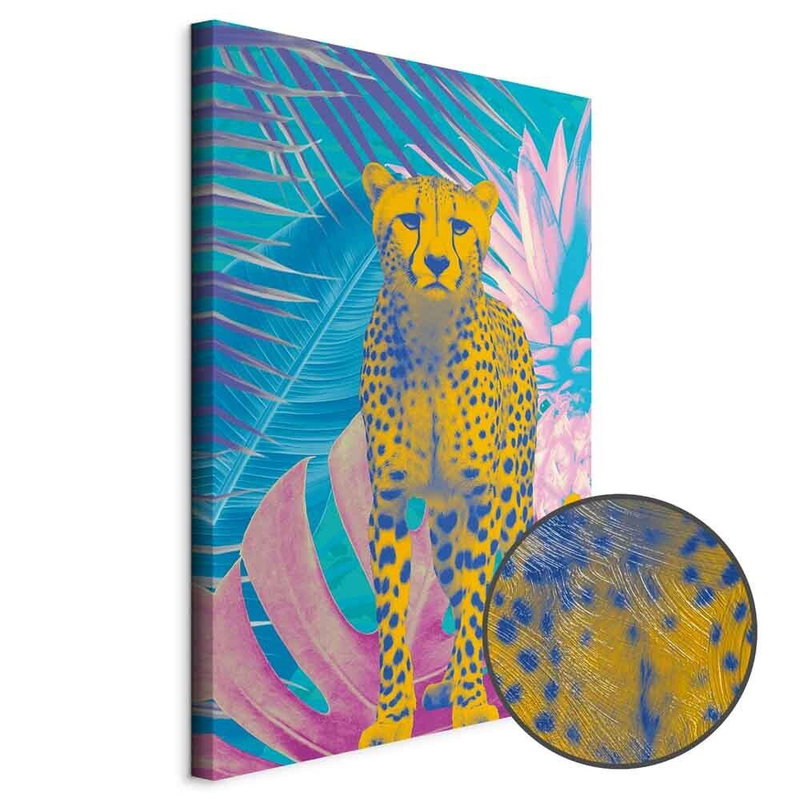
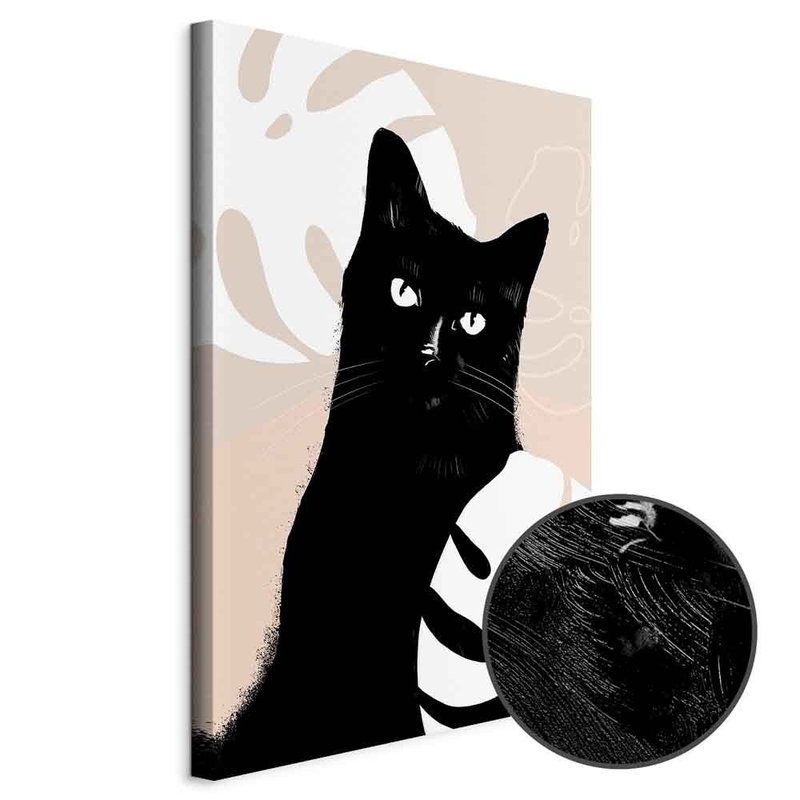
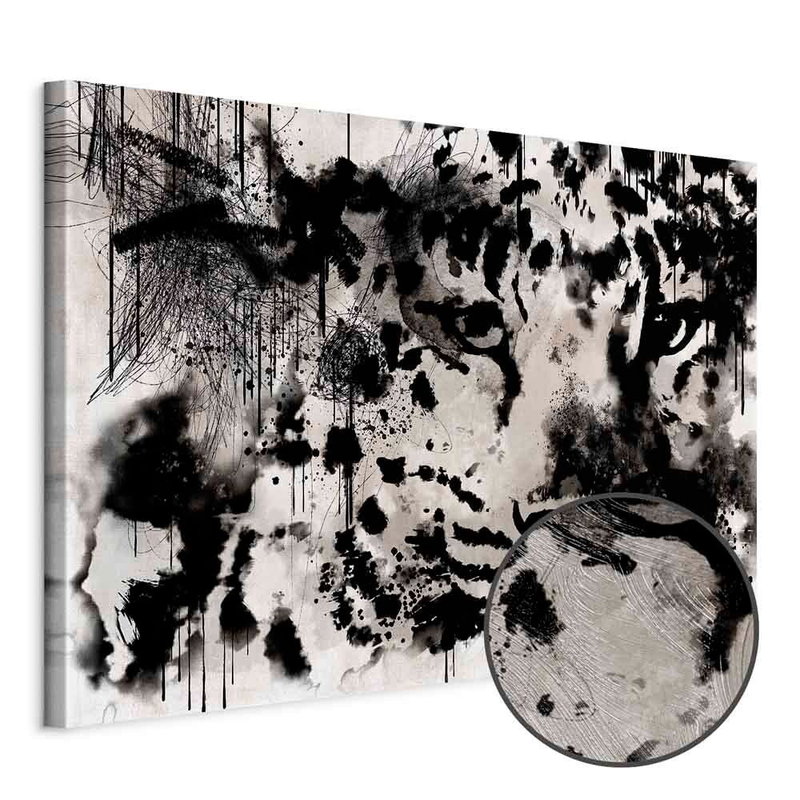
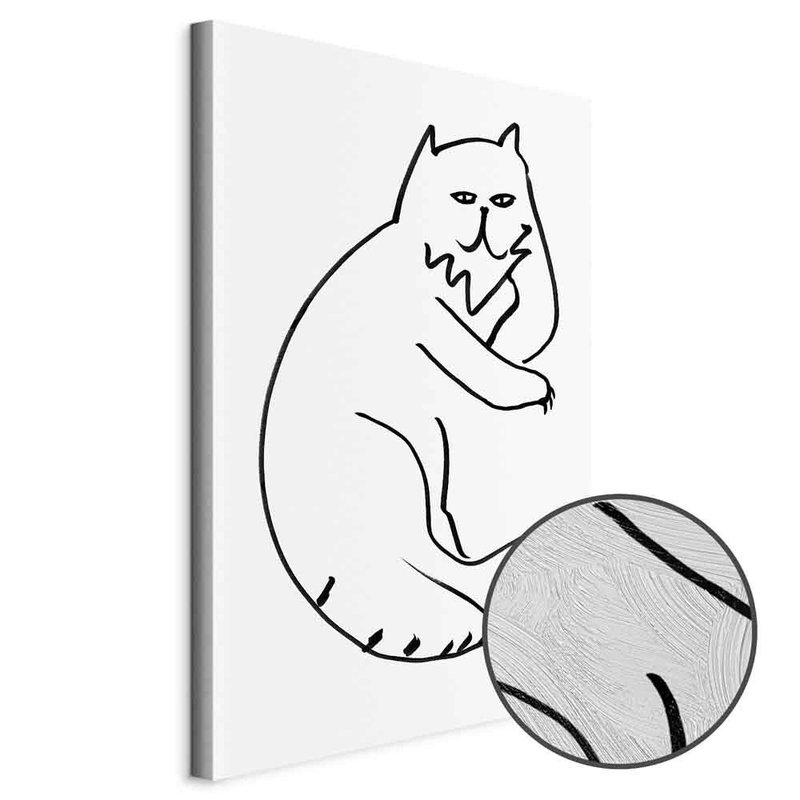
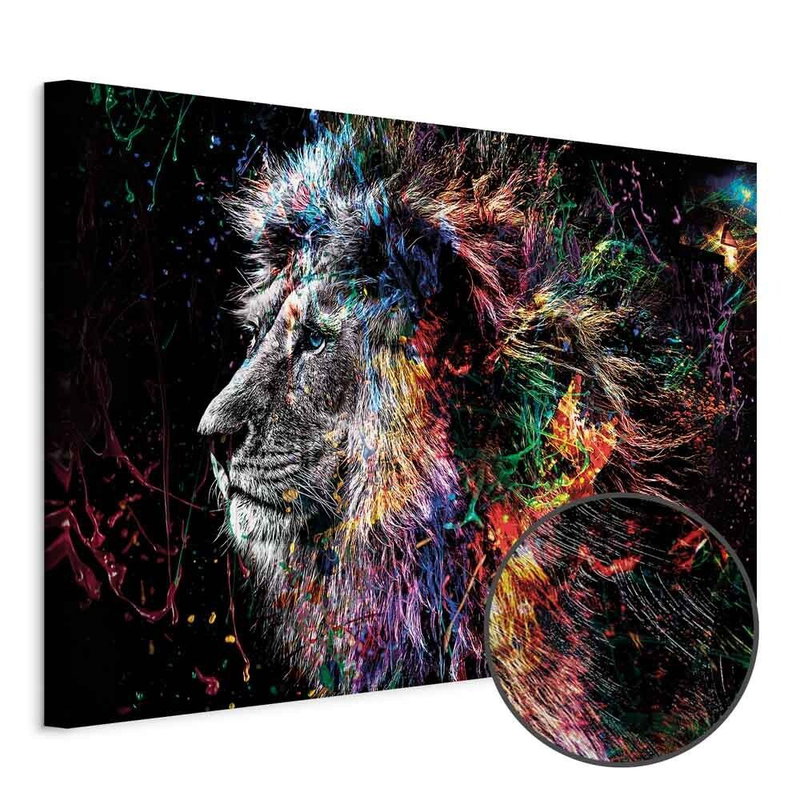
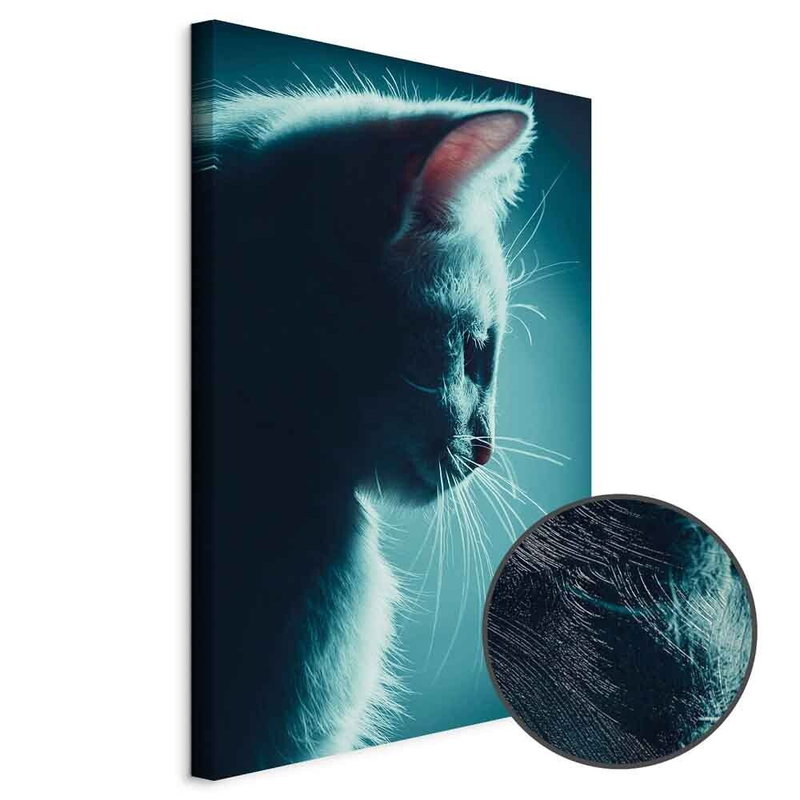
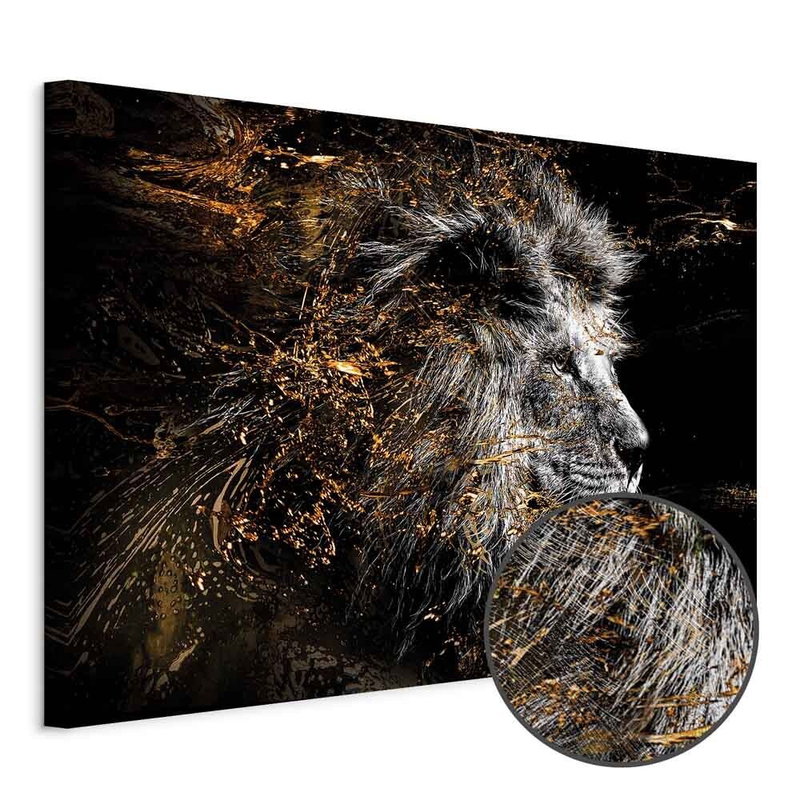
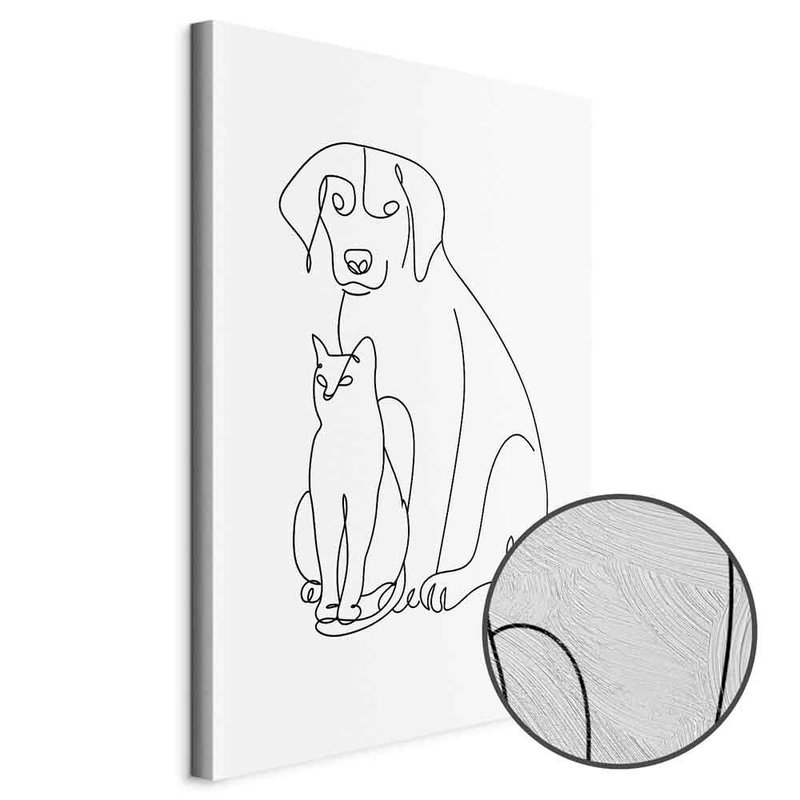

Cats and big cats with different expressions
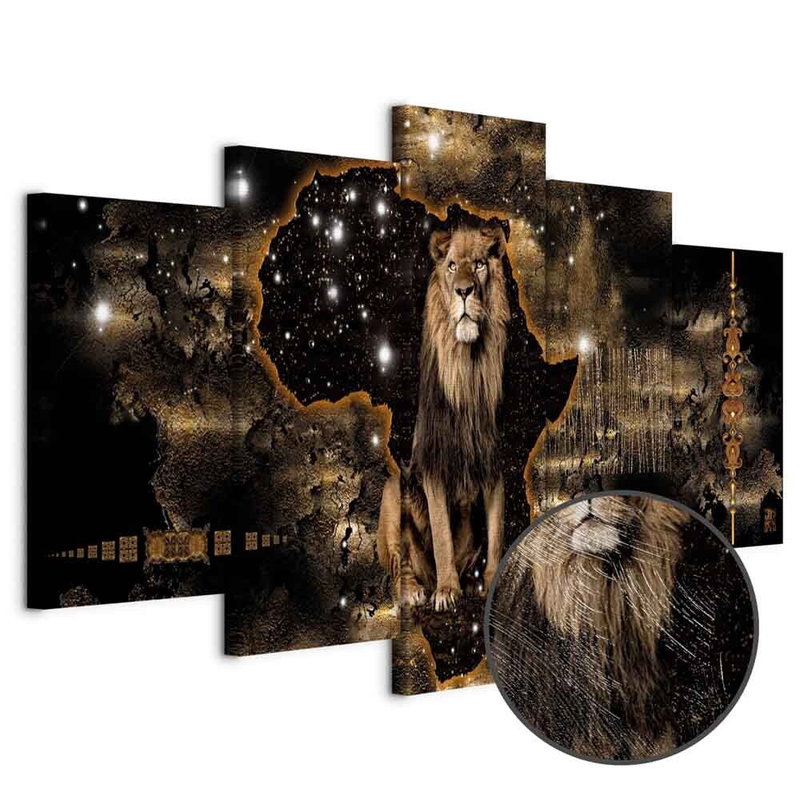
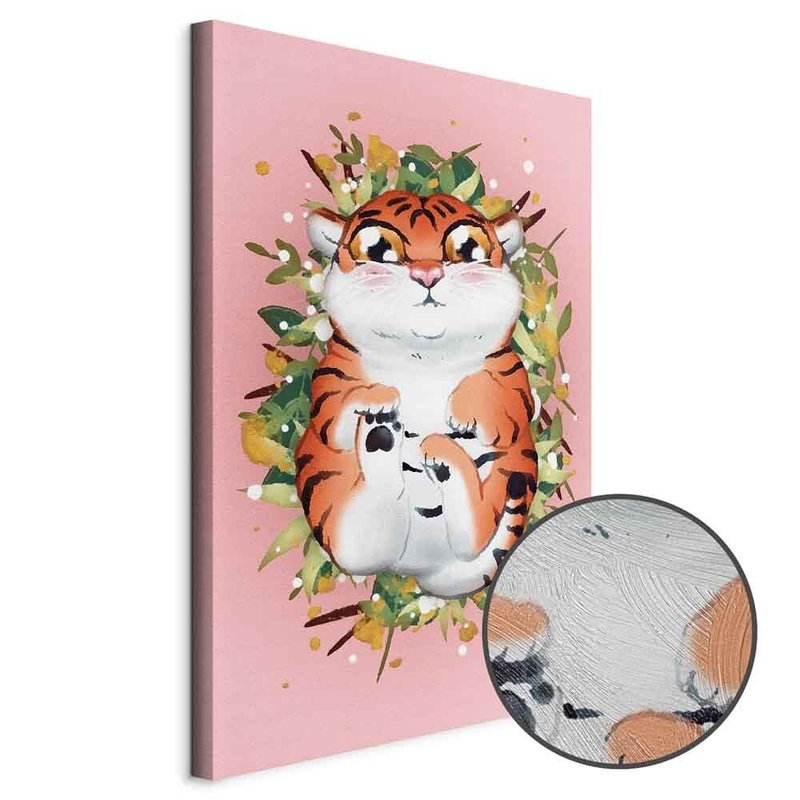
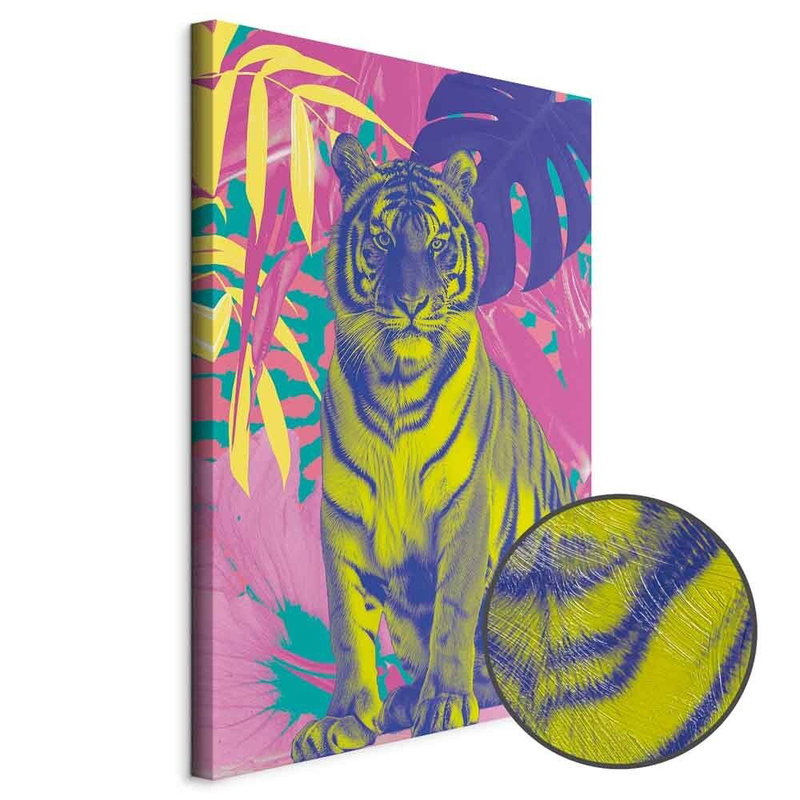
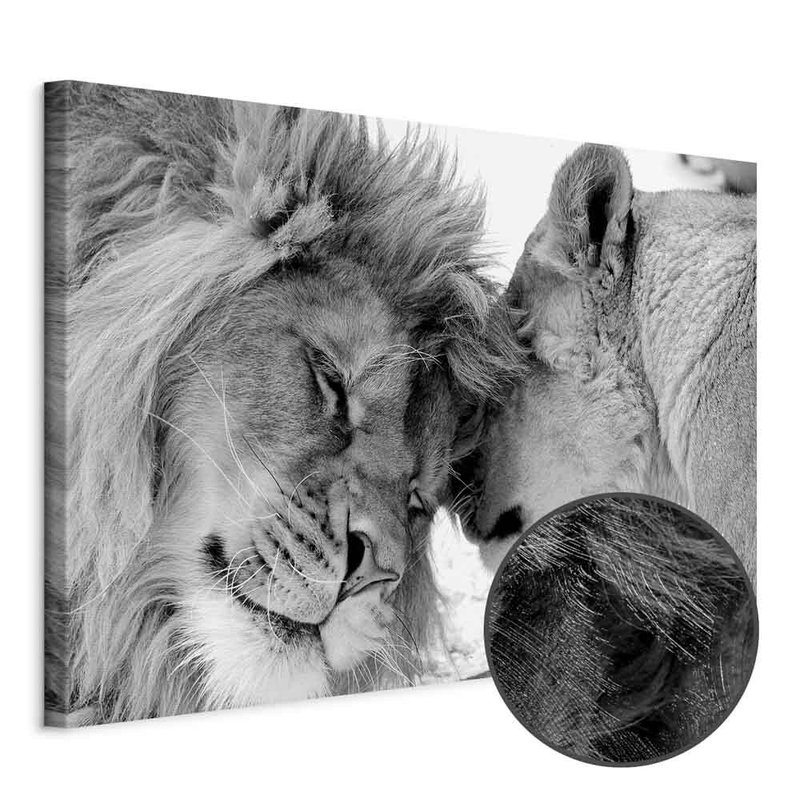
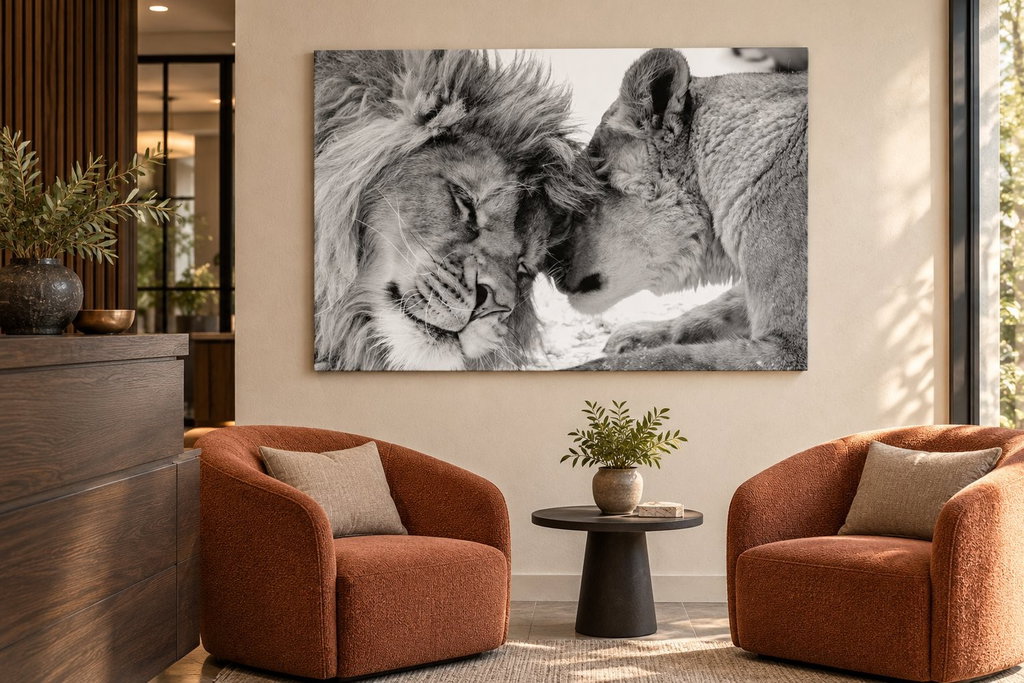
A black-and-white lion pair puts the closeness of the heads at the centre. A lit cat face can emphasise eyes, nose and fur, while a colourful tiger portrait builds character through stripes and surrounding leaves. Compare distance and cropping. A large face meets the viewer directly; a whole figure gives more space to posture and movement.
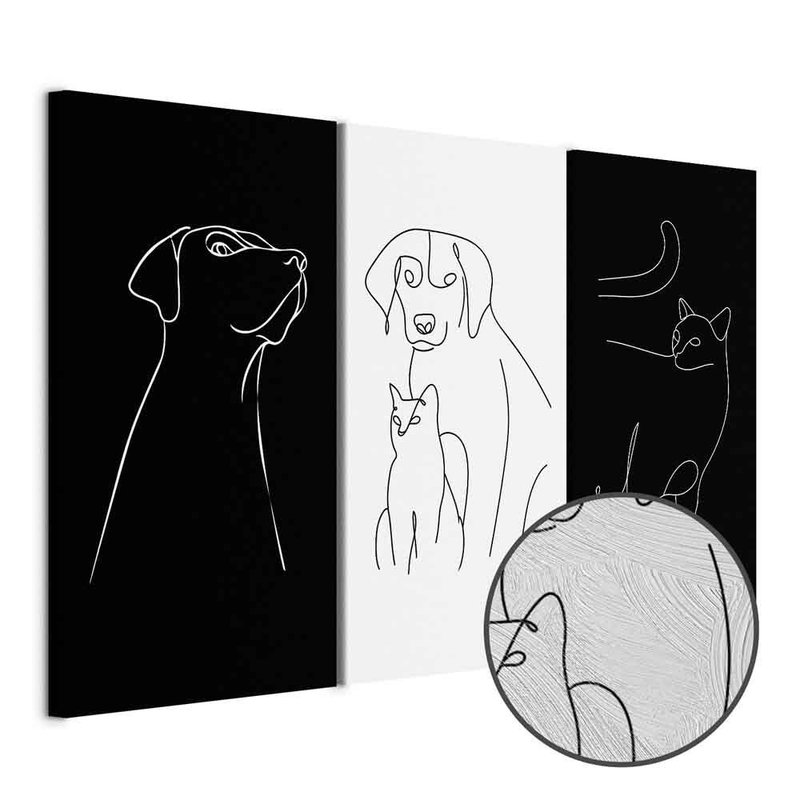
From a simple outline to a playful animal
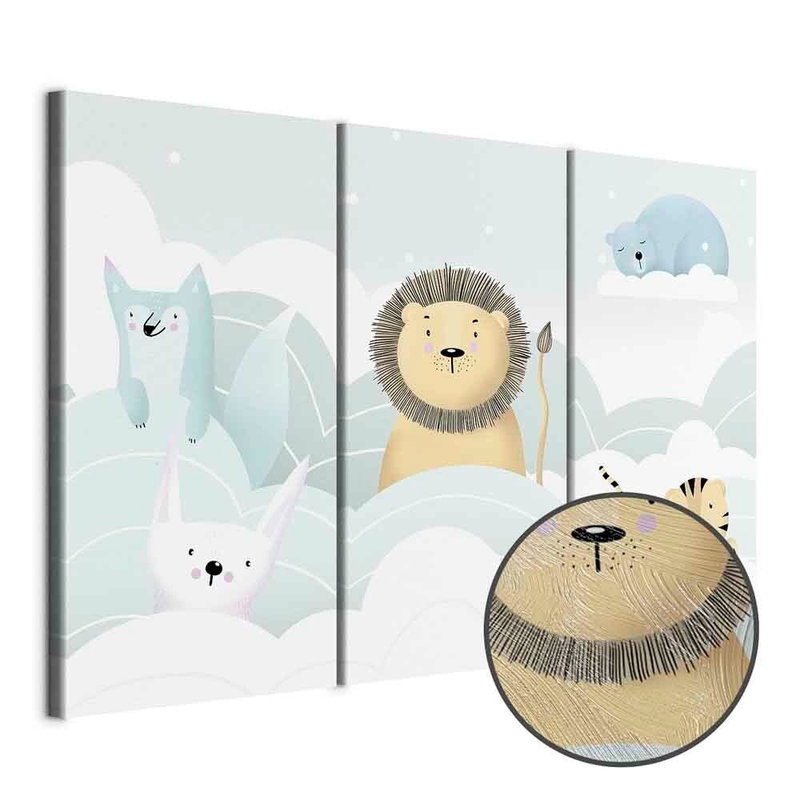
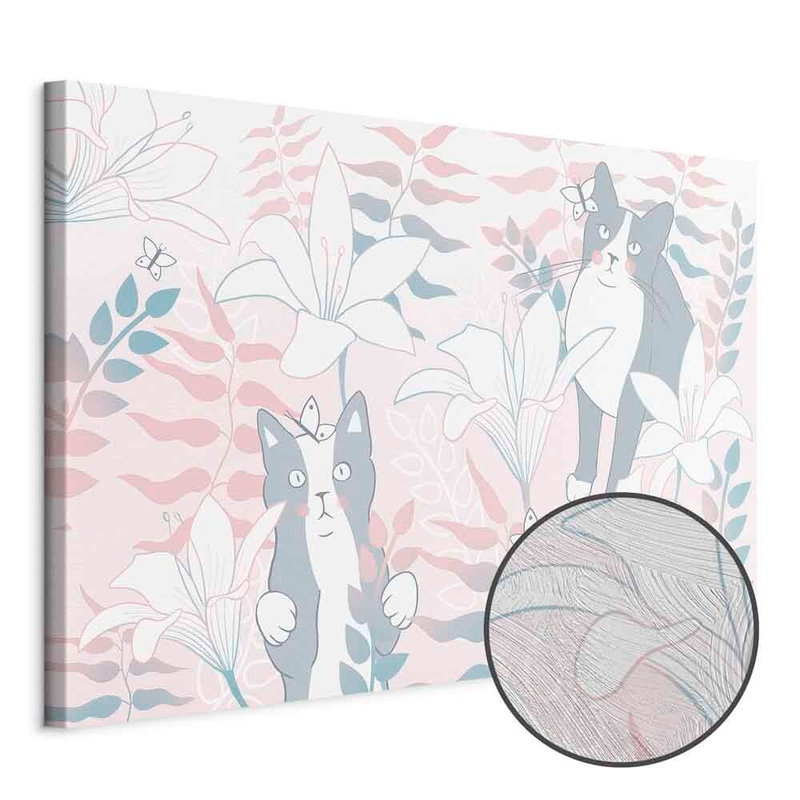
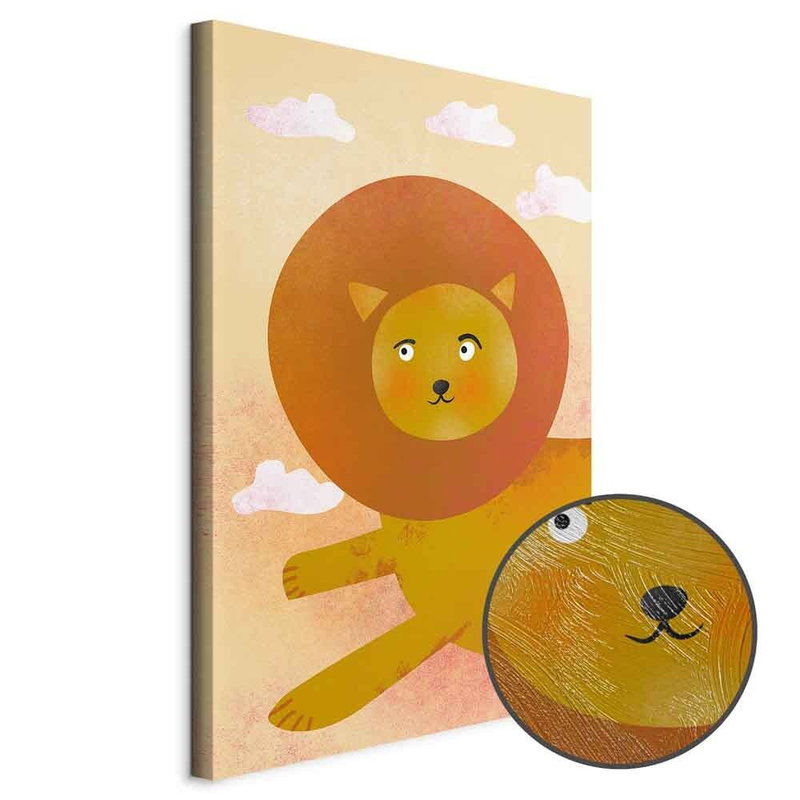
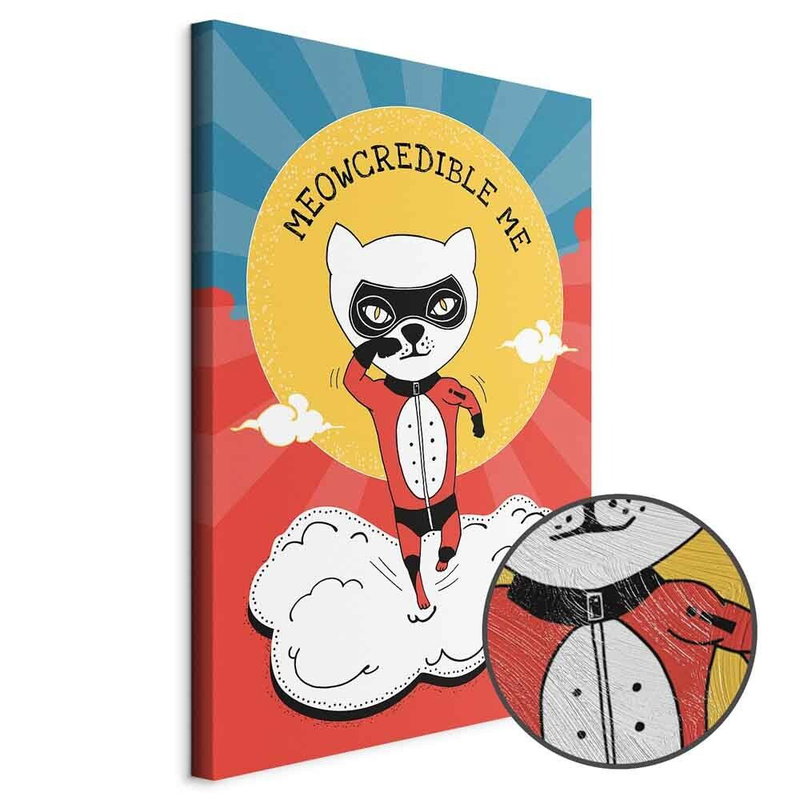
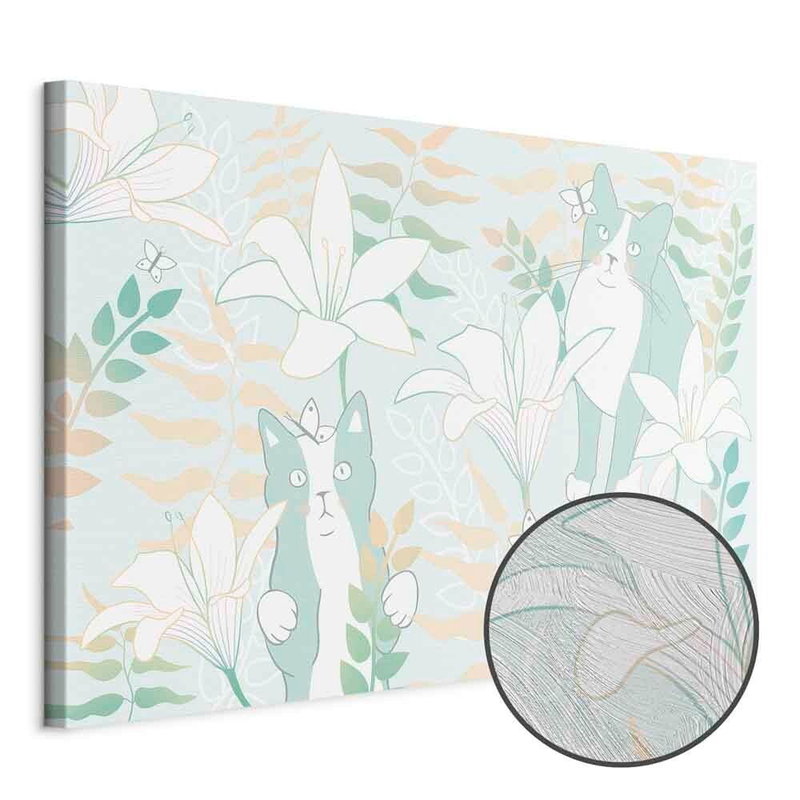
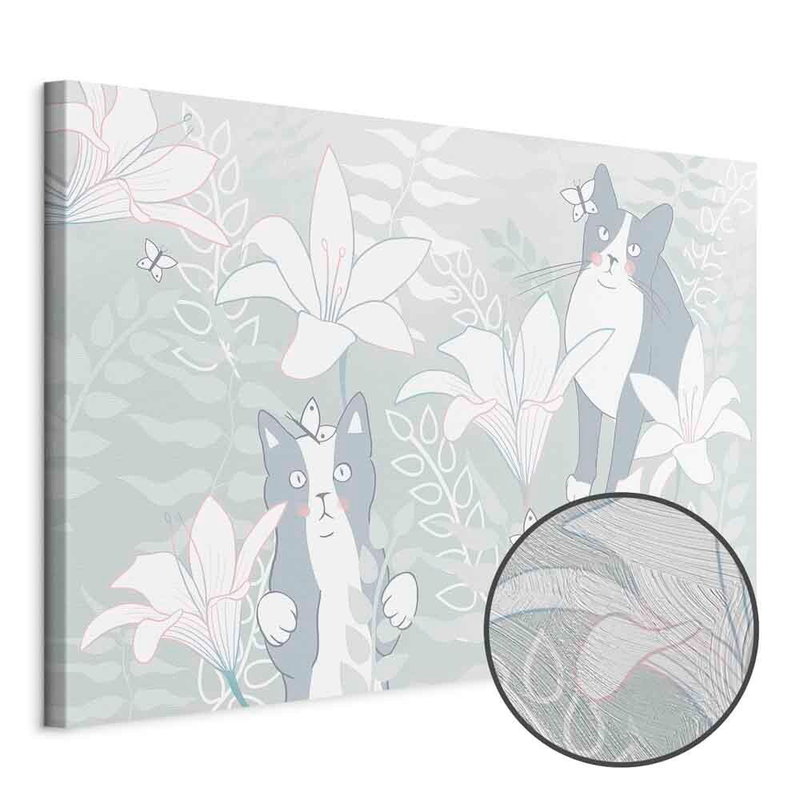
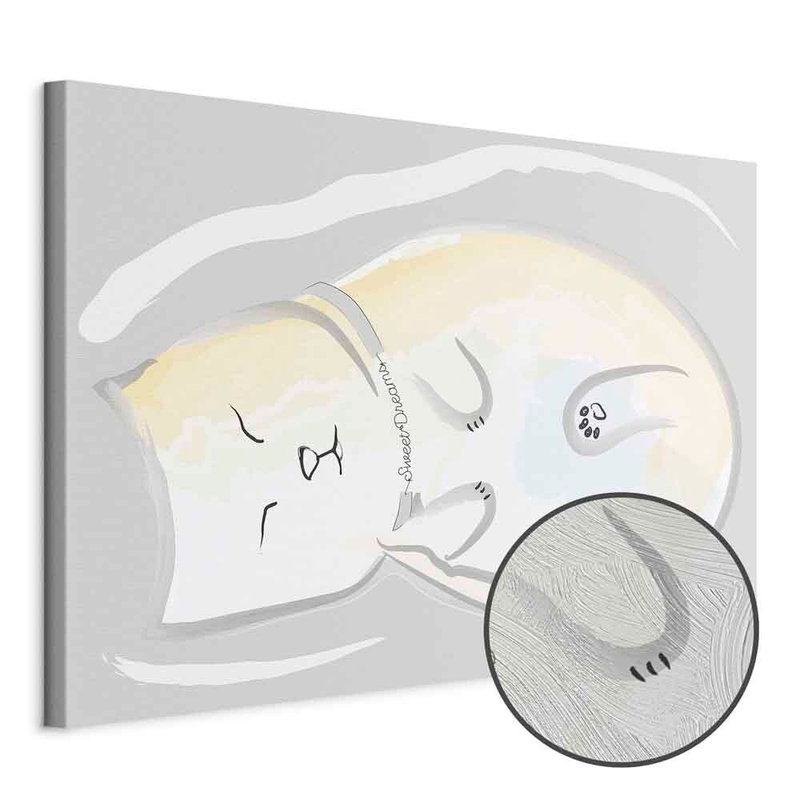
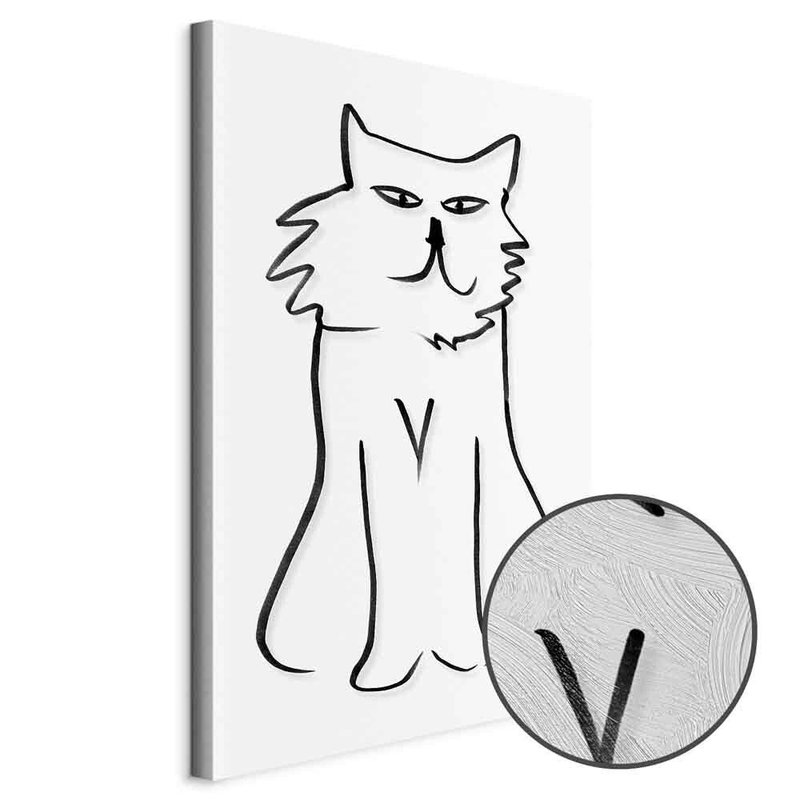
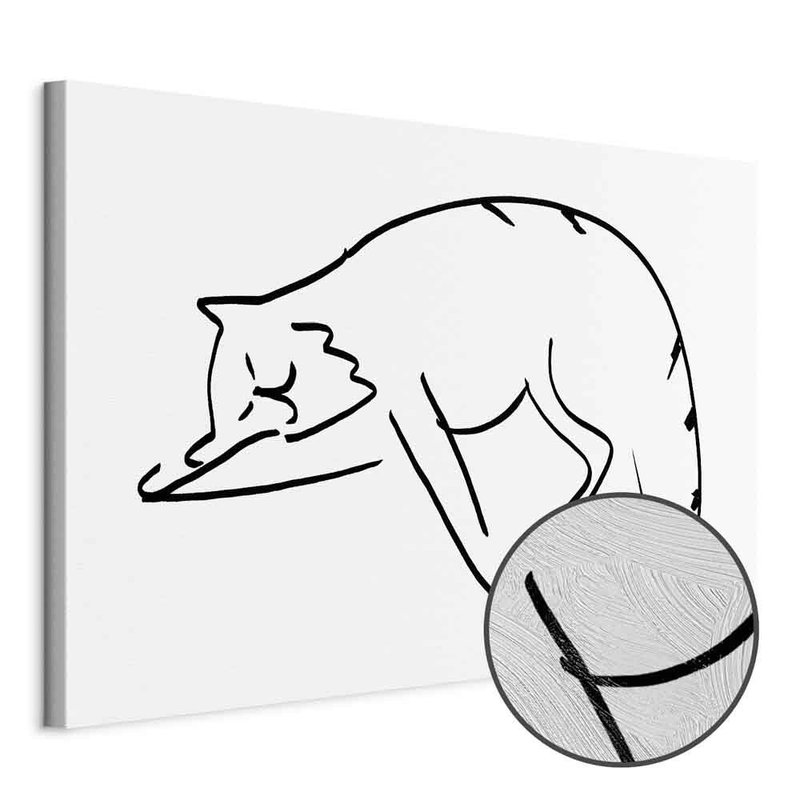
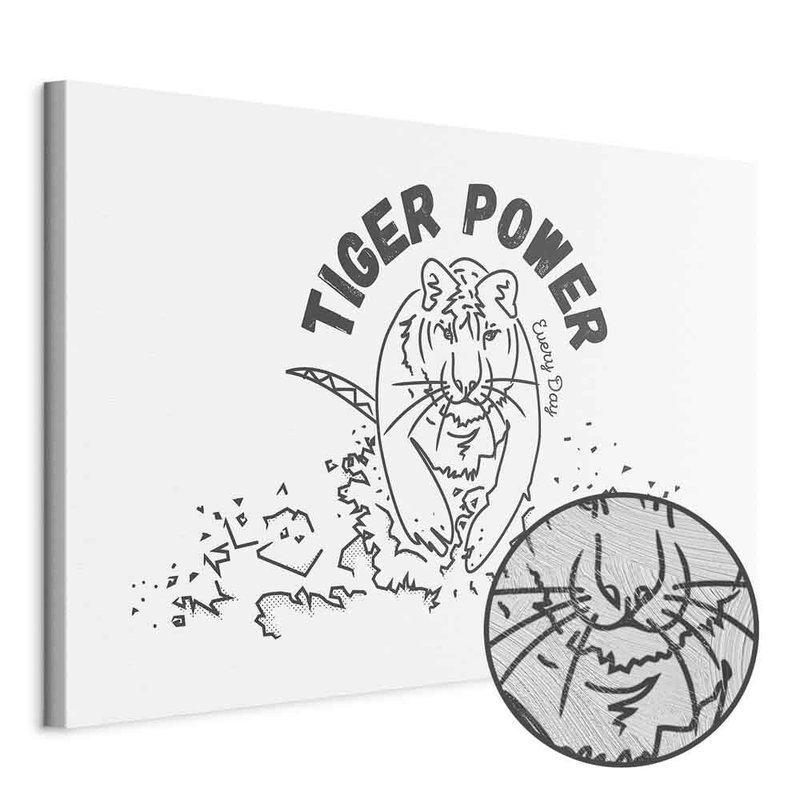
The drawn subjects include fine outlines on pale backgrounds and clearly coloured figures. A cat with a curved body creates a different rhythm from a lion with a round mane. Look at the direction of the lines and the empty space around the figure when choosing a wall. A playful subject can add a personal detail without the whole interior following the same theme.
Flowers, leaves and animals together
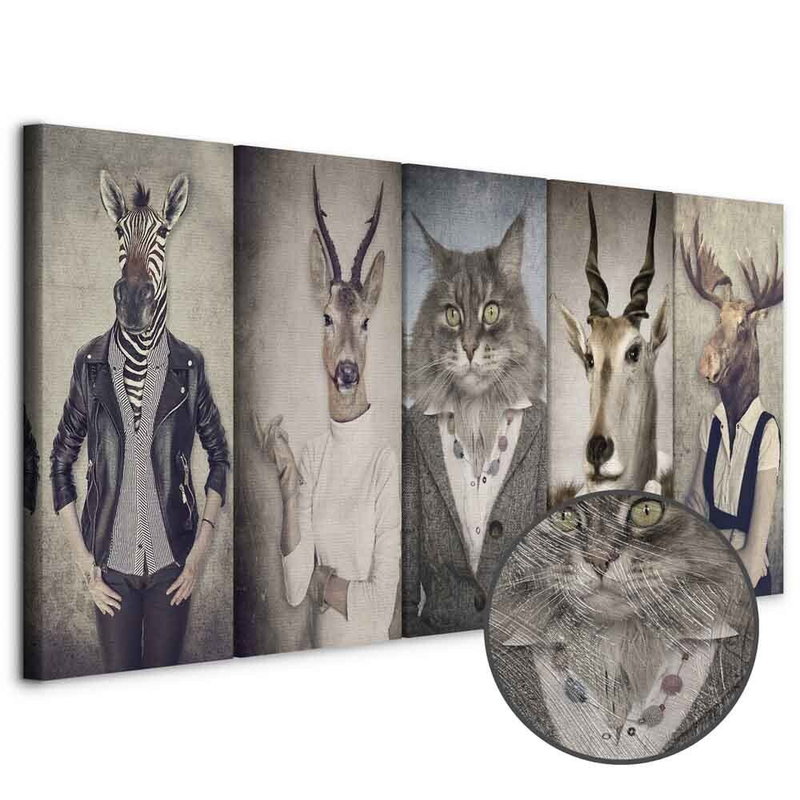
In several compositions the feline shares space with large flowers, butterflies or dense plant forms. Other pictures bring dogs and cats together, or place a cat portrait among several animal portraits across separate canvas panels. Check the entire product image to judge how much space the cat occupies. Choose by the complete composition, especially when pairing it with a purely botanical picture.
Match the format to the picture and wall
A landscape format can accommodate two heads or an extended body. Portrait pictures suit other crops, and some animal compositions span several canvas panels. Check the model’s dimensions and plan the gaps within a group. Make sure furniture does not obscure important faces or parts of the body. Available formats and versions are shown on each product page.
A premium surface and considered placement
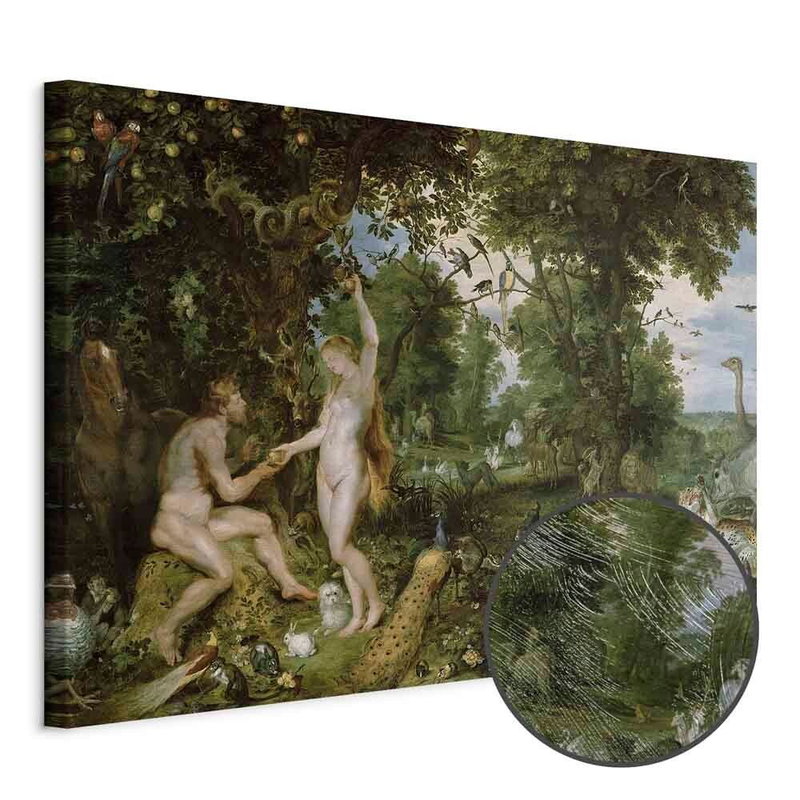
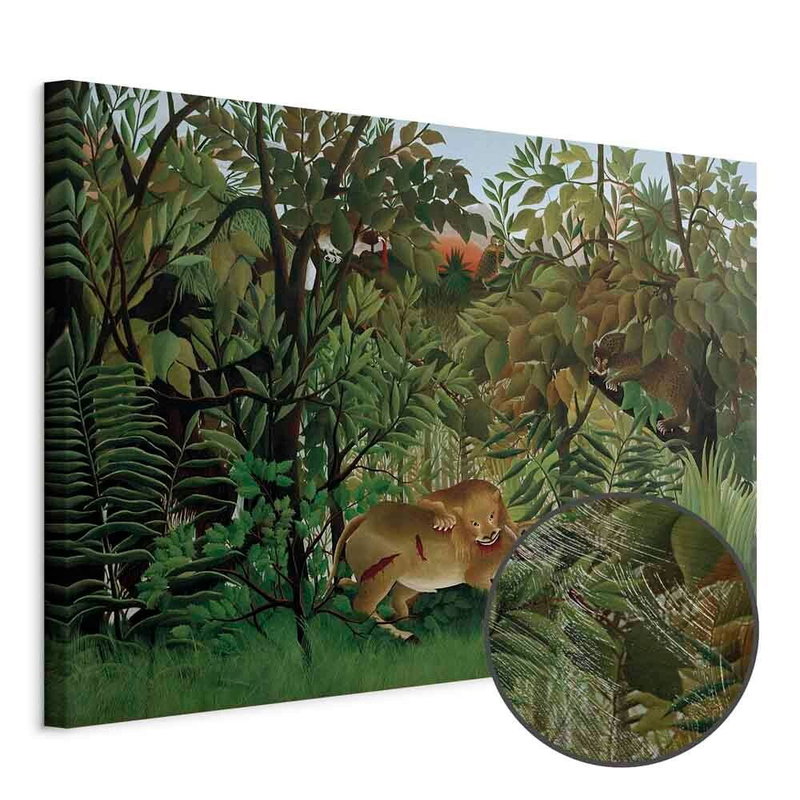
Clear gel is worked by hand over the canvas print to produce real surface texture. Fur, flowers and drawn lines belong to the printed subject. Assess the picture from seated and standing viewpoints when planning its height. The sound-absorbing construction can help reduce reverberation, depending on other room surfaces, placement and the total absorbing area. Follow the chosen product’s installation and care instructions.
The gaze changes the encounter with the room
A face looking straight ahead is often the first thing you notice. A profile can instead direct attention sideways towards other furnishings. Consider the relationship between the eyes’ direction and the background before choosing where to hang the image.
Compare the expression from a normal seat too. Small facial details and fur lines read differently from a close study of the product image. Assess the unified dark or light area as carefully as the details you enjoy, so the picture works both near and far.
Choose a picture style for the shared room
A cat design can be playful, graphic or more naturalistic without one style being the obvious choice for every setting. In a shared workspace or reception, it can help to compare different expressions together. Consider the whole composition rather than only the fact that all options depict felines.
Think about the images and patterns already visible. Large flowers around a cat’s face can connect with a botanical canvas, while a simple outline gives visual space between detailed pictures. The connection does not require every picture to show the same animal.
Distinguish product panels from separate pictures
An image with several animal portraits may be one product divided across multiple panels. Check what is included and how the parts should be placed before planning other pictures alongside. A standalone cat picture needs different space from a group in which every panel belongs to one composition.
Mark the entire product’s outer edges and include any gaps in the measurement. Make sure shelves or tall furniture do not obscure the faces. Follow the chosen model’s fixing instructions and assess absorbing area for the room’s needs, independently of the number of animals pictured.