




Distinguish the painting’s image from the surface
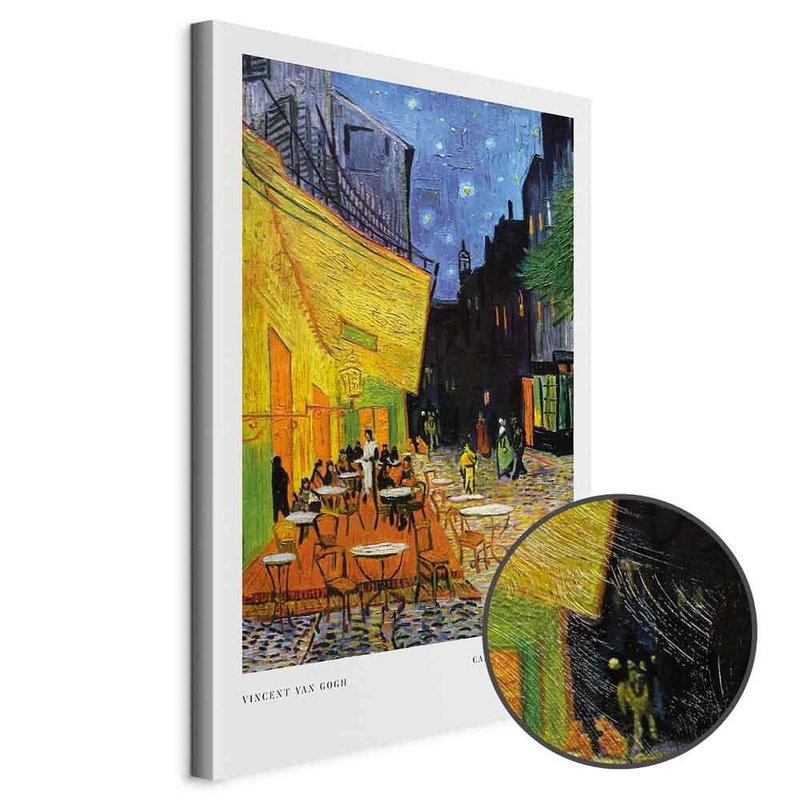
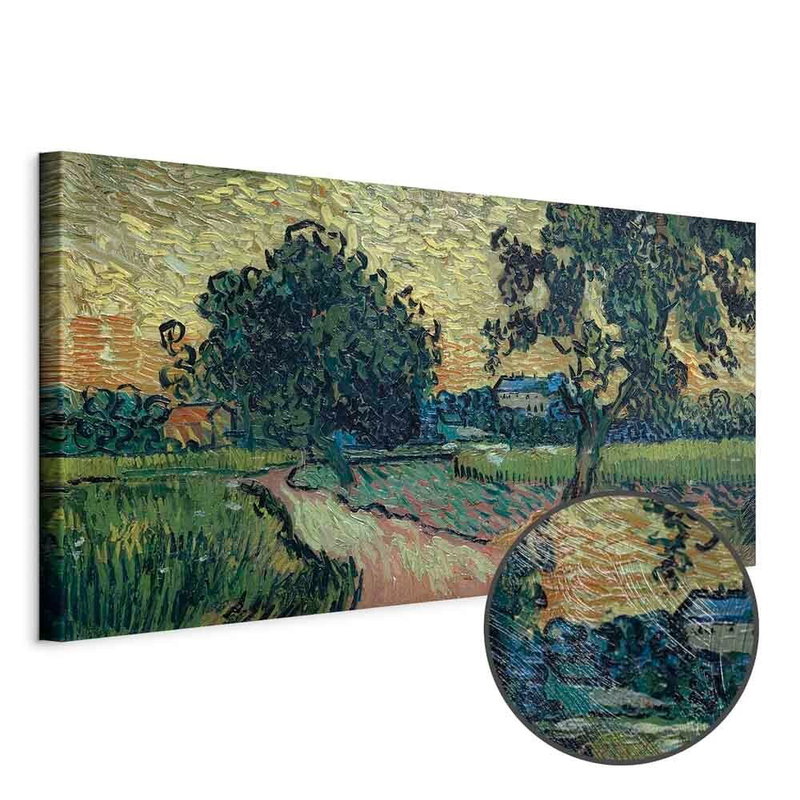
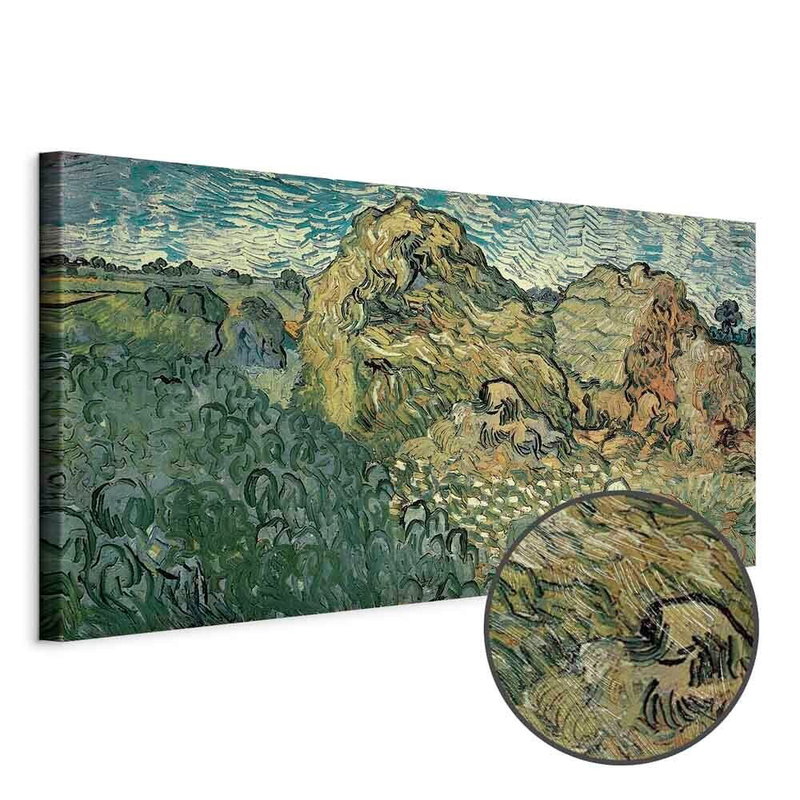
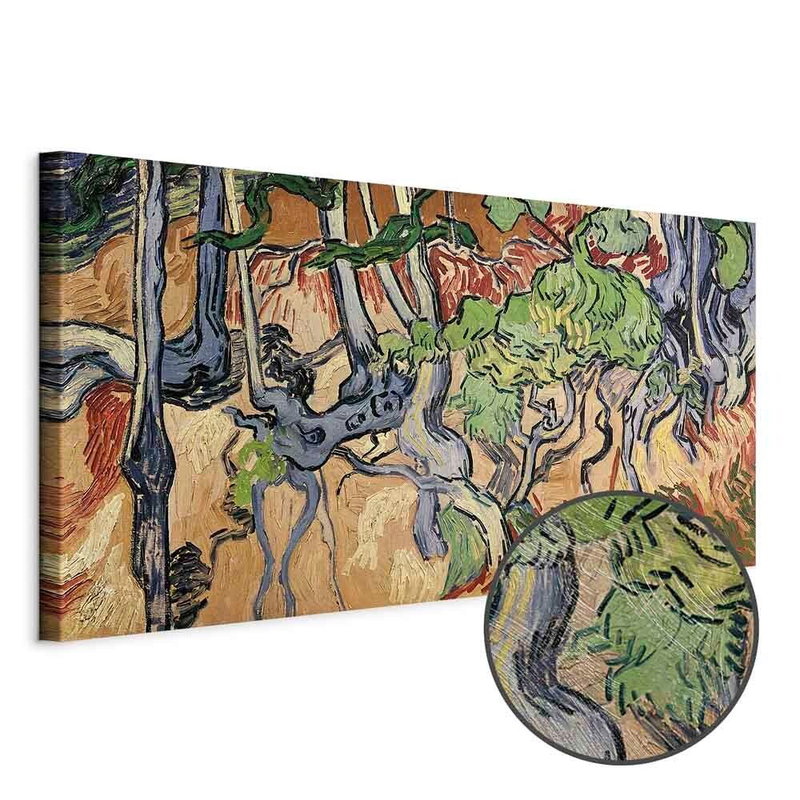
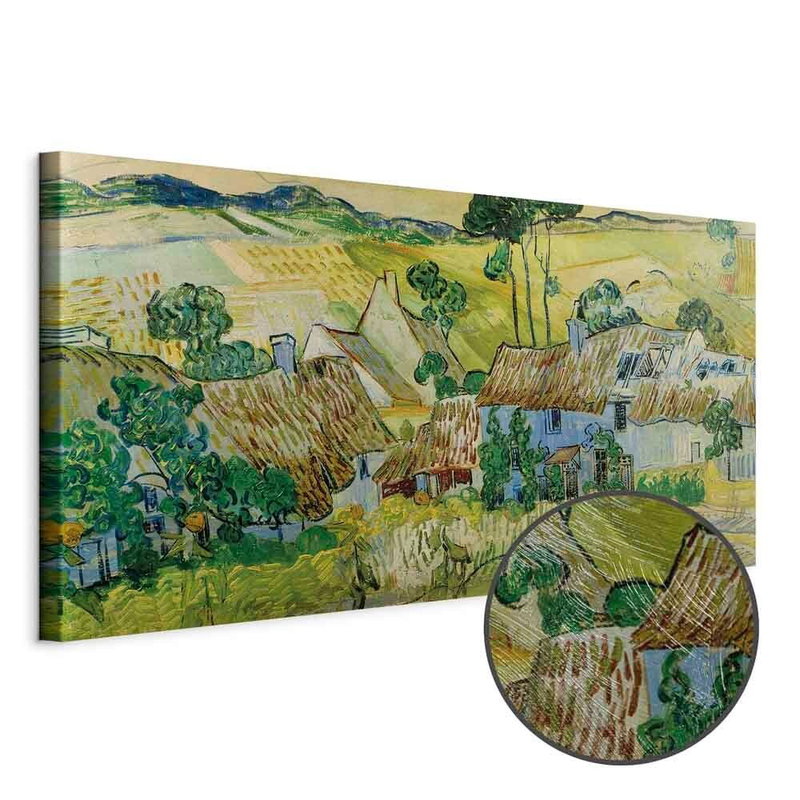
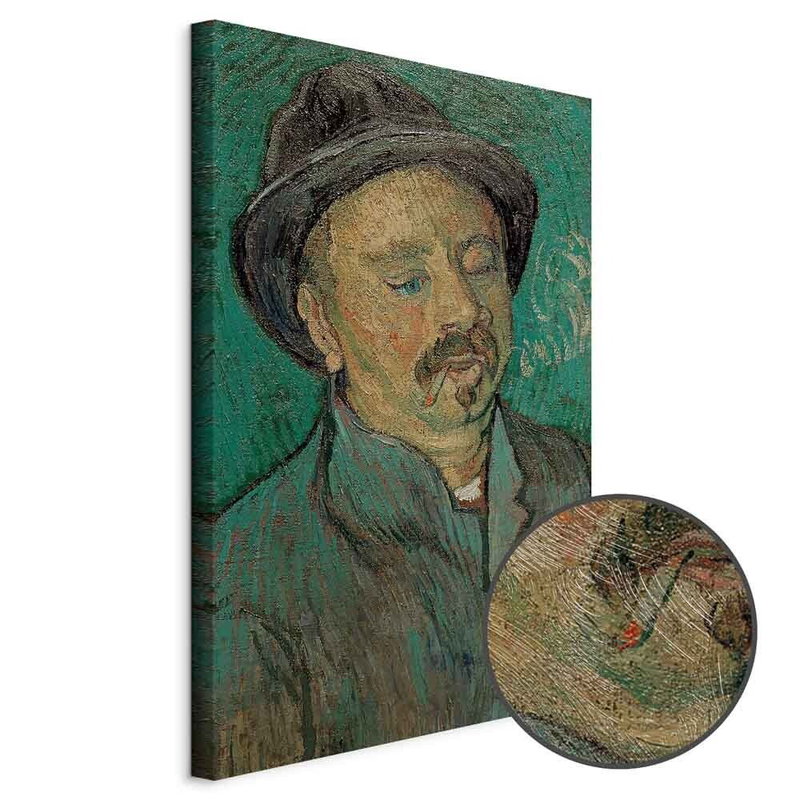
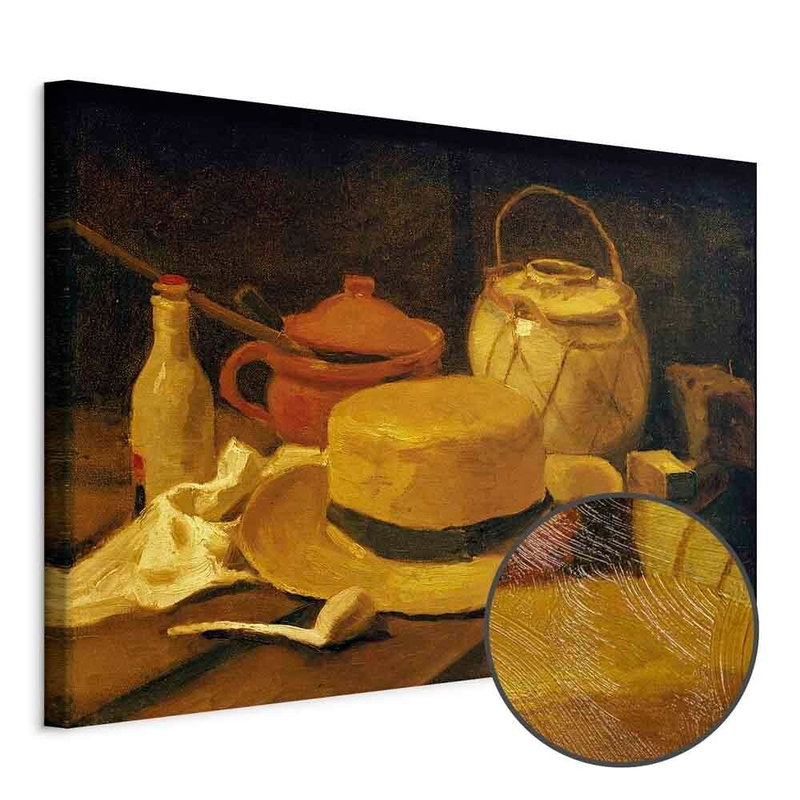
Van Gogh’s reproduced brushwork appears as colours and lines in the print. The premium range’s clear gel is applied by hand above the print and adds physical surface texture. These two elements do not need to follow each other exactly. First choose the work whose composition suits the room, then use the product information to understand its construction. The picture is a sound-absorbing reproduction and should not be confused with an original painting.
Follow the movement between roots, leaves and fields
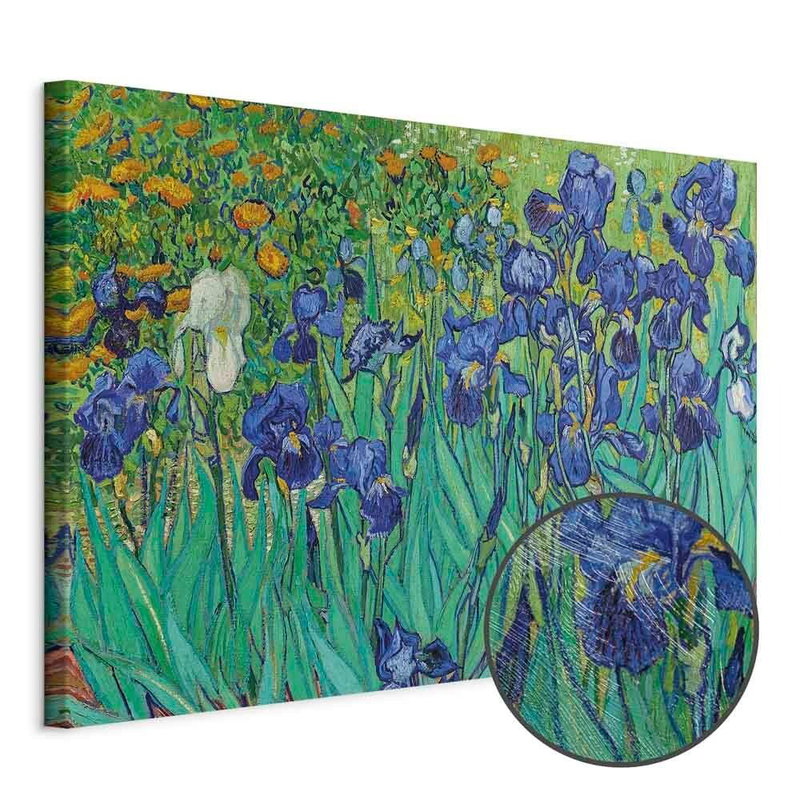
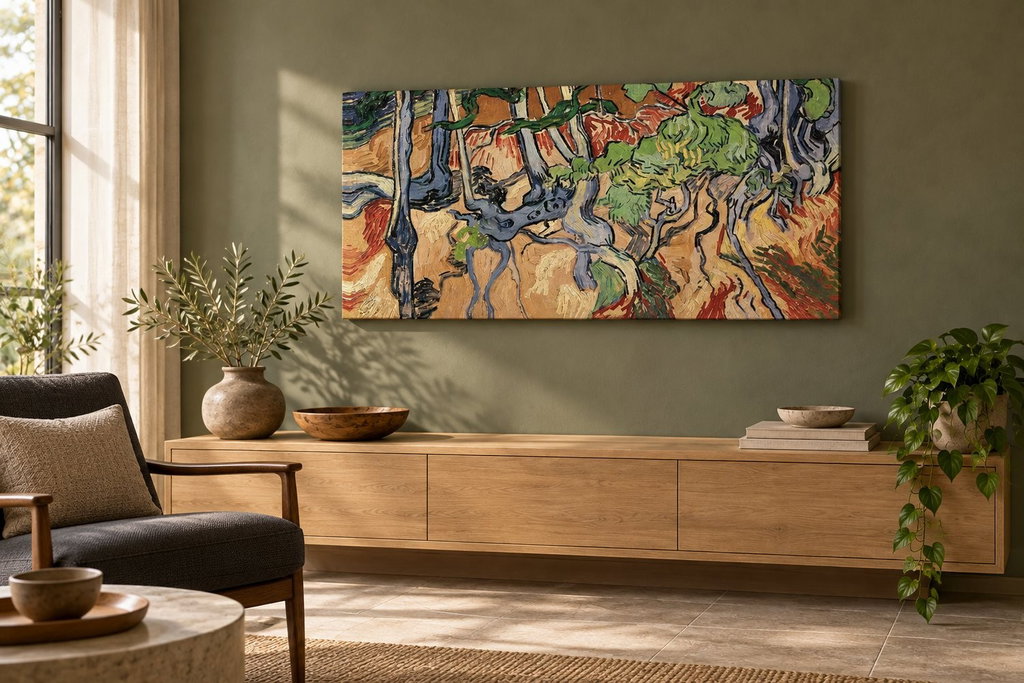
In the root image, blue-grey forms run through yellow-brown earth, while the long iris leaves lead the eye upwards. The landscapes with farmhouses and haystacks distribute the image more horizontally. These directions can help you choose between a broad wall above a sofa and a narrower space beside a passage. Compare the pictures’ larger areas before concentrating on the smallest details.
Let the room’s colours guide the combination
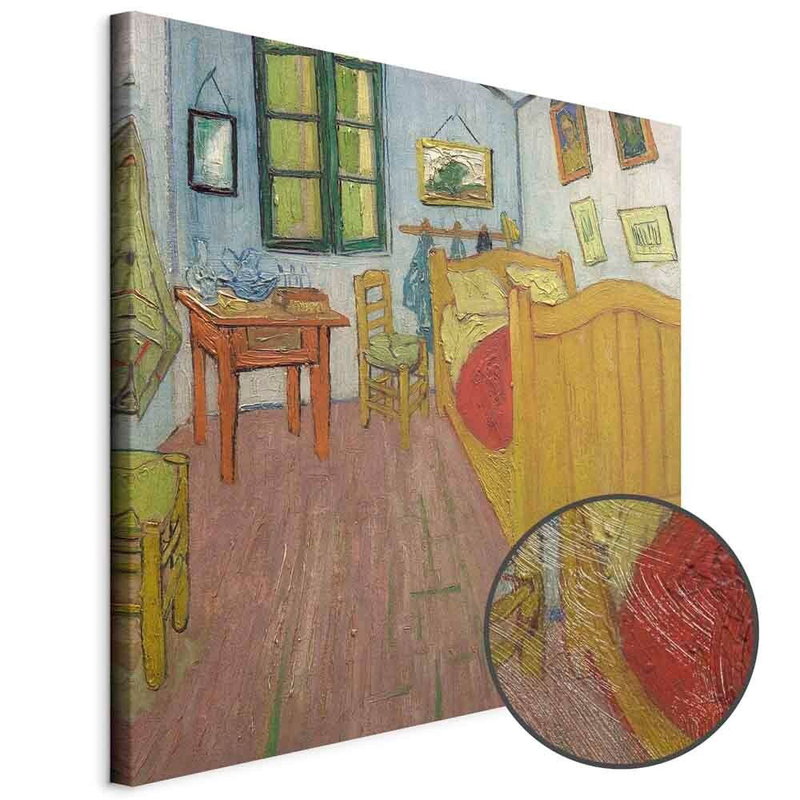
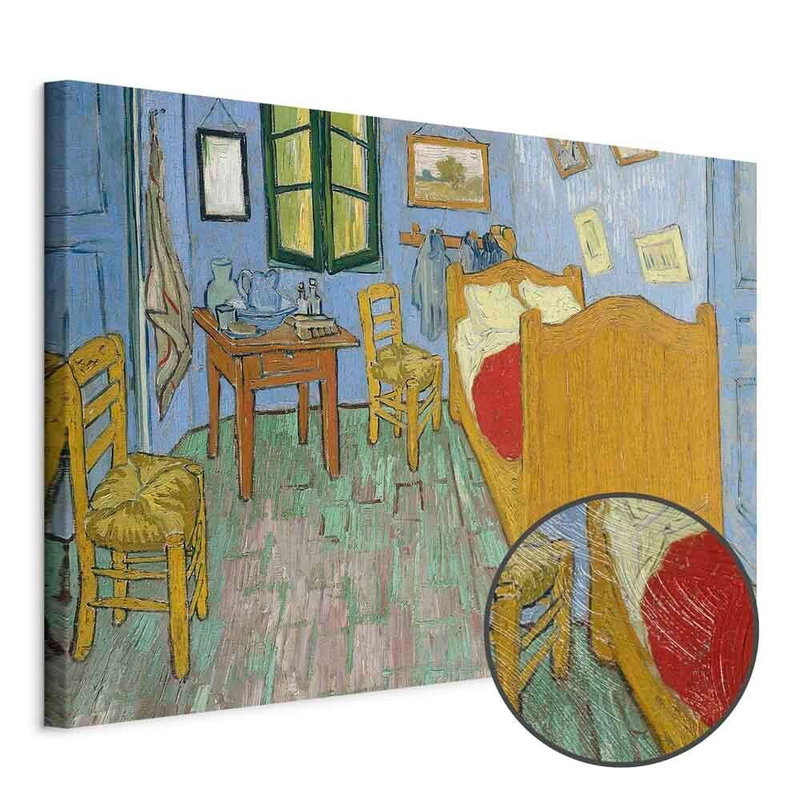
Green recurs in several images but with different companions. The irises’ blue-violet flowers and warm accents create a different combination from the bedroom’s yellow bed or the café terrace’s night-blue sky. A coherent group therefore does not need to show similar subjects. Instead, try connecting a blue or earthy tone with textiles, wood and wall colour. Leave enough space between pictures for each composition to be read individually.
Judge the whole image from your usual position
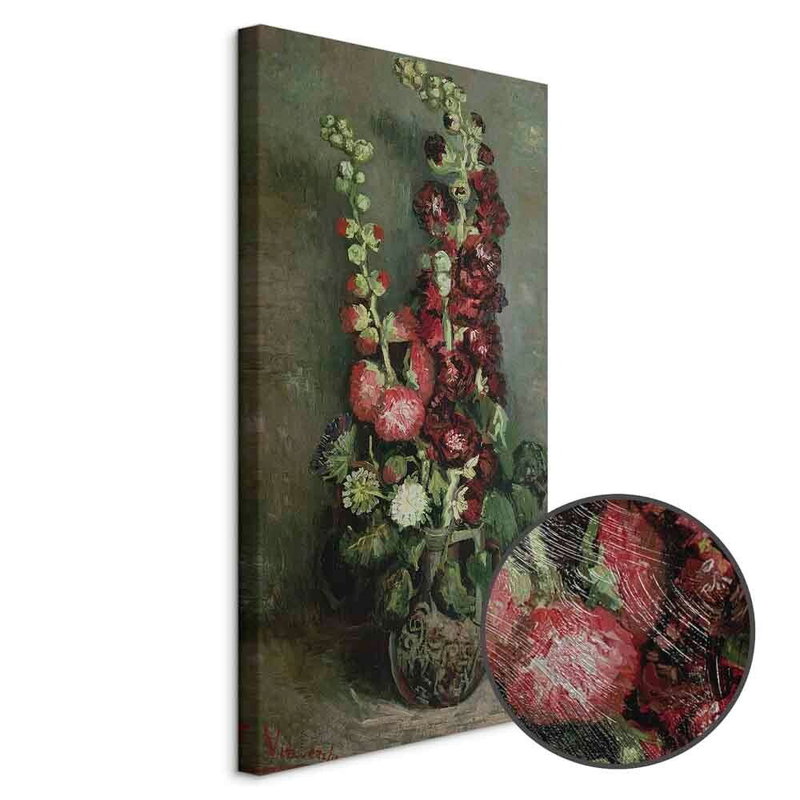
At a distance, the yellow sky, dark masses of trees or the bedroom’s large furniture shapes appear first. Closer to the picture, its lines and the premium surface’s texture become easier to see. Measure the wall and compare it with the selected product’s available formats. A broad root reproduction and an upright portrait require different amounts of space. Use the product measurements rather than estimating size from an interior photograph alone.
Plan sound absorption and care together
The sound-absorbing construction behind the canvas can help shorten reverberation. The room’s hard surfaces, other furnishings and the pictures’ area and placement affect the result. Several pictures may be appropriate when a larger total absorbing area is needed. Follow the selected model’s installation instructions and treat the hand-worked surface carefully during maintenance. Read the product’s own advice before choosing a cleaning method; surface and construction are parts of the same premium product.
Choose a work for its own composition
An artist’s name connects the selection, but individual pictures have different focal structures. A dense plant image can fill the surface with forms, while a room scene is built around distinct objects and perspective. Compare the full images before choosing a reproduction for the intended position.
Let interest in the artist provide a starting point while assessing each work individually. You do not need the same picture type everywhere. A smaller recurring colour can be enough to connect two different subjects with the rest of the interior.
Distinguish the reproduction’s format from the depicted work
Use the product image and dimensions for the option you choose. Do not assume every available format reproduces the same crop or panel division. Compare the complete image and check whether the composition is continuous or divided across several panels.
When divided, include the gaps in the group’s total space. Keep the parts in the order belonging to the product and follow its hanging instructions. Both the printed subject and physical outer edges need to work with the wall.
Give each reproduction its own readable position
A collection of works can be easier to appreciate when one is the main image and the others have clear gaps. Compare the distribution of light and dark areas in the group. Many strong forms alongside one another need different judgement from a single canvas on a clear wall.
Assess the position up close and from everyday places in the room. Check whether a lamp or tall furniture obscures important image areas. Then connect decorative planning with the need for absorbing area; the artist you choose does not change how the sound-absorbing construction should be sized and mounted.