



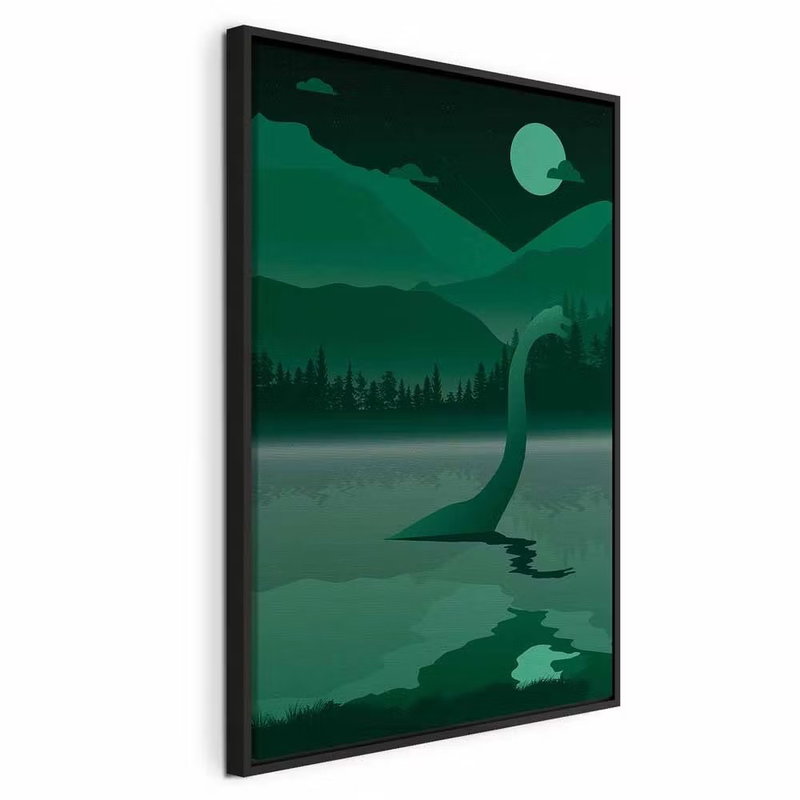

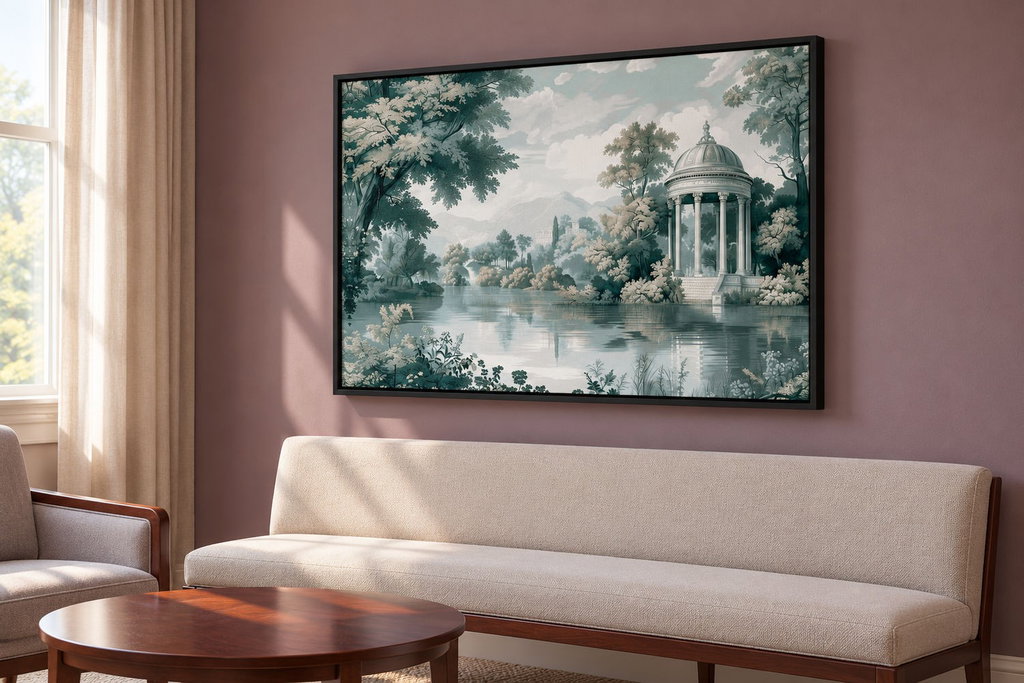
Water and surroundings form a whole
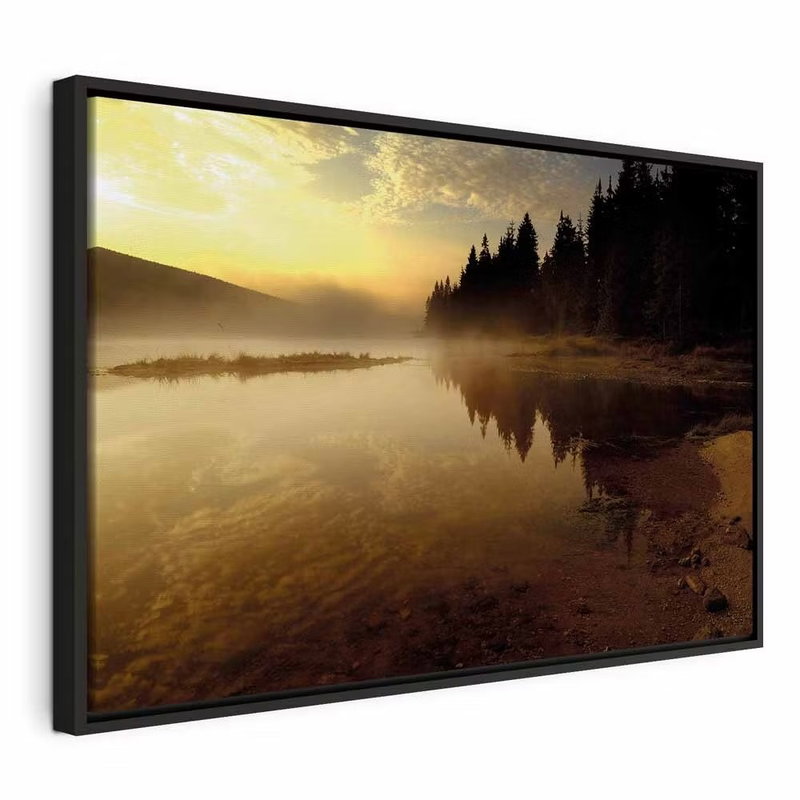
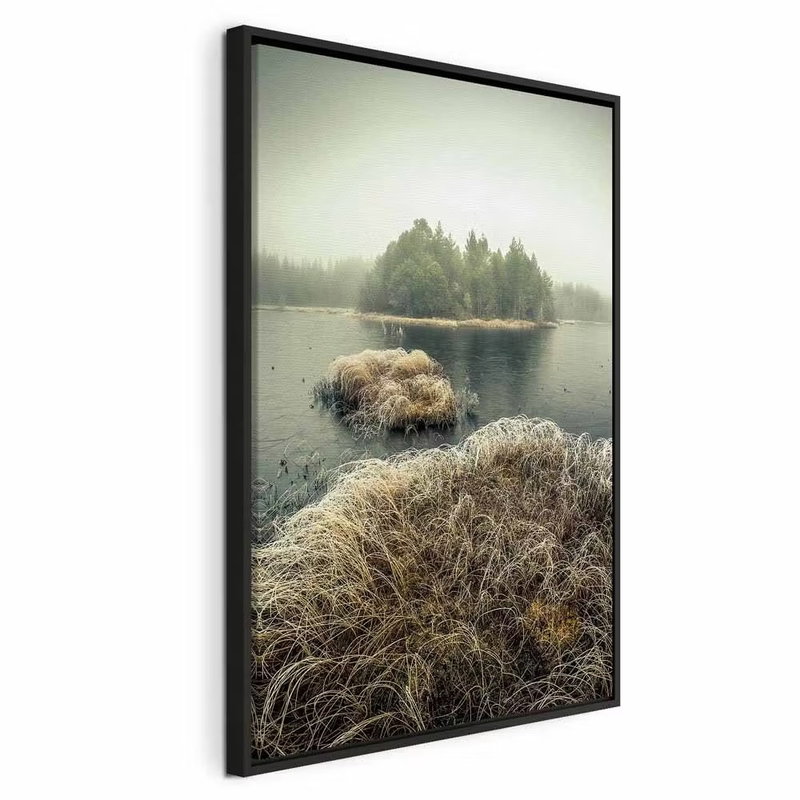
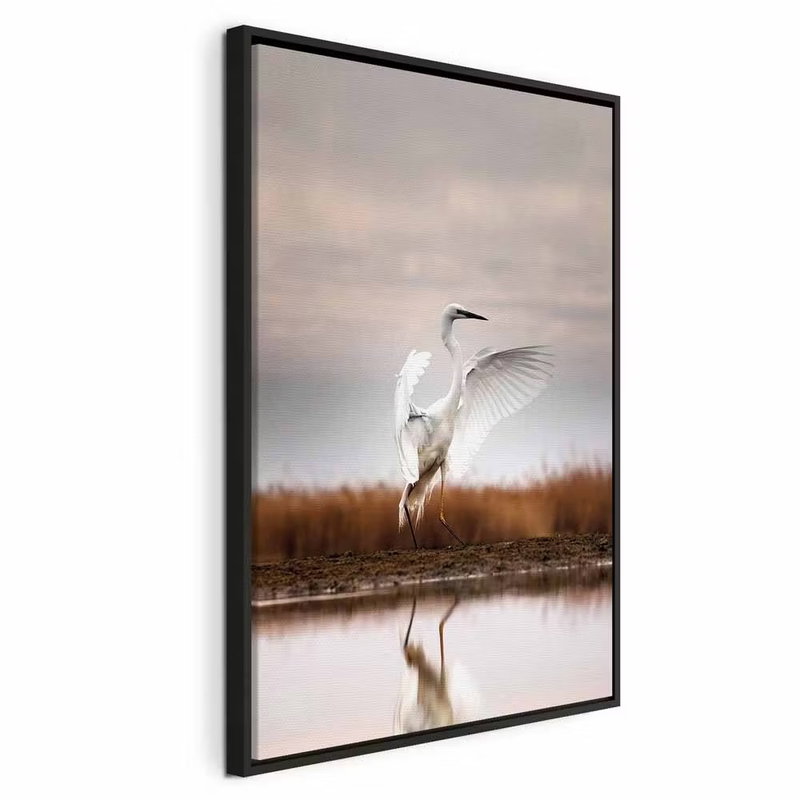
A lake image may let water fill almost the entire composition or show shores, trees and sky meeting around it. The checked selection also includes a heron as a clear focal point in the waterside setting. Notice how landscape and animals share attention.
A reflection, low horizon or solitary figure may make the image interesting for your room. Compare actual compositions. A lake connection does not mean every picture has the same colours or level of detail.
Reflections and quiet areas on the wall
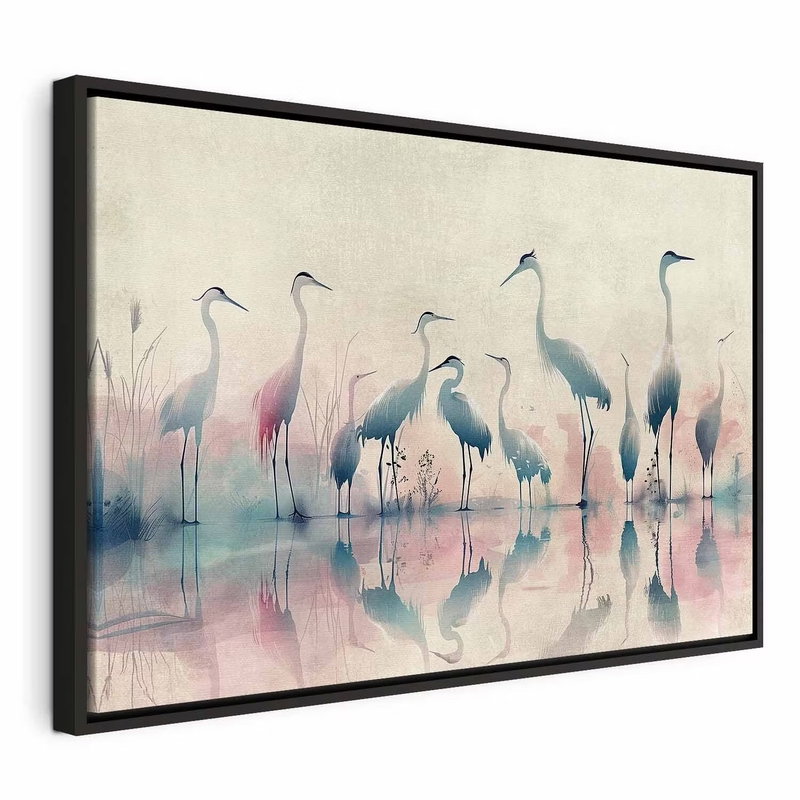
Repeating forms in the water give the image a particular balance between upper and lower sections. This can suit a place where a clear subject brings the interior together. A detailed shoreline scene may instead reward pausing closer to the picture.
Choose a shade to connect with textiles or furniture. A restrained water surface can complement a room that already has many patterns. If the picture should be the main feature, allow more clear wall around it.
Frame and format define the view
A visible outer frame marks where the lake landscape ends and the wall begins. Compare frame choices with the wall colour and the image’s darkest or lightest areas. This helps assess the whole before choosing a variant.
Measure the position and check the stated dimensions. Small shoreline details or a bird may need more picture area to be visible from a sofa group, while a simpler composition works differently. Avoid a position where the main subject feels hidden behind furniture or tall objects.
A sound-absorbing picture for the actual setting
The lake image is the decorative surface of a sound-absorbing construction. It can help reduce reverberation alongside furnishings and any other absorbers. Choose not just by its calm expression but also by the absorbing area required.
Read fixing and care instructions and adapt mounting to the wall. Water depicted in the print does not indicate moisture resistance. The model’s documented indoor use should determine its position.
Give the reflection enough room
Notice how the water divides the image. A reflection may repeat shapes clearly or suggest them through gentle colour changes. Both can feel cohesive without needing the same surroundings. Compare the image’s horizontal line with a table, sofa or window, and decide whether it should follow those lines or establish its own direction.
When a bird or another distinct element carries the subject, it needs to remain visible from the usual seat. Check its share of the image and contrast against the background. A detail that catches the eye in a close-up may become less prominent when the whole picture is on the wall.
Colours that connect water and interior
Look for a colour at the meeting of shore and water rather than only in the largest area. That shade can recur subtly in textiles or wood. Consider the distribution of light and dark too. Pale water above a dark sofa has different visual weight from an image dominated by denser shoreline shapes.
The lake image need not be combined with other water subjects. It can stand alone or connect with nature pictures through colour, frame or a similar level of detail. Leave enough space for each landscape to be read. Adapt gaps and outer dimensions to the wall area actually available.
Consider the room’s everyday light
Assess the position at different times of day and avoid furniture or tall objects cutting across important details. Painted or photographed light is different from the actual room lighting. Plan illumination and position together, then follow the selected product’s mounting and care advice.