




Magnolia shapes in painted and drawn compositions
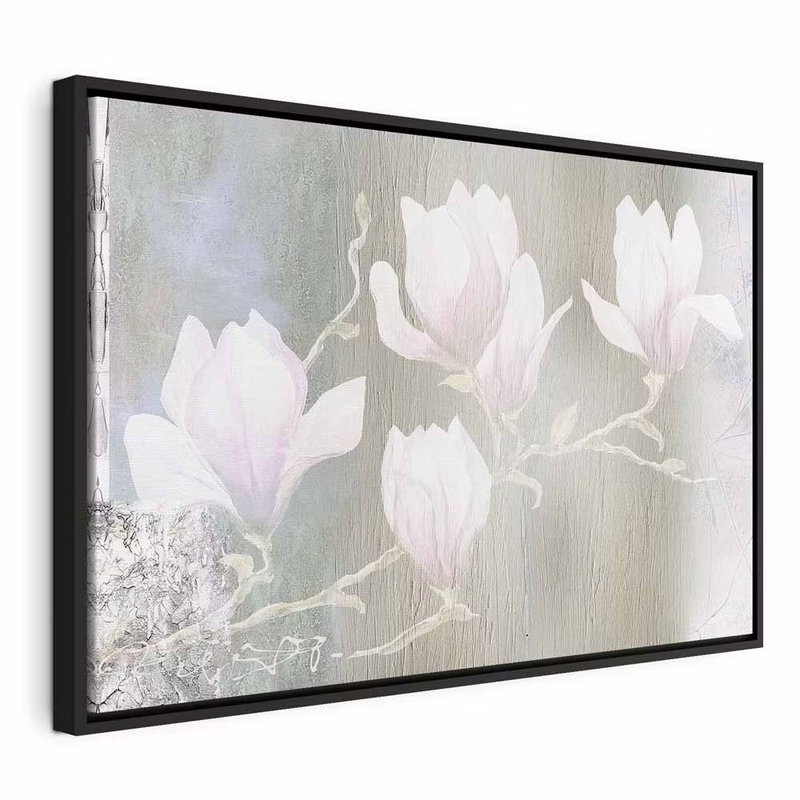
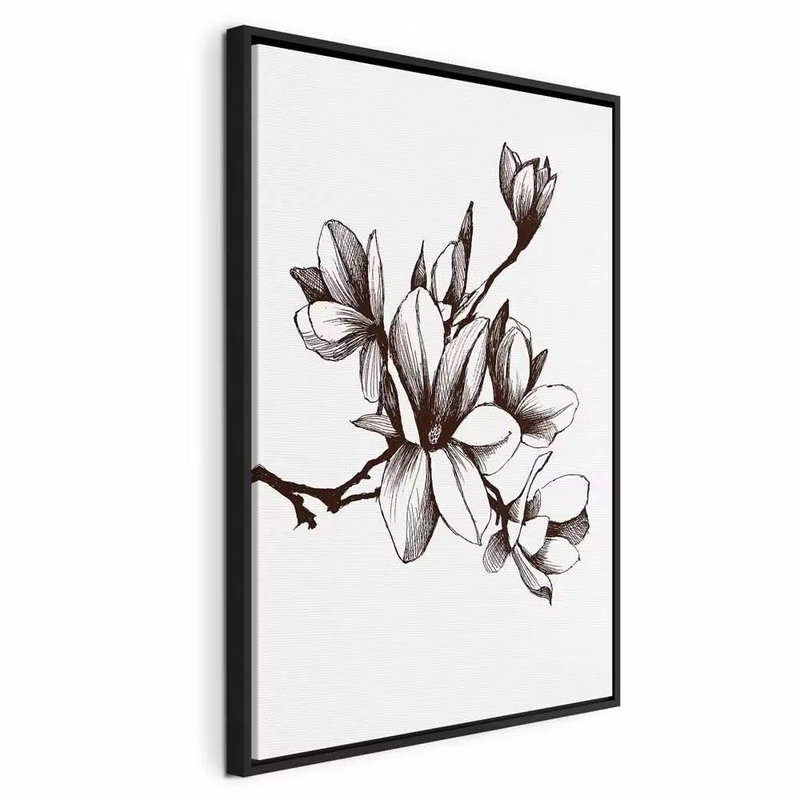
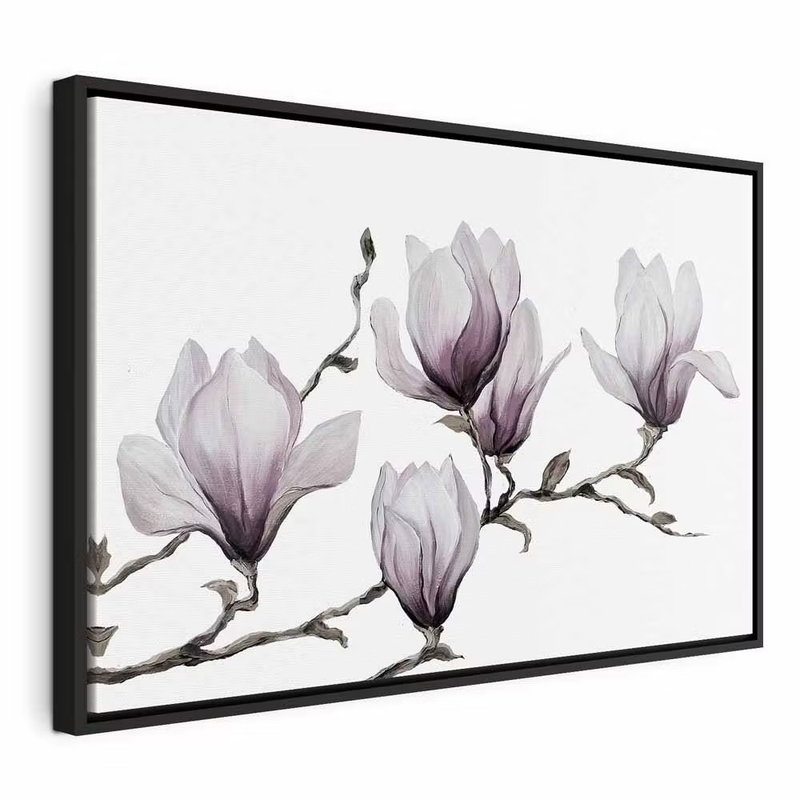
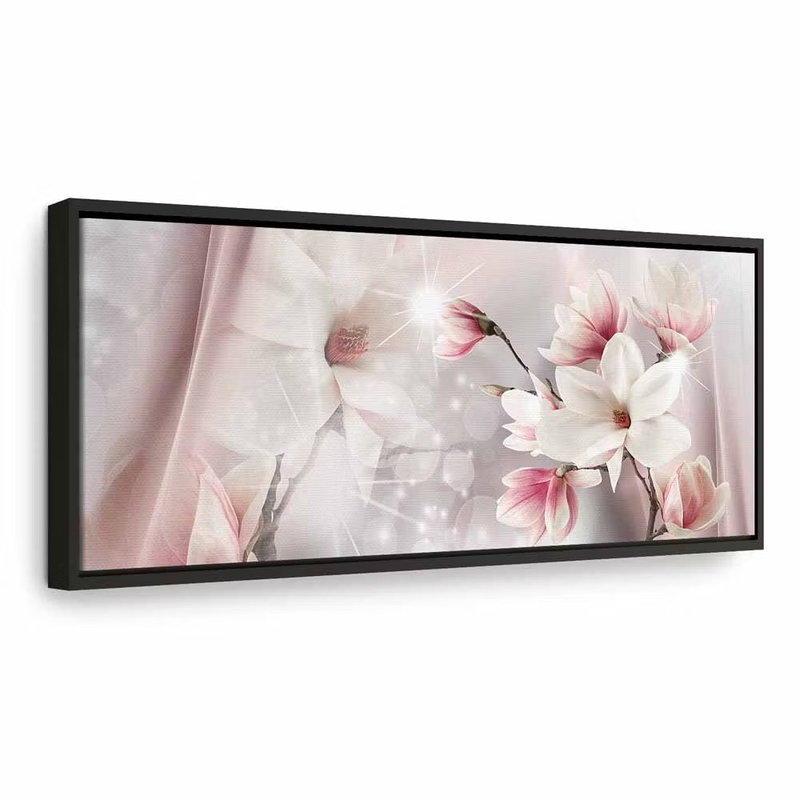
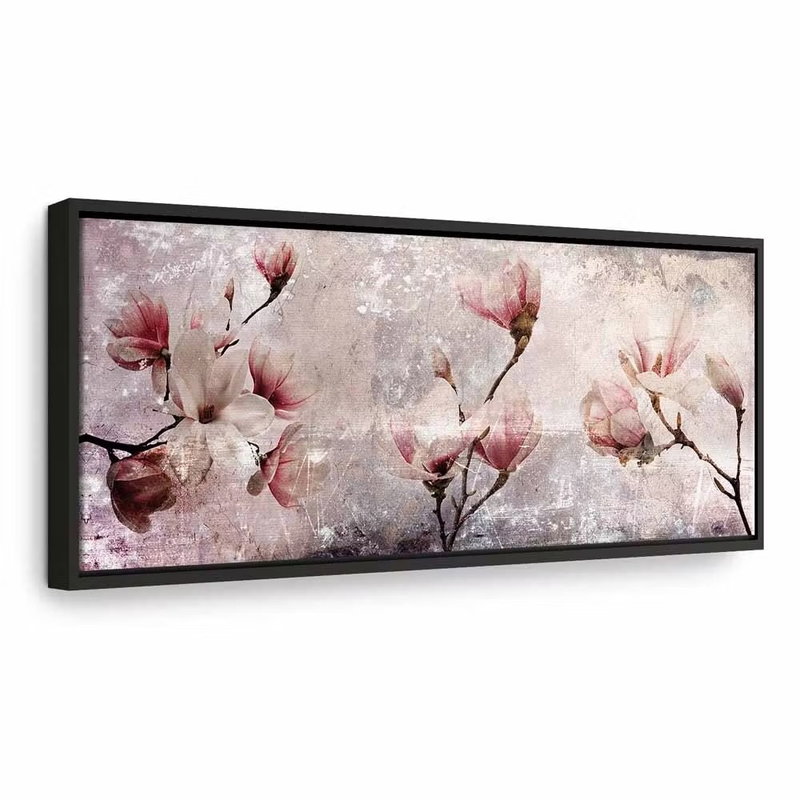
Magnolia flowers can appear as open cups, closed buds or a sequence along dark branches. Each composition emphasises different features of the plant. Empty space matters in a light line drawing, while painted petals may blend into the colours of the background.
Pink and white against the wall colour
Pale pink and white flowers can provide a quiet contrast to a warm grey or more colourful wall. Look at the grey, brown or weathered background too. It shapes the overall effect as much as the flower colour. Check the frame options offered for the individual product.
Choose a format that follows the branches
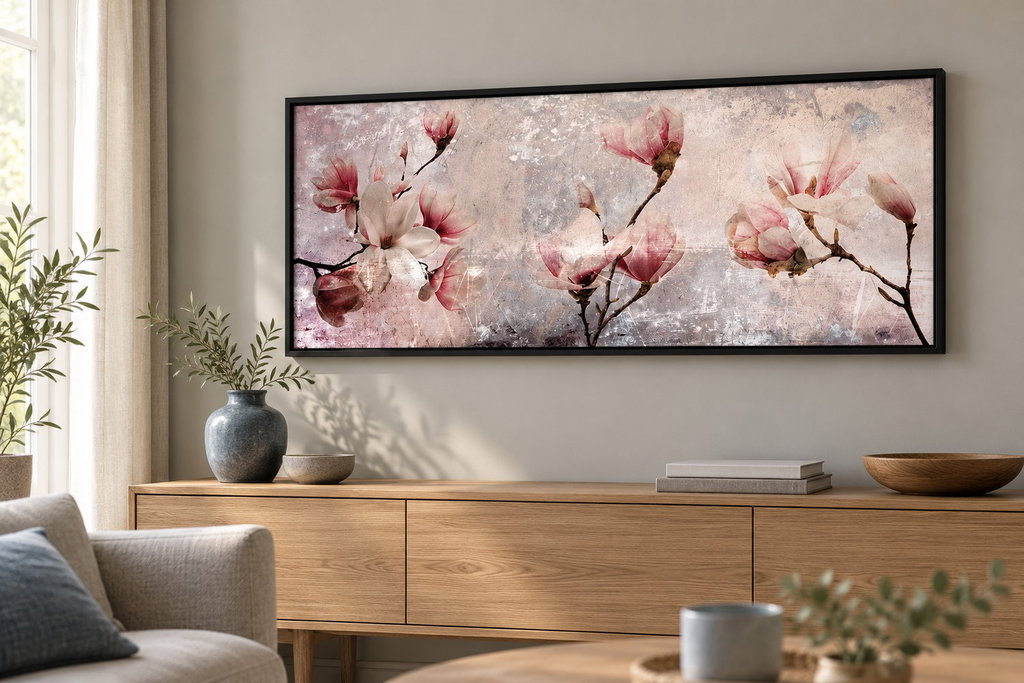
A wide branch composition needs a different setting from an upright flower detail. Measure the wall above a sideboard or beside a seating area and use the picture’s actual outside dimensions. Leave space around the frame so the artwork and furniture each have a clear place.
Botanical art with an absorbing structure
The flower print is the decorative face of a sound-absorbing picture. It can help reduce reverberation, although the result depends on the room’s surfaces and total absorbing area. Follow the model’s mounting and care instructions. Different sizes and frame choices of the same image remain one motif.
The shipping offer covers delivery to collection points where offered, rather than all business-parcel deliveries.
Give flowers and empty space equal importance
Large magnolia petals may be the picture’s strongest focal point, but the direction of the branches and the open areas determine how the composition works on a wall. Look at the whole image before choosing on the strength of a single flower. A branch running diagonally creates a different movement from several flowers gathered near the centre. A composition with plenty of background can feel airy even at a large size. This does not mean choosing the smallest possible picture: the distance from the seating position affects how clearly both lines and subtle colours can be seen.
Compare it with the room’s actual light
White petals are rarely pure white in a painting. They may contain grey, beige or faint pink shadows that matter alongside the wall and furniture. Compare the lightest and darkest parts with the room, rather than looking at just one flower colour. Near a window, the picture may look different during the day and under evening lighting. A screen helps you choose but is not a precise colour reference. If the wall already has a strong colour, a recurring background tone can create a connection without making every part of the interior match.
Give the picture a clear place above the furniture
Try marking out the outside dimensions with removable markers before choosing a size. Assess the position from the places where the picture will be seen, such as an armchair, a meeting table or the entrance to the room. A broad magnolia branch can follow a low piece of furniture, while an upright image can give direction to a narrow wall. Keep clear of shelves, lamps and door frames so that the frame has an outline of its own. Always check the formats actually offered for the individual image; a different crop can change the balance between flowers, branches and background.
Build a coherent wall with variety
When hanging several pictures together, start with a shared tone or a recurring direction of line. The pictures do not have to show exactly the same flower, but each image needs enough space to be read clearly. Avoid judging a magnolia solely by how well it matches a small product thumbnail beside it. Open the images individually before comparing the overall group. Plan the position of the frames and the spaces between them. Let the furniture and the way the room is used determine how far the group should extend across the wall.
Plan sound absorption as part of the room
A sound-absorbing magnolia picture can combine a distinct floral image with a more comfortable sound environment, but the subject itself indicates no acoustic performance. A room with hard flooring, large glazed areas and frequent conversation may need several absorbing surfaces. Assess the total picture area alongside the other furnishings and read the product’s documented properties. A picture that reduces reflections within a room does not replace a sound-insulating construction between rooms. Choose mounting arrangements to suit the wall and the particular model’s instructions, so that the appearance and practical position work together.