



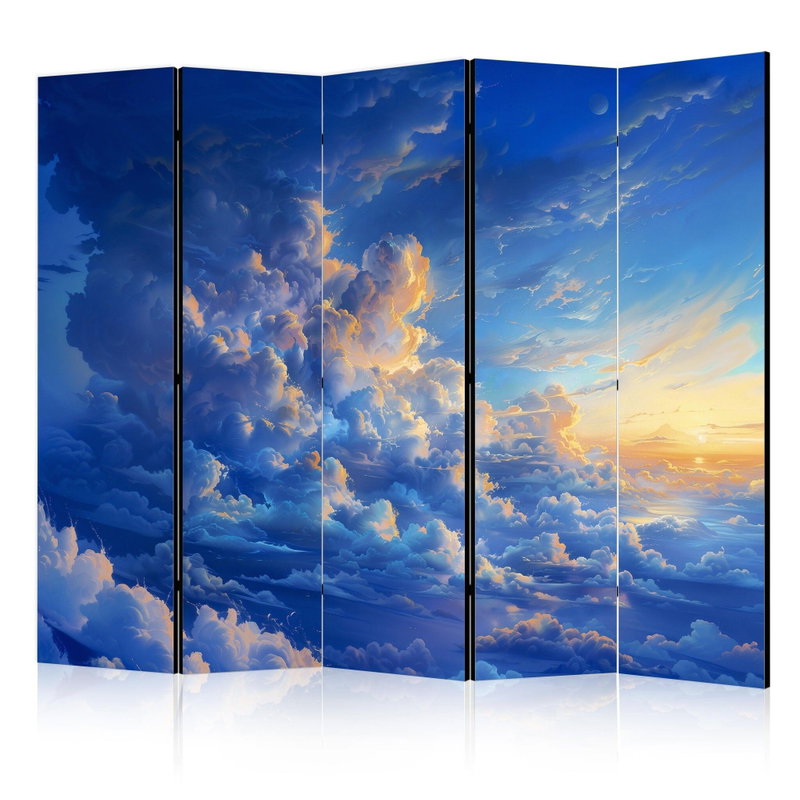
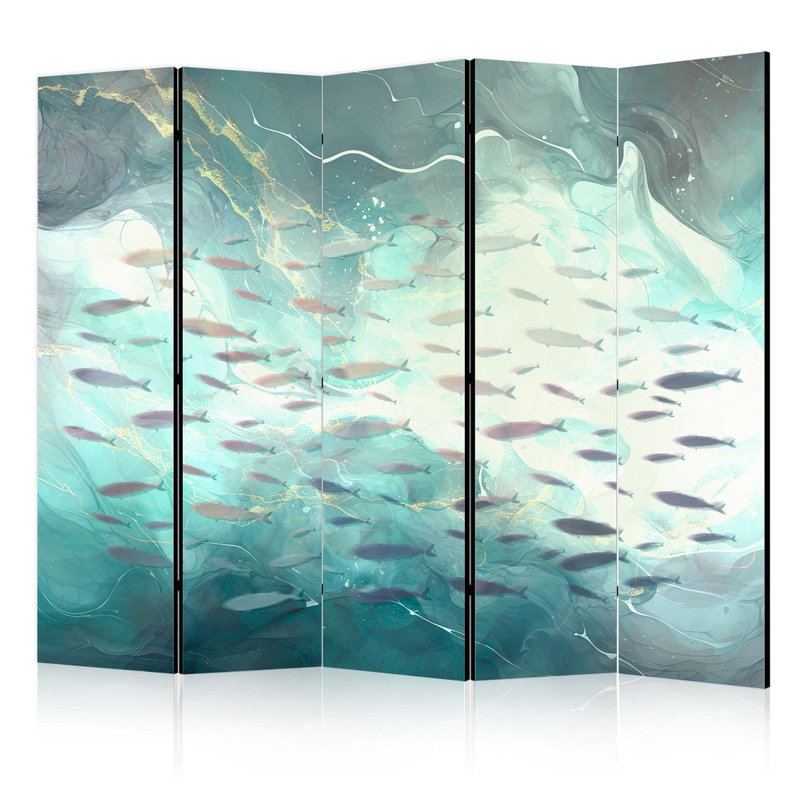
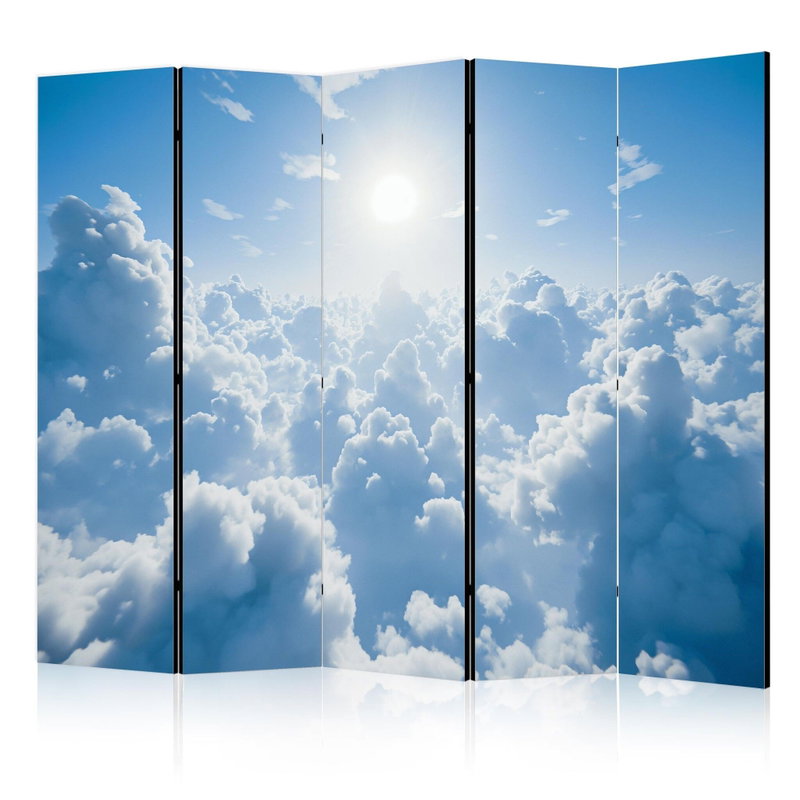
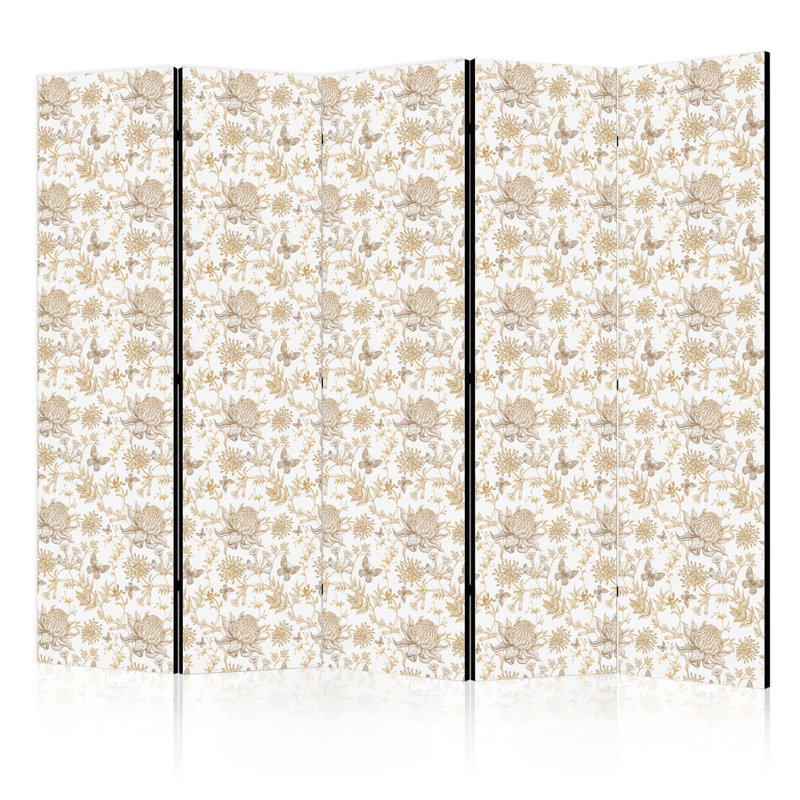
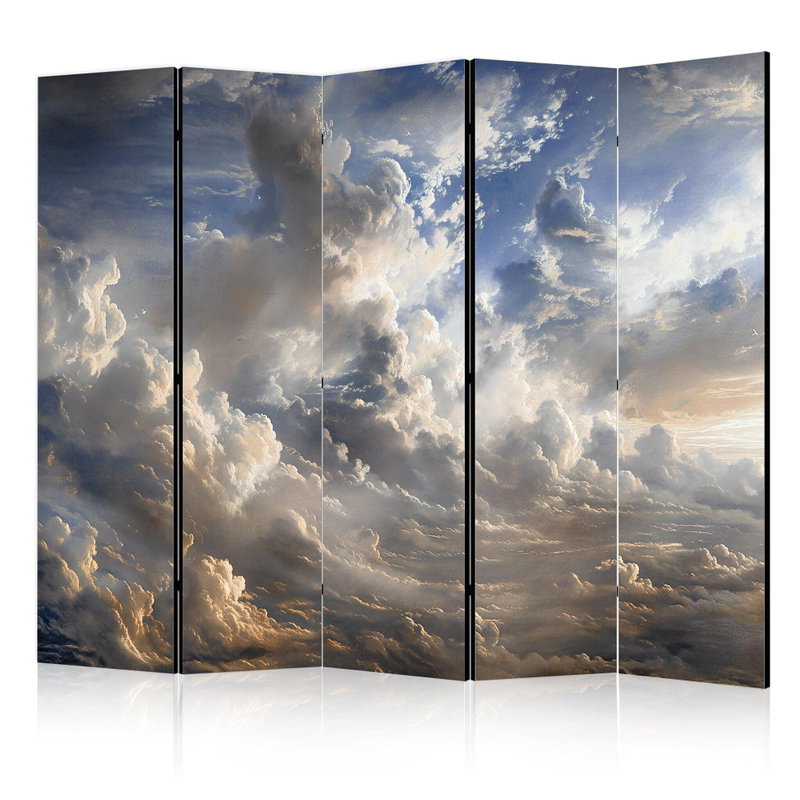
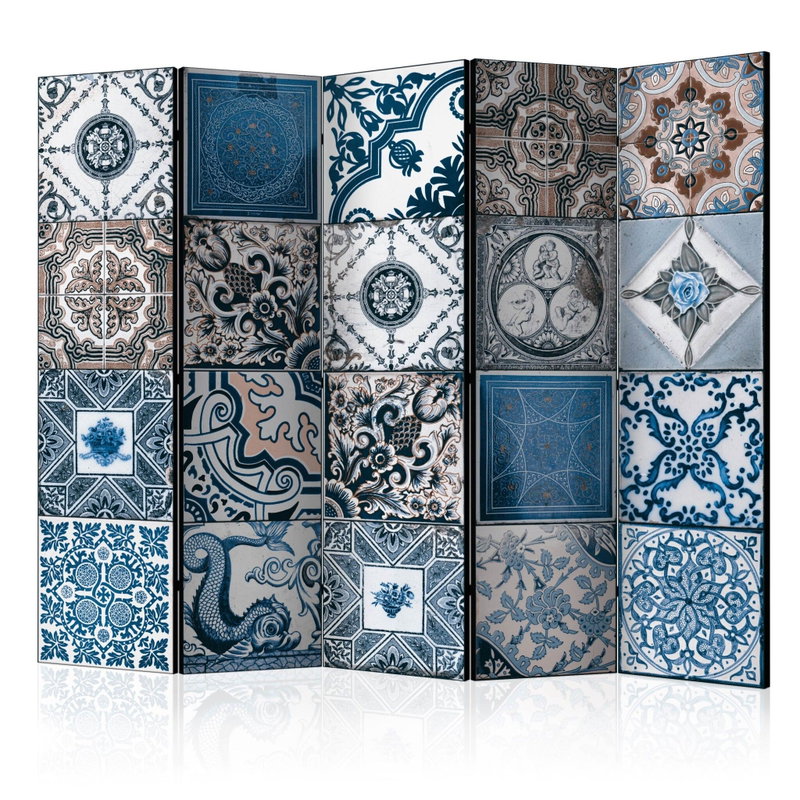
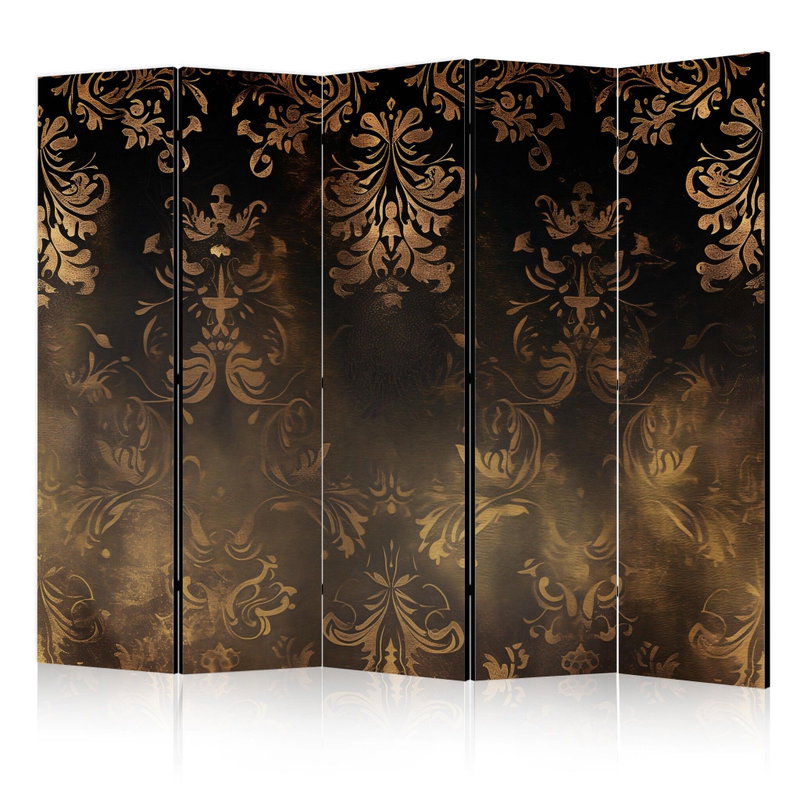
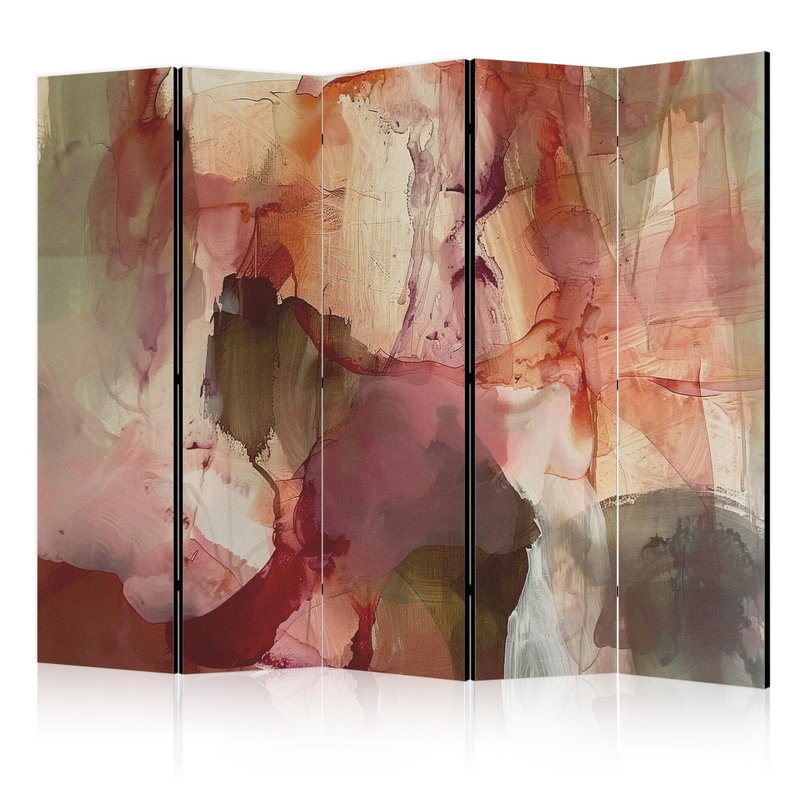
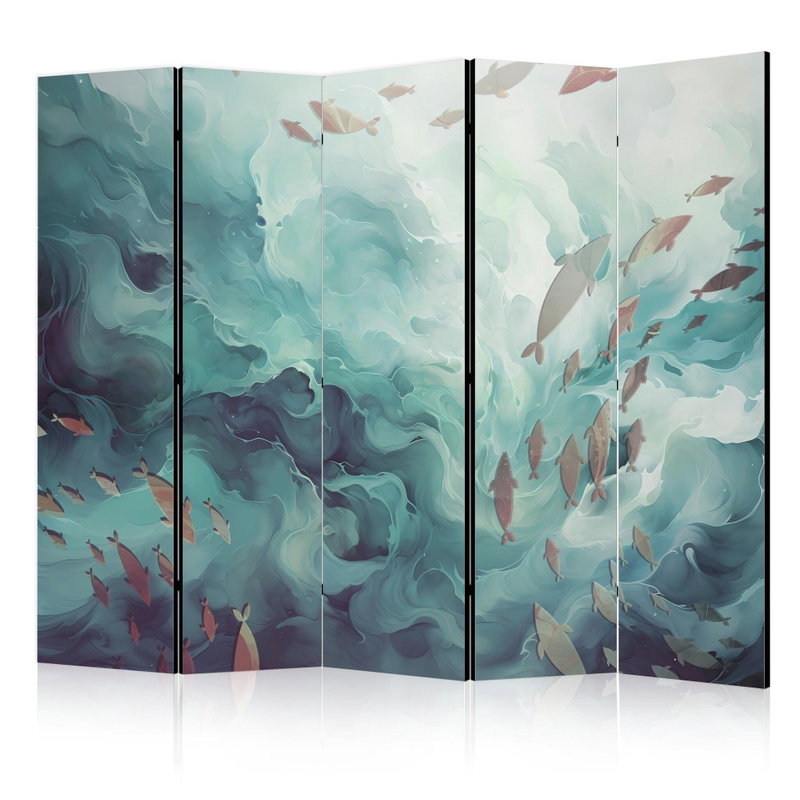
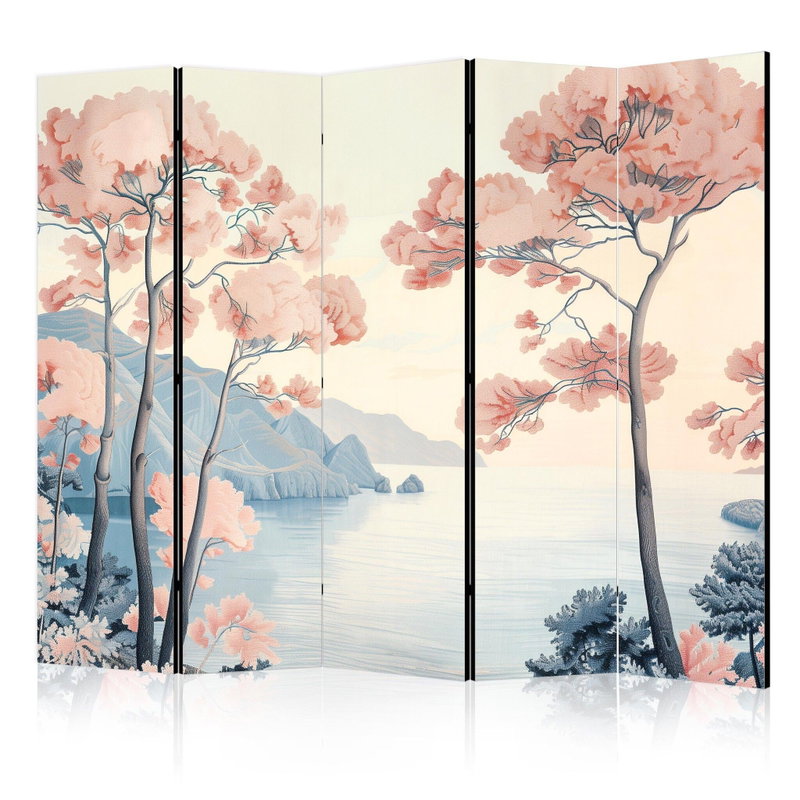
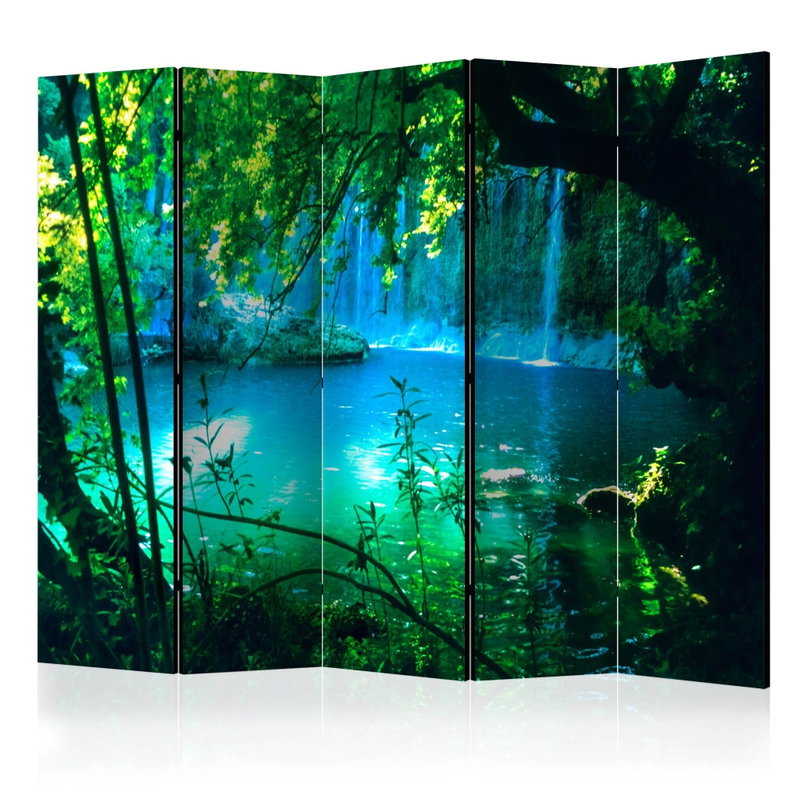
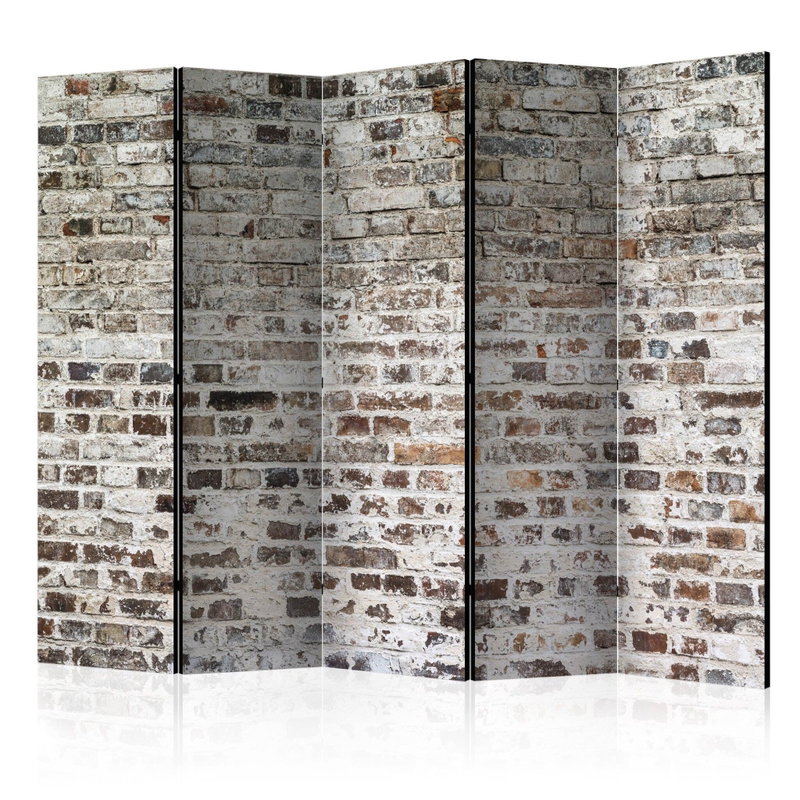
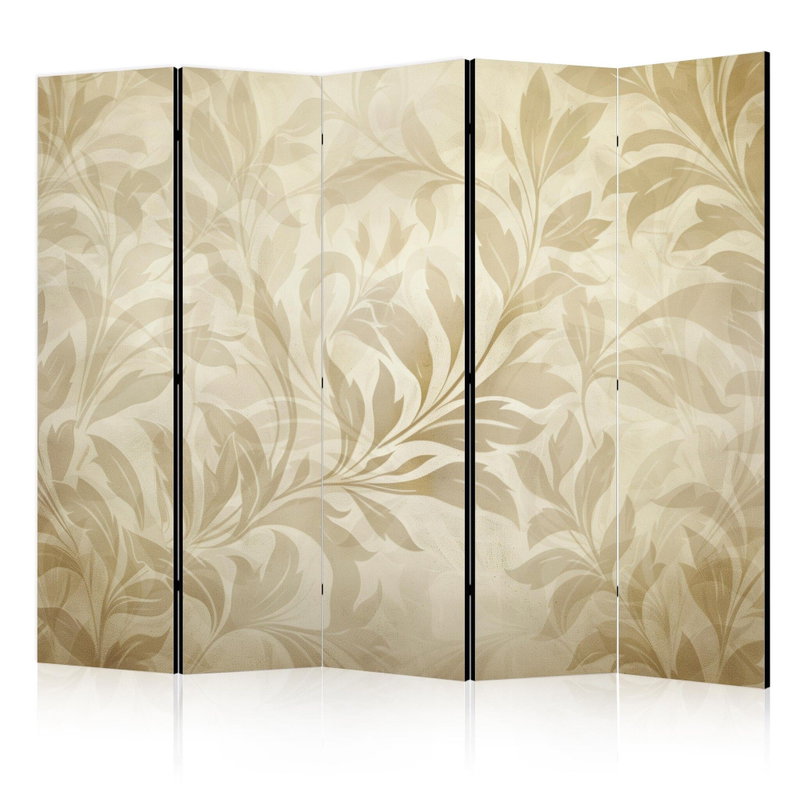
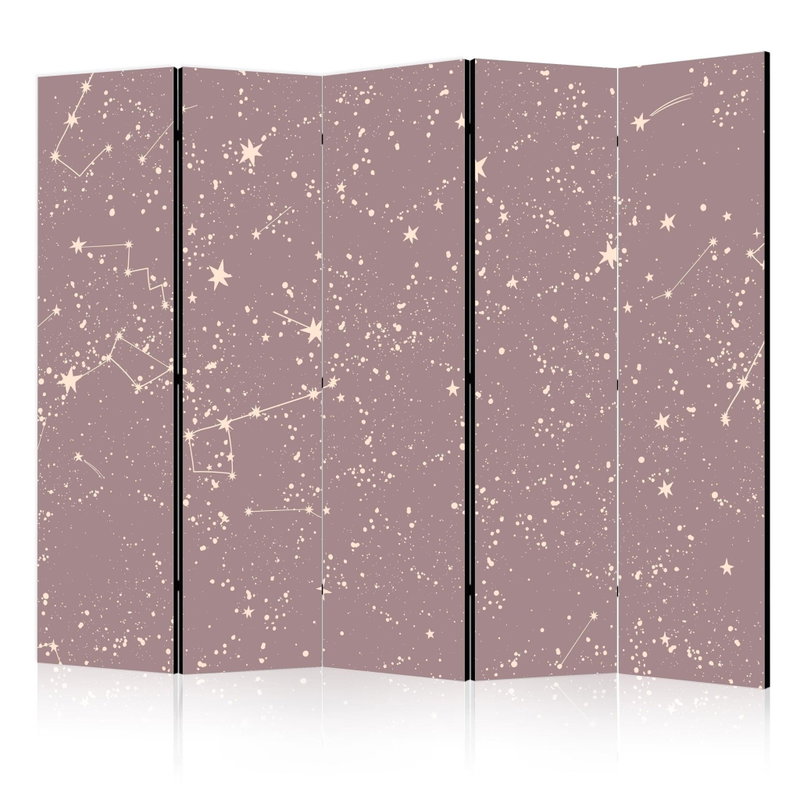
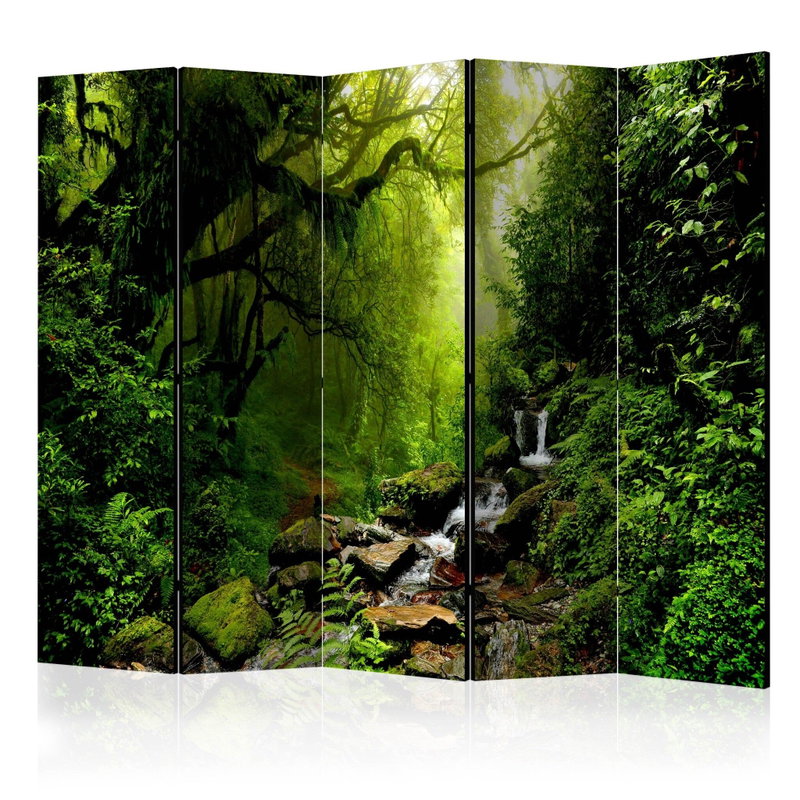
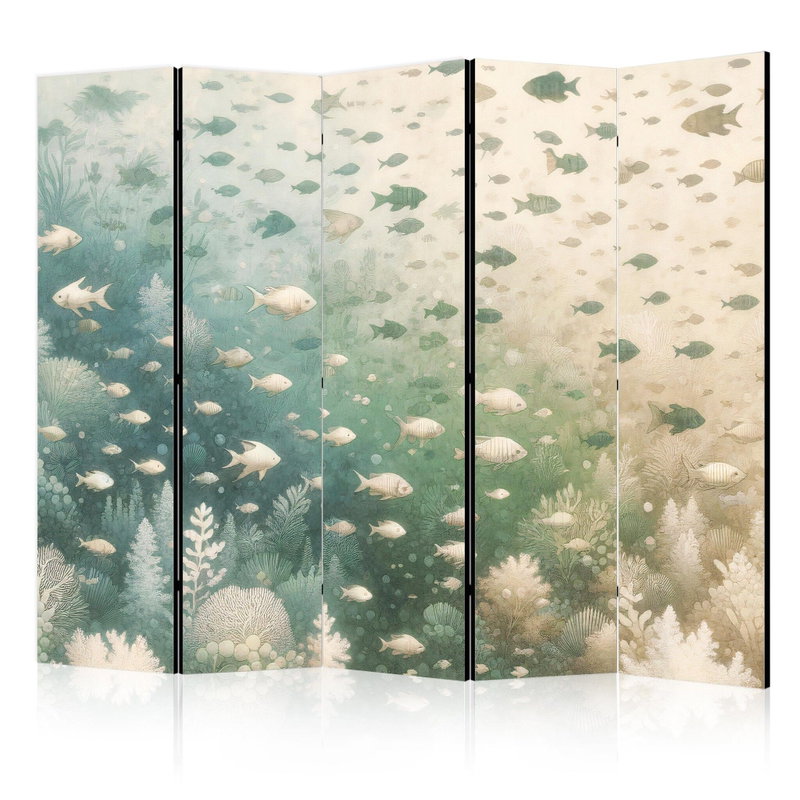
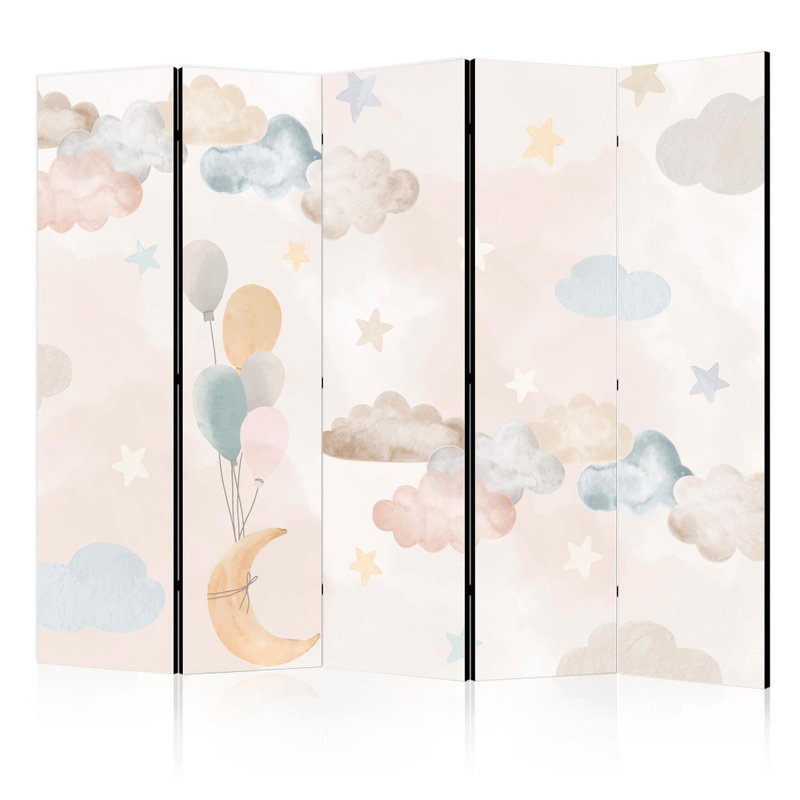
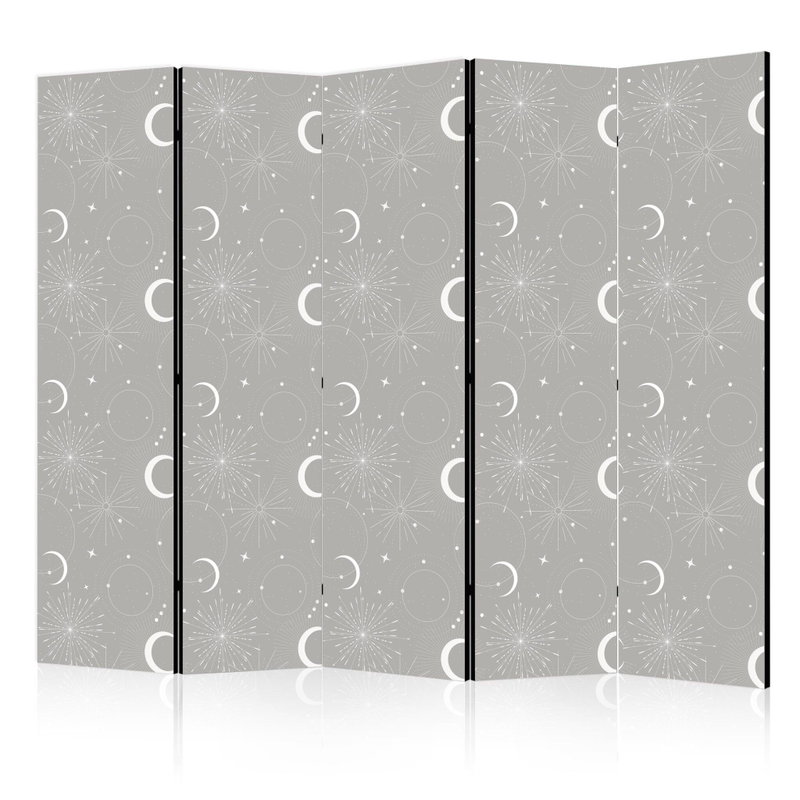
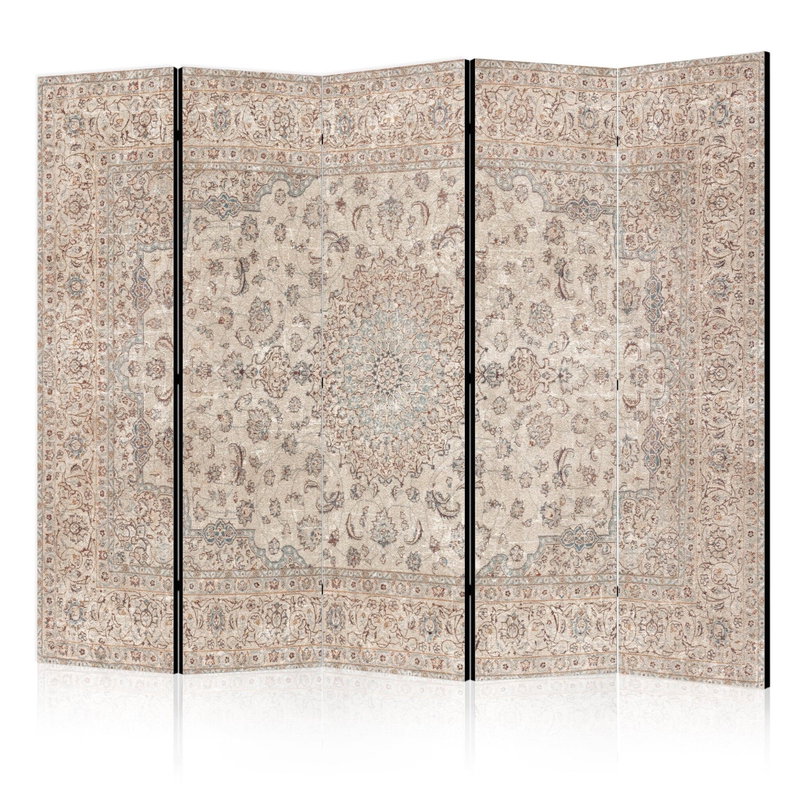
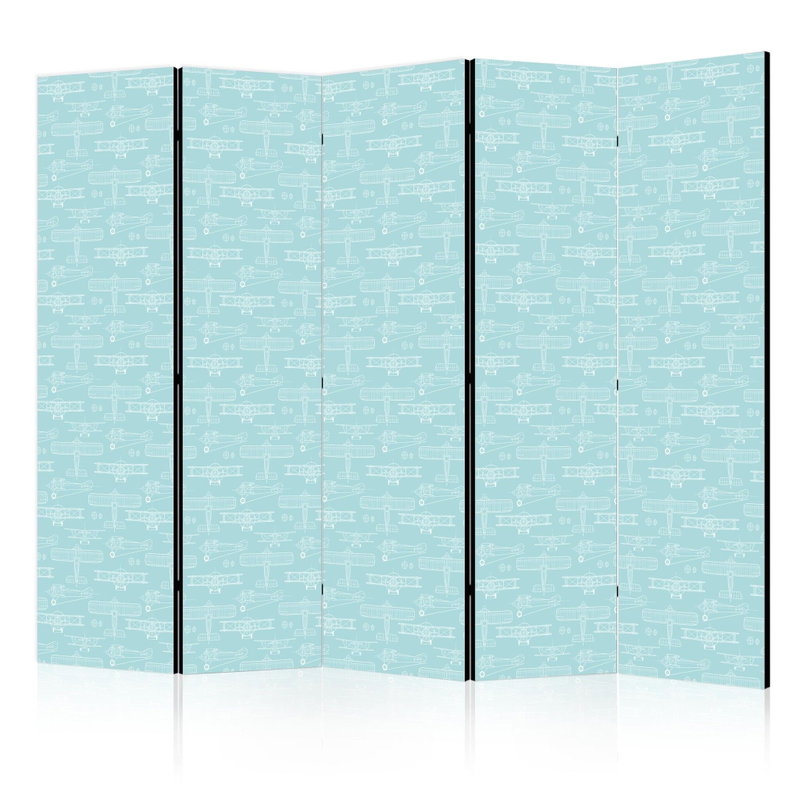

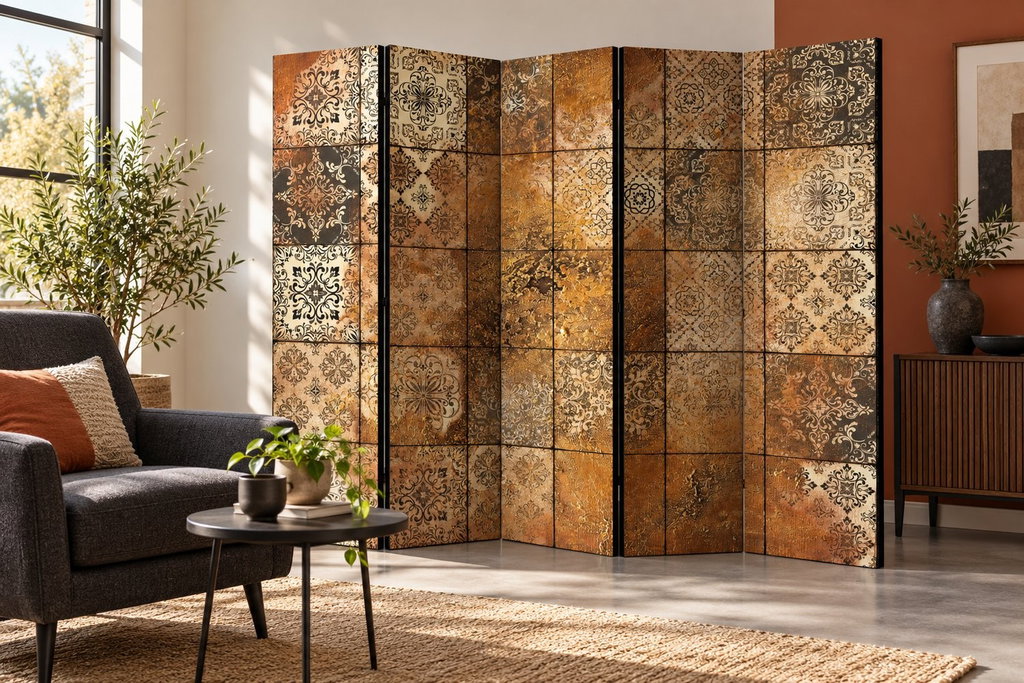
Five parts for a wider visual boundary
A five-panel screen can frame a larger zone without permanent division. Hinged panels adapt to a seating group, work area or part of a shared room. The broad motif is visible in several directions, so choose it alongside furniture on both sides.
Start with the visual purpose: a backdrop to a meeting area, limiting direct views of a workspace or separating a route from a quieter zone. One screen can stand in different arrangements, but each must be stable and leave space for everyday movement.
225 centimetres unfolded is not the arranged width
Checked five-panel models have fully unfolded dimensions of 225 × 172 centimetres, with five panels each 45 centimetres wide. Angling reduces effective width and occupies depth too. Measure more than a straight floor line when trying the position.
Mark intended folds and check outer panels beside chairs, tables and routes. A longer screen may need more clear floor at the ends than the main image suggests. Do not stand it completely straight just to achieve total width: follow the guidance for a suitable stable angle.
Let the motif work across the complete panel group
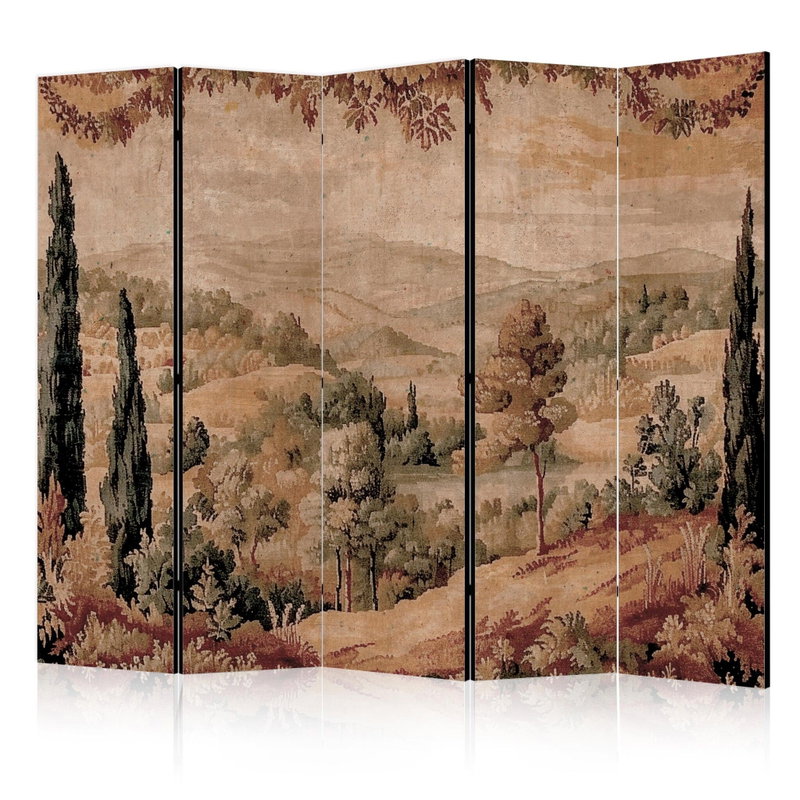
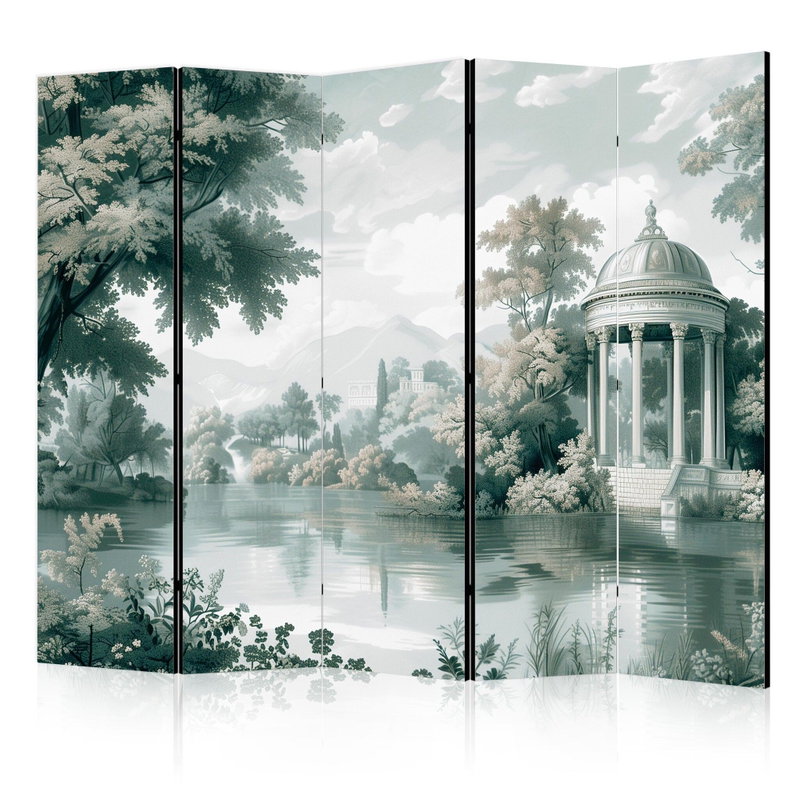
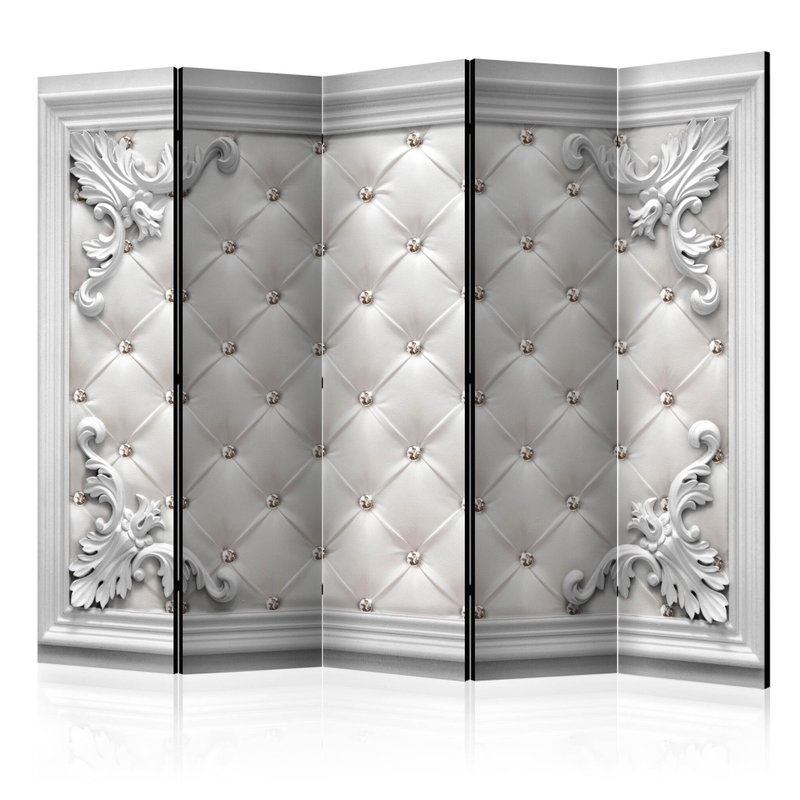
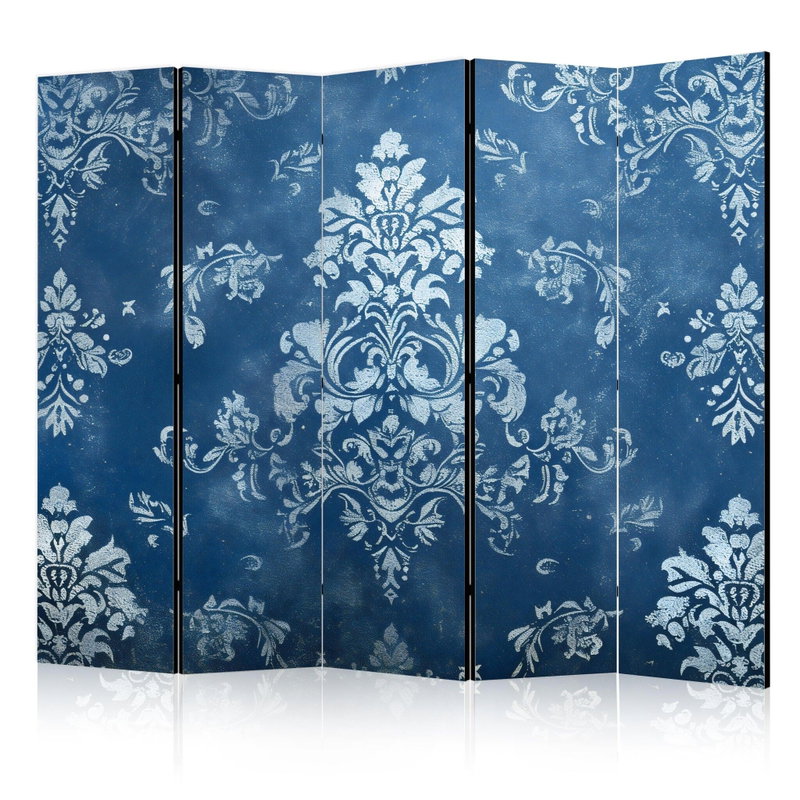
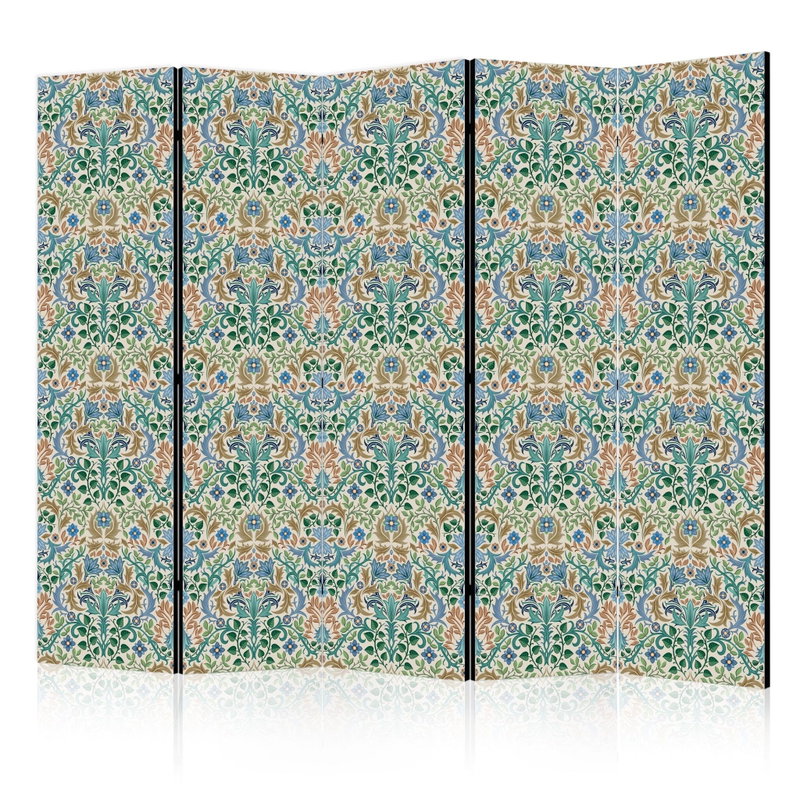
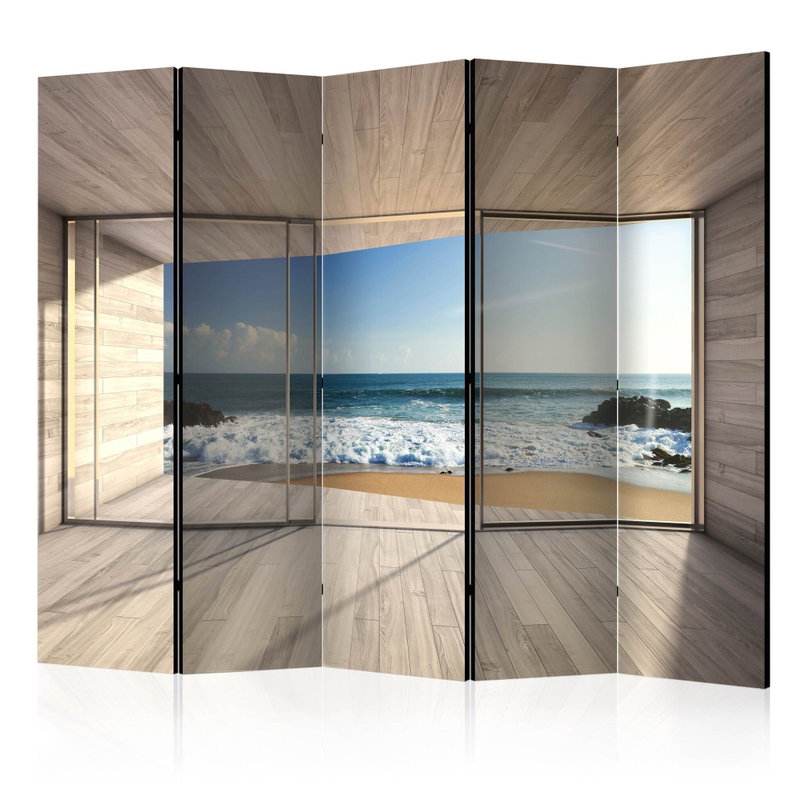
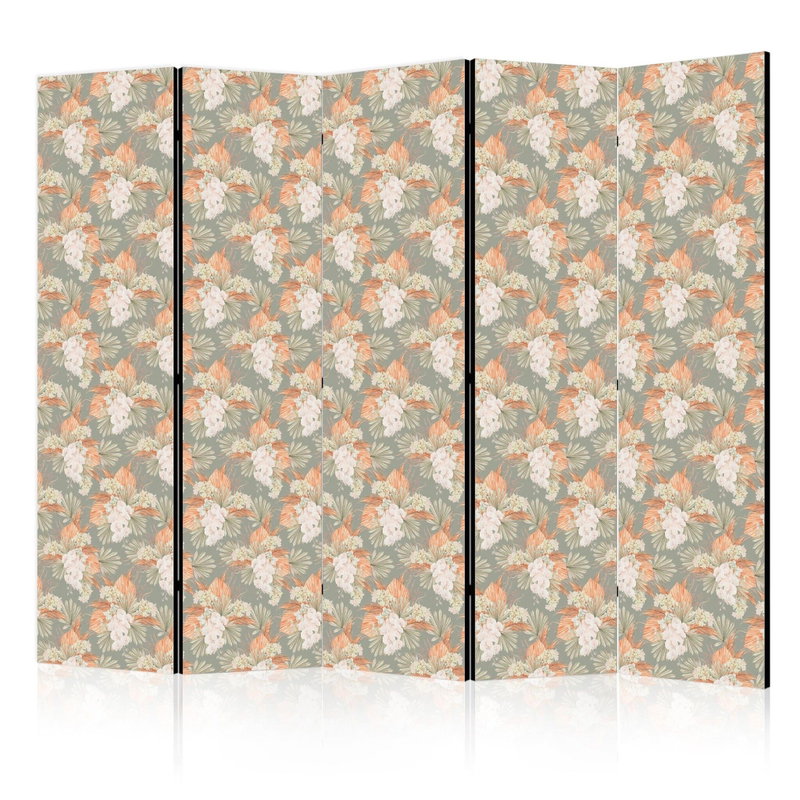
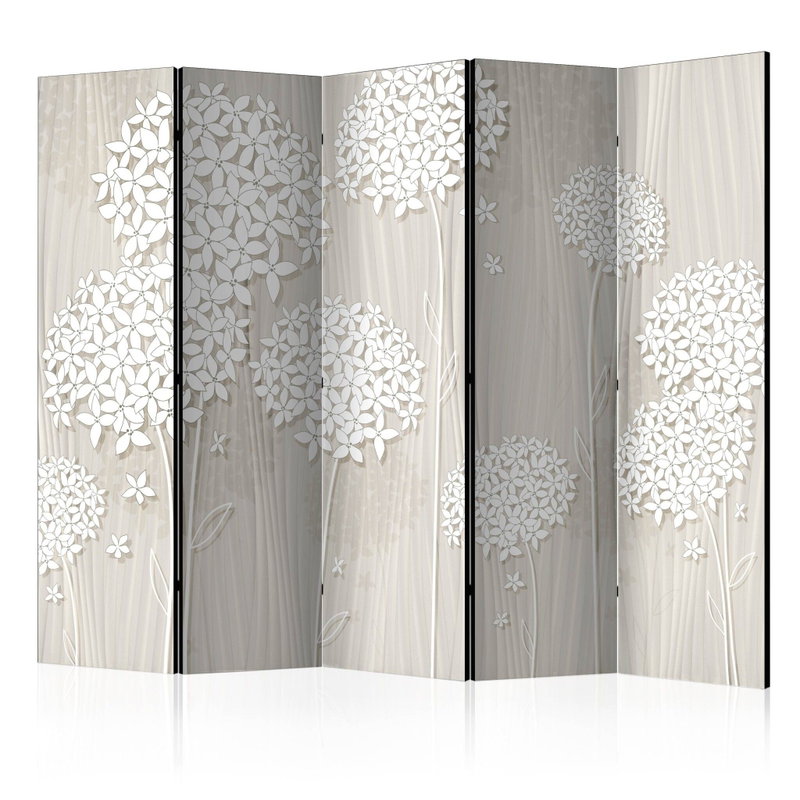
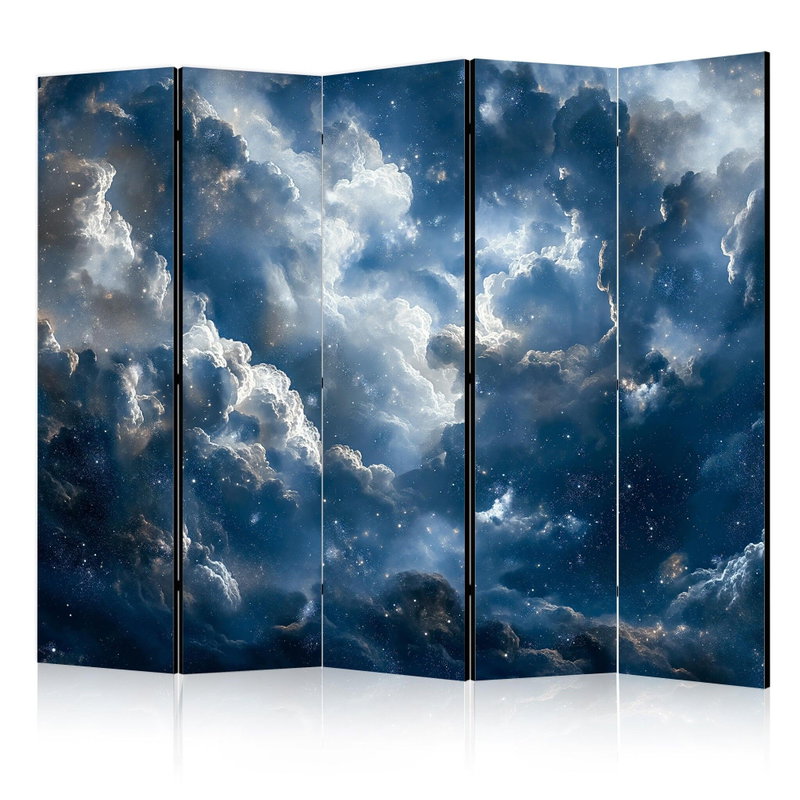
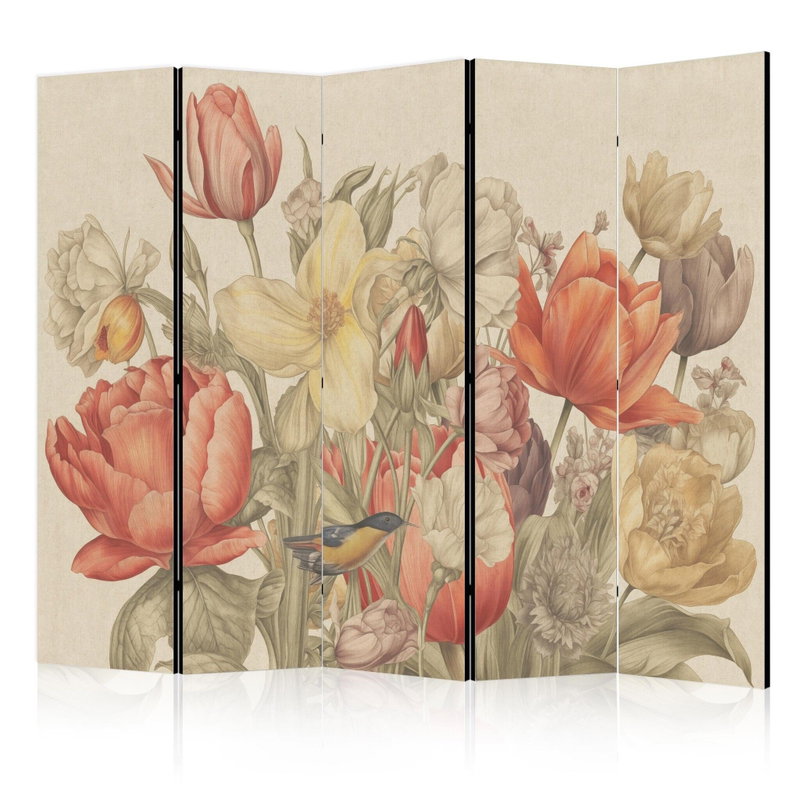
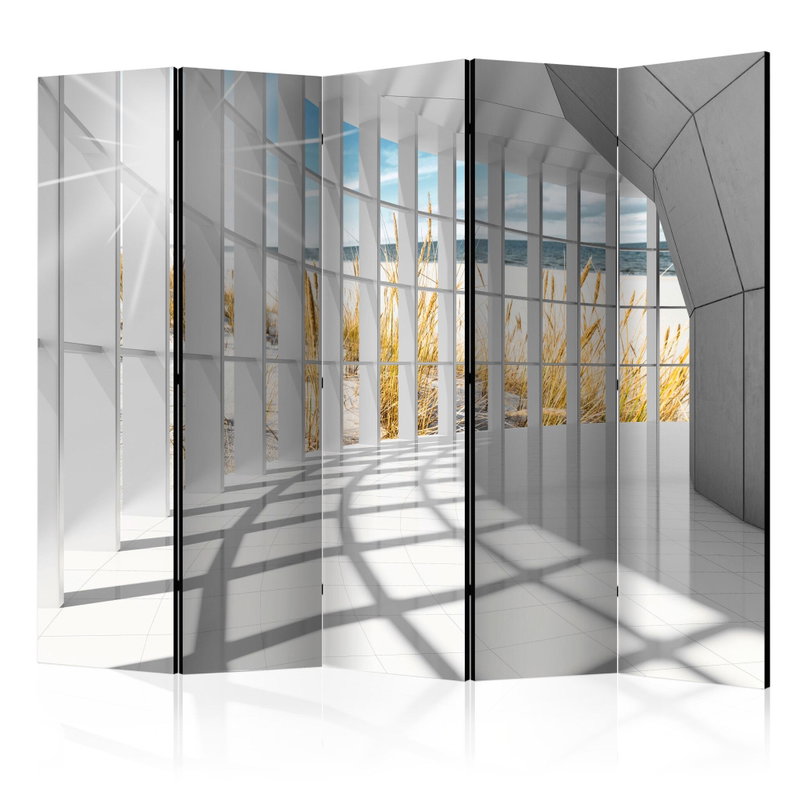
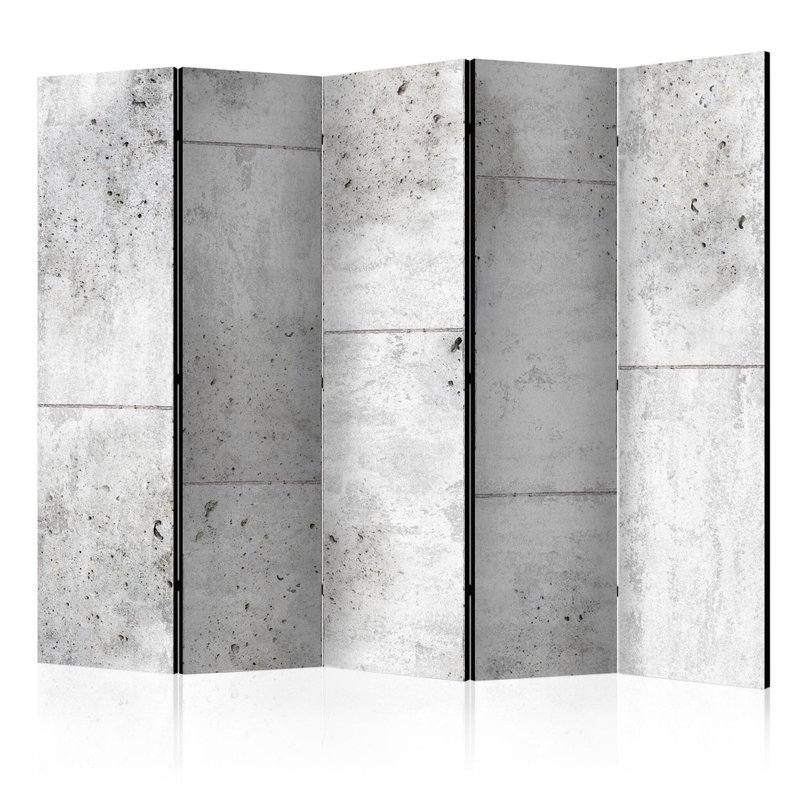
A landscape can provide a long horizon or sequence of trees and vegetation. Dense flowers work differently, filling the surface with petals and foliage. Abstract designs and patterns can connect the long boundary through repetition, material illusions and colour fields without a distinct centre.
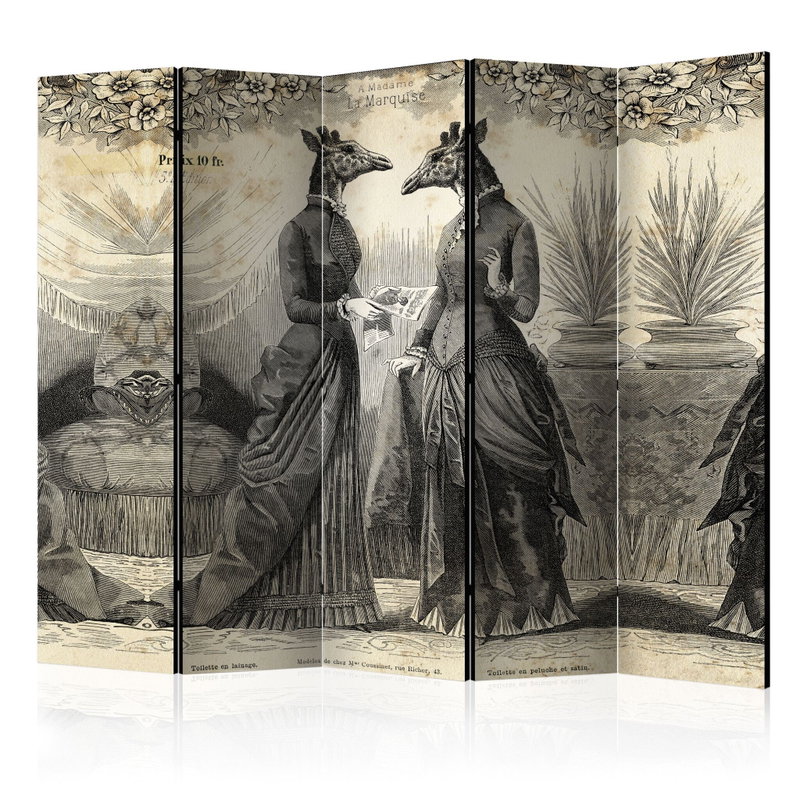
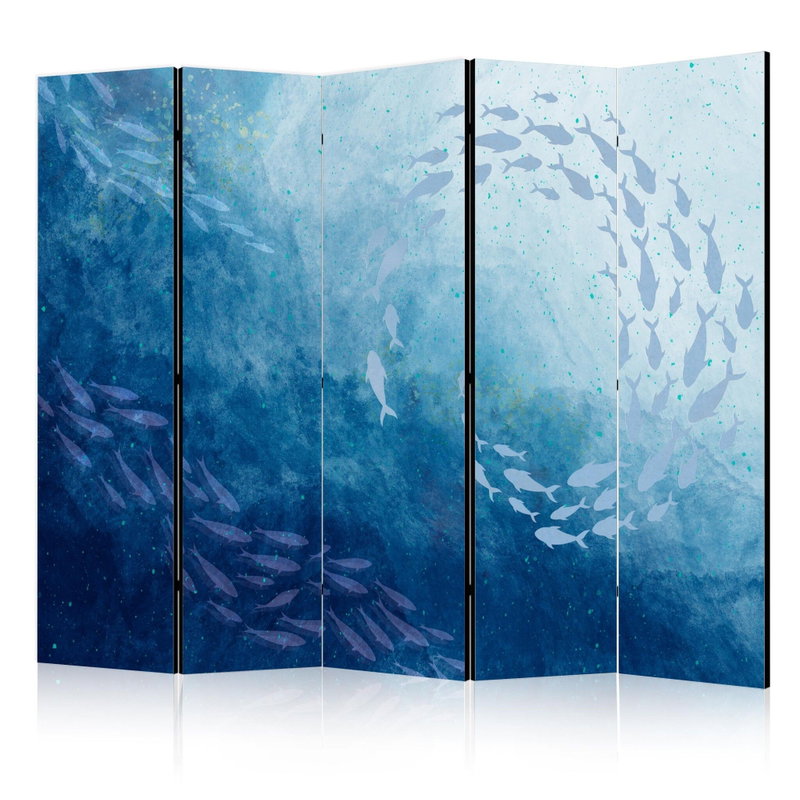
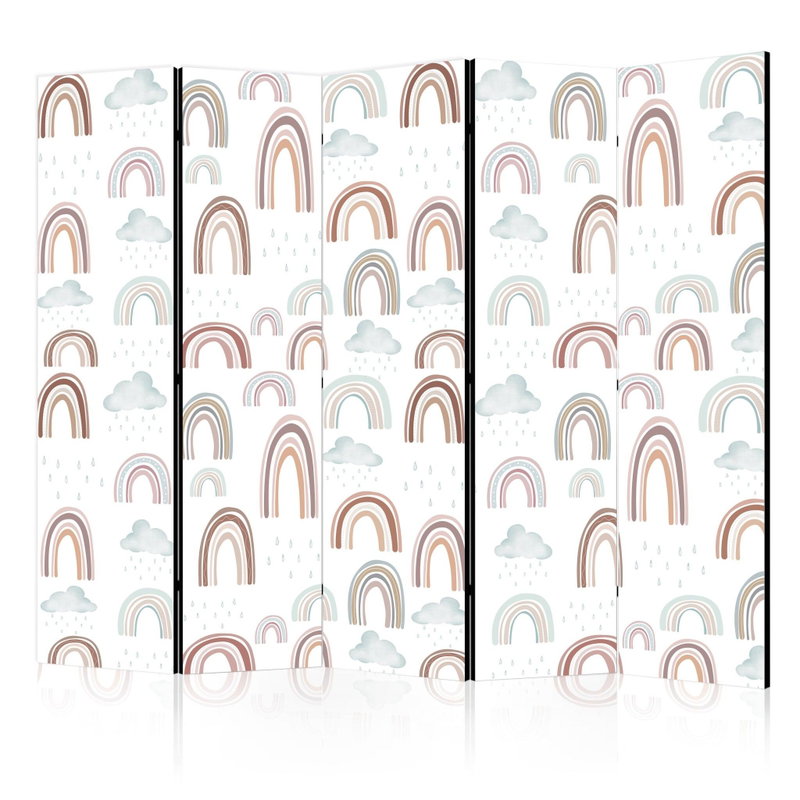
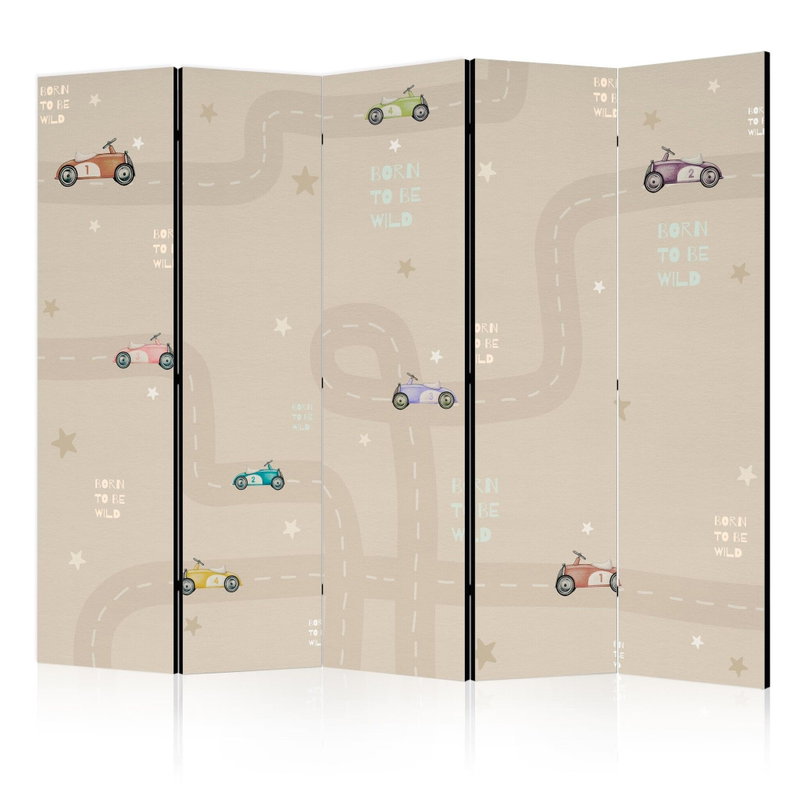
There are also animal and marine subjects, children’s illustrations and other art or object motifs. Check important details against panel joins. A central bird, figure or object may appear differently when angled. Use the actual complete product image and assess from the main viewing direction.
Two sides meeting different areas of one room
Double-sided printing makes the screen a freestanding image surface. One side might form a seating backdrop while the other meets a route or workspace. A colour suited to one side must therefore also be compared with the other’s light and textiles.
Product information permits pins, messages and photographs on the surface. Decide which side carries information and how much of the image may be covered. Consider reach: recurring notices should be replaceable without moving panels out of their stable arrangement.
Assess construction and acoustic function correctly
The documented construction includes pine framing, metal hinges and absorbent technical polyurethane foam. The filling can absorb some incident sound and help reduce reverberation. Five panels give a different format from three, but their number does not promise a particular noise reduction.
A freestanding boundary is open around its sides and top. It does not replace building sound insulation or guarantee conversation privacy between places. Acoustic planning needs room volume, surfaces, furniture and other absorbent materials considered together. Use documented properties and actual use rather than a wall-like appearance.
Positioning, storage and the final choice
The screen is ready to position without wall mounting. Check floor contact and panel angles when placing it and after every move. Follow care guidance for print and surface. It folds away but needs suitable storage that protects the images from unnecessary abrasion.
If the broad format makes clear access difficult, three panels may fit better. If five fit, compare motif families suited to the room’s palette first, then individual compositions. This gives the practical boundary and the image equal care in the choice.