



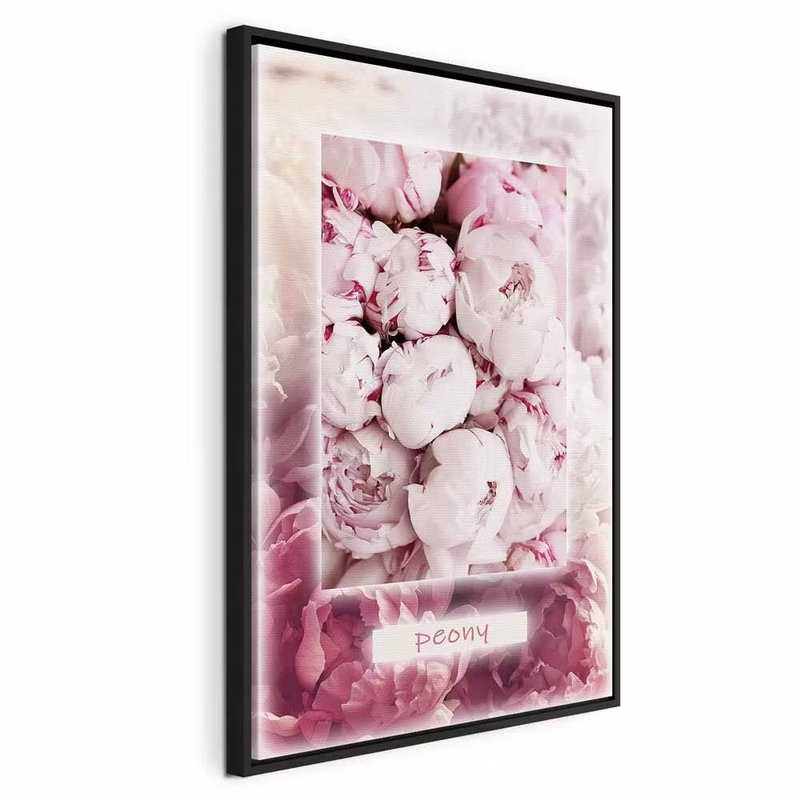
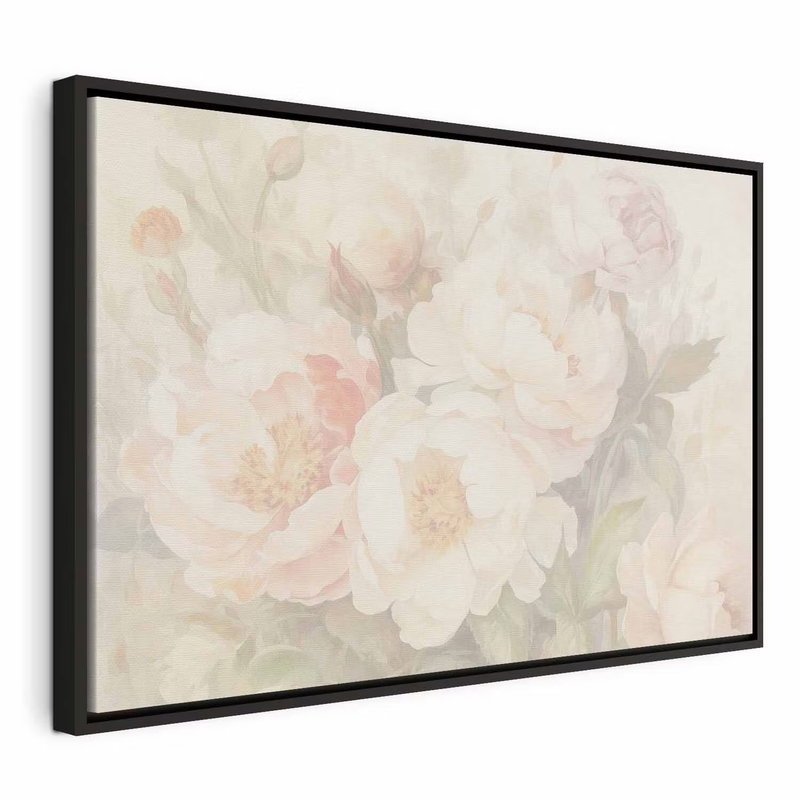
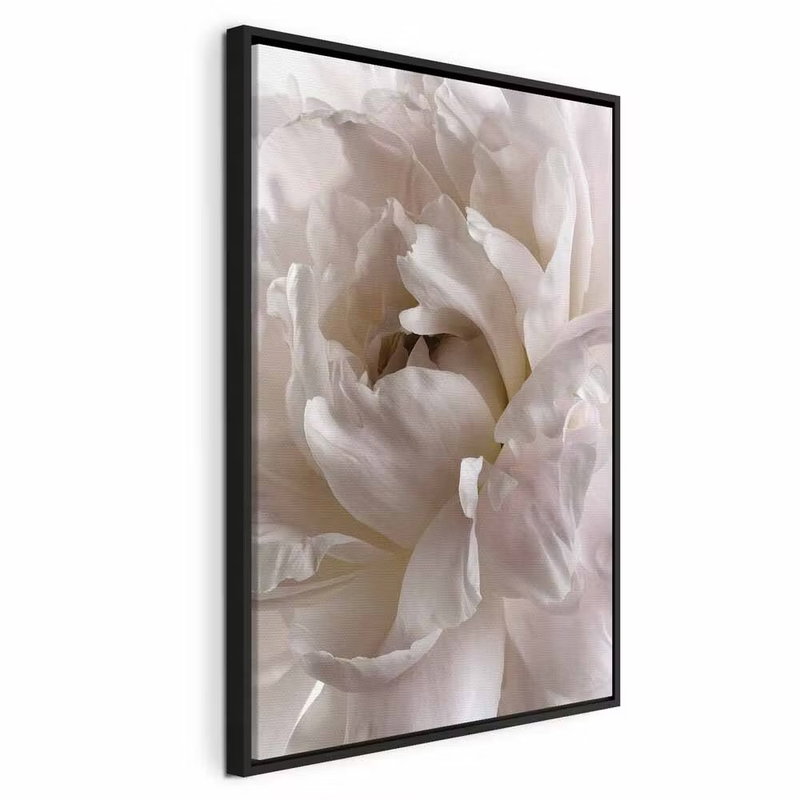
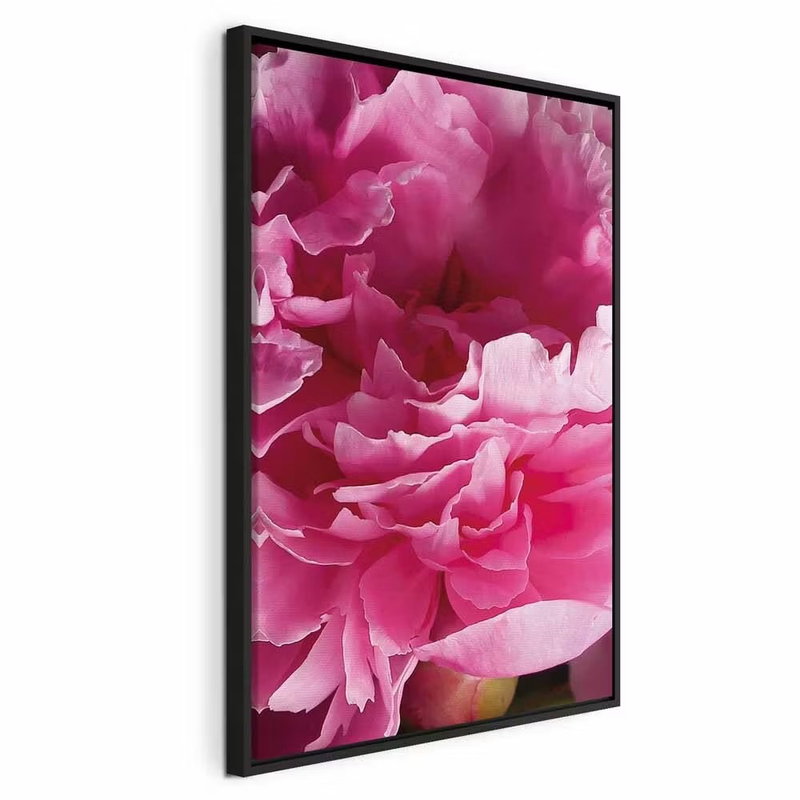
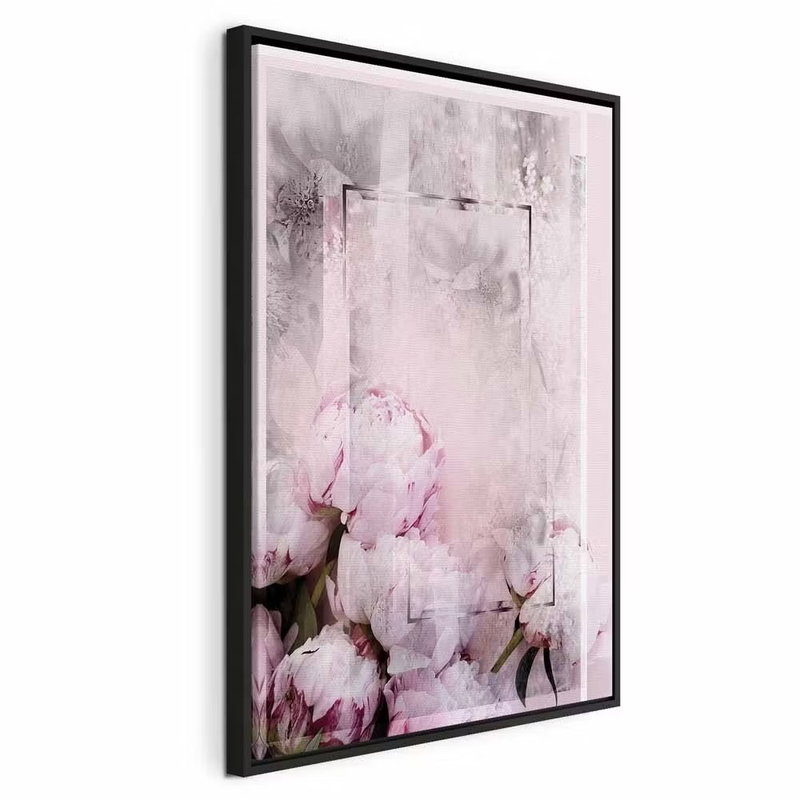

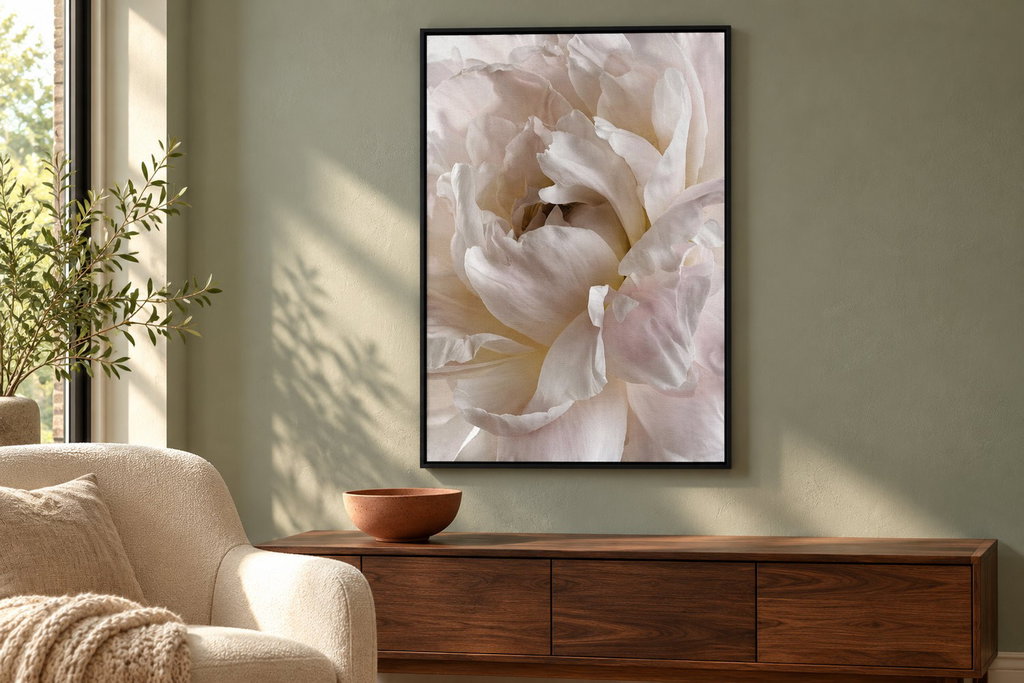
Layers of petals give the image depth
A peony’s many petals can fill almost the entire picture or sit within a more open composition. Light areas and shadows between the petals create different effects. Consider the full image and its details before deciding how strongly the flower should feature on the wall.
From a pale flower detail to a painted composition
A close-up of white petals may read as a soft pattern from a distance. Pink flowers and painted backgrounds make different connections with the room’s colours. Compare the background with the wall, wood and textiles, and check the frame options available for the product.
Let the image scale guide its placement
An upright peony picture can have a defined place beside an armchair. A landscape composition above a wide piece of furniture creates a different balance. Use the stated outside dimensions and your normal viewing distance instead of estimating size from a room photograph.
Plan the artwork and absorbing area together
The absorbing structure can help shorten reverberation. The flower subject does not determine the absorbing area a room needs. Read the individual model’s material, mounting and care information. Different sizes and frame versions of the same image count as one motif.
The shipping offer covers delivery to collection points where offered, rather than all business-parcel deliveries.
Dense petals and clear differences in light
Small shadows between peony petals can have more impact than a strong outer contour. Follow the lightest areas with your eye and notice where the darker spaces gather. A flower filling the whole image may seem abstract from a distance and clearly botanical close up. A composition with more room around the flowers lets each shape stand out separately. Compare the images from roughly the distance at which the picture will be seen in the room. A small detail in a product photograph may become an important focal point in a larger format.
Choose contrast to suit the wall and furniture
Pale peonies do not necessarily mean an entirely pale picture. The background, shadows and any dark foliage affect how strongly the image stands apart from the wall. On a light wall, a darker background can give the flower a clear outline. On a more colourful wall, a soft petal tone may connect the picture to other furnishings. Use the image actually offered and check frame choices on the product page. Screen brightness and colour reproduction may differ from reality, so assess the distribution of light and dark areas too.
Decide whether the peony should lead or support the room
A large flower above a low sideboard can become the room’s most prominent picture. Near a workspace, a smaller format may provide a quieter accent without competing with screens and shelves. Neither choice requires every other object to follow the same floral theme. Use colour, materials and spacing to create connections instead. Measure the position before ordering and compare the available format’s outside dimensions with the furniture. Check that doors, reading lamps and nearby cupboards can still be used normally once the picture is in place.
Combine floral pictures without overcrowding the wall
When combining a peony picture with other images, a recurring background or shared frame tone can hold the group together. Leave clear spaces between pictures so that the dense petals do not merge into one large pattern. Compare a more detailed image with a more open composition, but work from the actual images’ colours and proportions. A row of equally sized pictures and a freer arrangement create different rhythms. Plan the wall positions beforehand and assess the whole group from the seating position, rather than only looking at each picture close up.
Separate the image choice from the room’s acoustic needs
The peony’s soft forms are a visual quality, not a measure of sound absorption. Acoustic function depends on the product’s construction and the absorbing area present in the room. A conversation space with hard materials may need more absorbing surfaces than a single picture. Use documented product information and assess the overall room alongside its floor, ceiling, glazing and other furnishings. Sound absorption can reduce reflections within the same room but does not mean that sound transmission between rooms disappears. Follow the model’s wall-fixing and cleaning instructions to preserve both the image and its function.